
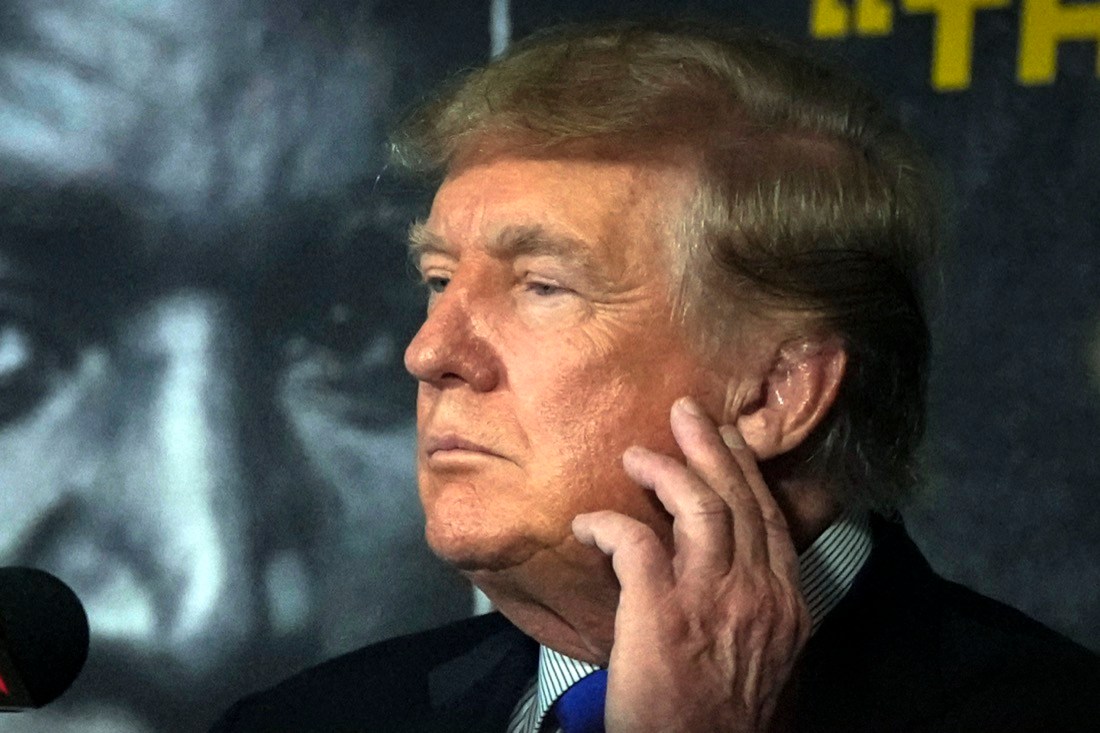
NEW YORK (AP) – Former President Donald Trump is due Wednesday to face questioning under oath in New York’s civil investigation into his business practices. But will he answer?
The ex-president’s lawyer has indicated that he will advise Trump to stay mum and invoke the Fifth Amendment’s protection against self-incrimination. It’s a constitutional right that gets high-profile exposure in settings from Congress to TV crime shows, but there are nuances. Here’s what it means – and doesn’t – to “plead (or ‘take’) the Fifth.”
WHAT IS ‘THE FIFTH’?
The Fifth Amendment to the U.S. Constitution establishes a number of rights related to legal proceedings, including that no one “shall be compelled in any criminal case to be a witness against himself.”
In the most direct sense, that means criminal defendants don’t have to give damning testimony in their own cases. But it has come to apply in non-criminal contexts, too.