
Saturday, November 14, 2026Nov 14

Backyard mosquito spraying booms, but may be too deadly

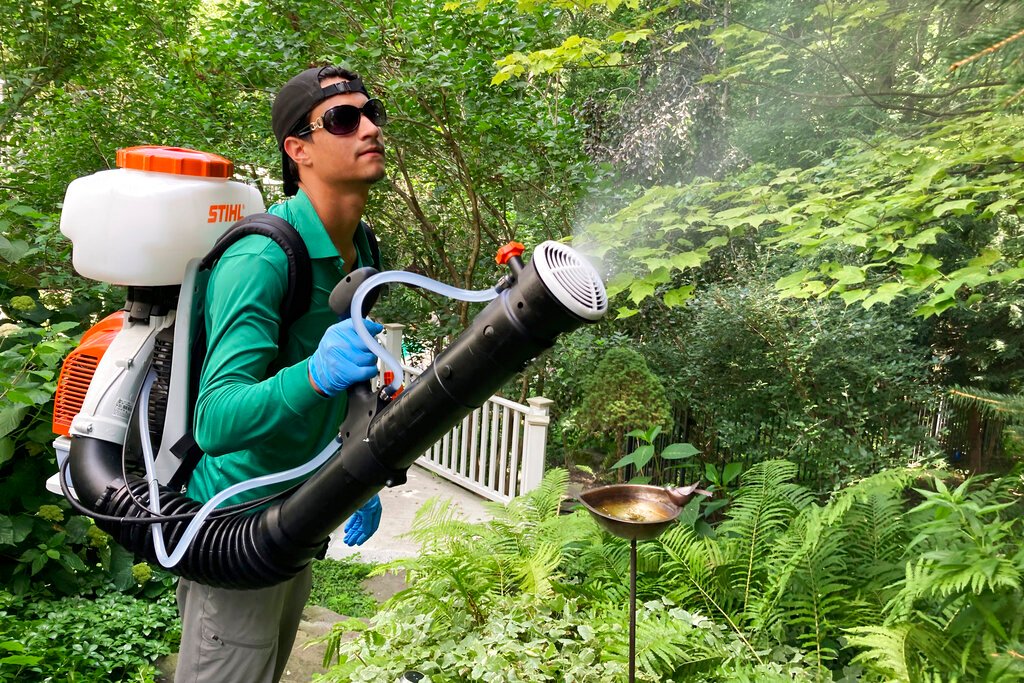
Mosquito Joe lead technician Damien Ysasi sprays a mixture of essential oil insecticides in a yard in Cascade Township near Grand Rapids, Mich., on July 20, 2022. As climate change widens the insect's range and lengthens its prime season, more Americans are resorting to the booming industry of professional extermination. But the chemical bombardment worries scientists who fear over-use of pesticides is harming pollinators and worsening a growing threat to birds that eat insects. (AP Photo/John Flesher)

CASCADE TOWNSHIP, Mich. (AP) — It’s an increasingly familiar sight in U.S. cities and suburbs: A van pulls up to the curb. Workers wearing gloves, masks and other protective gear strap on backpack-type mechanisms with plastic hoses, similar to leaf blowers.

Revving up the motors, they drench trees, bushes and even house walls with pesticides targeting an age-old menace: mosquitoes.

The winged, spindly-legged bloodsuckers have long been the bane of backyard barbecues and, in tropical nations, carriers of serious disease. Now, with climate change widening the insect’s range and lengthening its prime season, more Americans are resorting to the booming industry of professional yard spraying.

“If you like to be outside, it certainly makes it more pleasant not to be swatting mosquitos and worrying about all the issues,” said Marty Marino, a recent customer in Michigan’s Cascade Township, a bedroom community near Grand Rapids.

But the chemical bombardment is beginning to worry scientists who fear over-use of pesticides is harming pollinators and worsening a growing threat to birds that eat insects.