
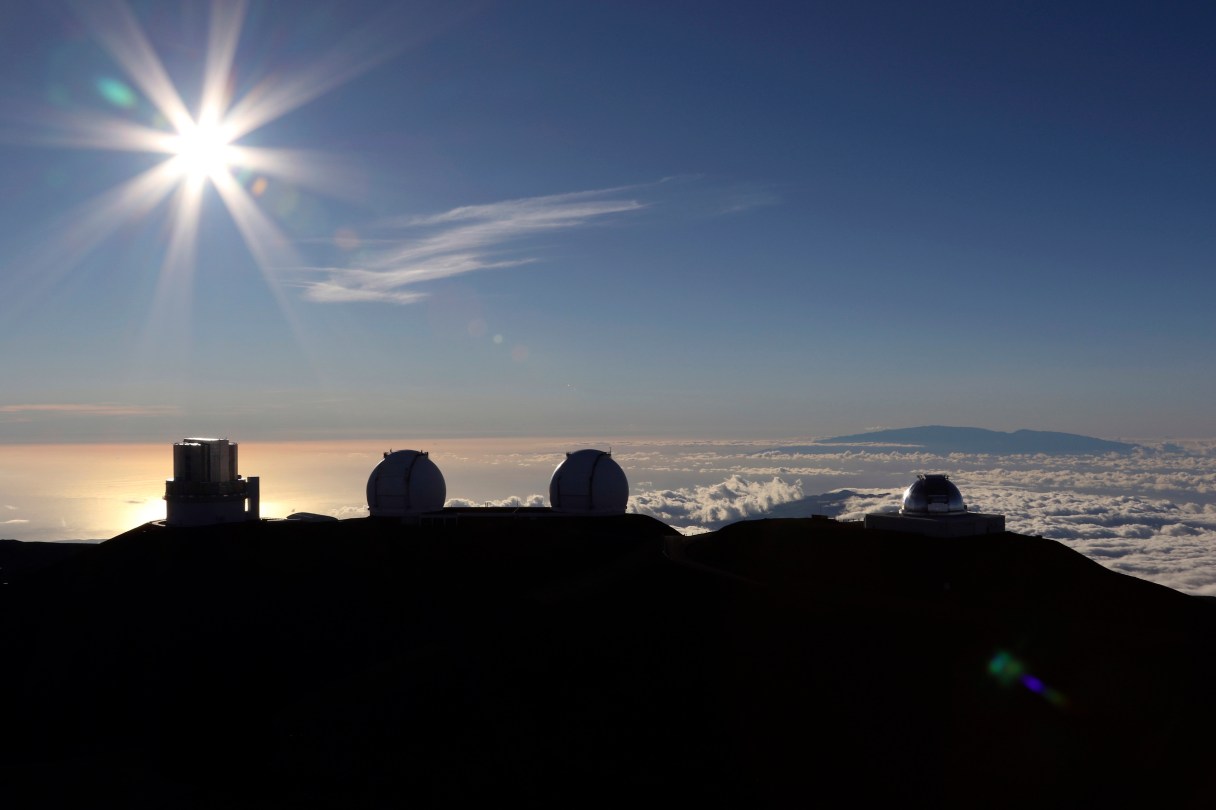
HONOLULU (AP) — For more than 50 years, telescopes and the needs of astronomers have dominated the summit of Mauna Kea, a mountain sacred to Native Hawaiians that’s also one of the finest places in the world to study the night sky.
That’s now changing with a new state law saying Mauna Kea must be protected for future generations and that science must be balanced with culture and the environment. Native Hawaiian cultural experts will have voting seats on a new governing body, instead of merely advising the summit’s managers as they do now.
The shift comes after thousands of protesters camped on the mountain three years ago to block the construction of a state-of-the-art observatory, jolting policymakers and astronomers into realizing the status quo had to change.
There’s a lot at stake: Native Hawaiian advocates want to protect a site of great spiritual importance. Astronomers hope they’ll be able to renew leases for state land underneath their observatories, due to expire in 11 years, and continue making revolutionary scientific discoveries for decades to come. Business and political leaders are eager for astronomy to support well-paying jobs in a state that has long struggled to diversify its tourism-dependent economy.
To top if off, the new authority may offer a first-in-the-world test case for whether astronomers can find a way to respectfully and responsibly study the universe from Indigenous and culturally significant lands.