
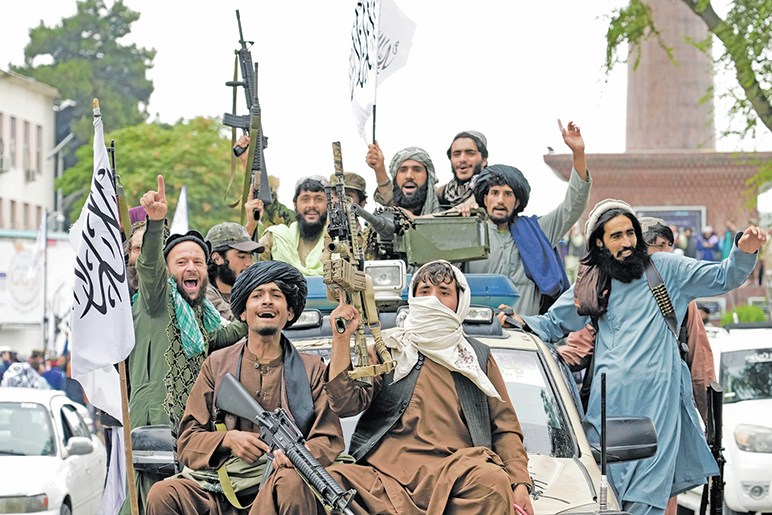
When the Taliban returned to power in Afghanistan on Aug. 15, 2021, there were faint hopes that this time would be different.
The Taliban promised to respect girls’ education and women’s rights, and to not allow the country to become a breeding ground for terrorism, as it had been in the Taliban’s previous stint in government before the 2001 U.S. intervention.
But a year after the fall of Kabul, the Taliban has failed to deliver on these promises and gradually become more repressive as it tries to consolidate power in the country.
Its record on women’s rights has been abysmal, as has its distribution of much-needed humanitarian aid.
Meanwhile, the view that the Taliban could meaningfully mitigate the counterterrorism concerns of the West has only grown more absurd since it first made such promises as part of 2020’s Doha agreement to secure a U.S. exit. The Taliban’s leading political ranks remain dominated by wanted terrorists, including members of the influential terrorist group the Haqqani Network.