
Monday, November 16, 2026Nov 16

USDA scattering rabies vaccines for wildlife in 13 states

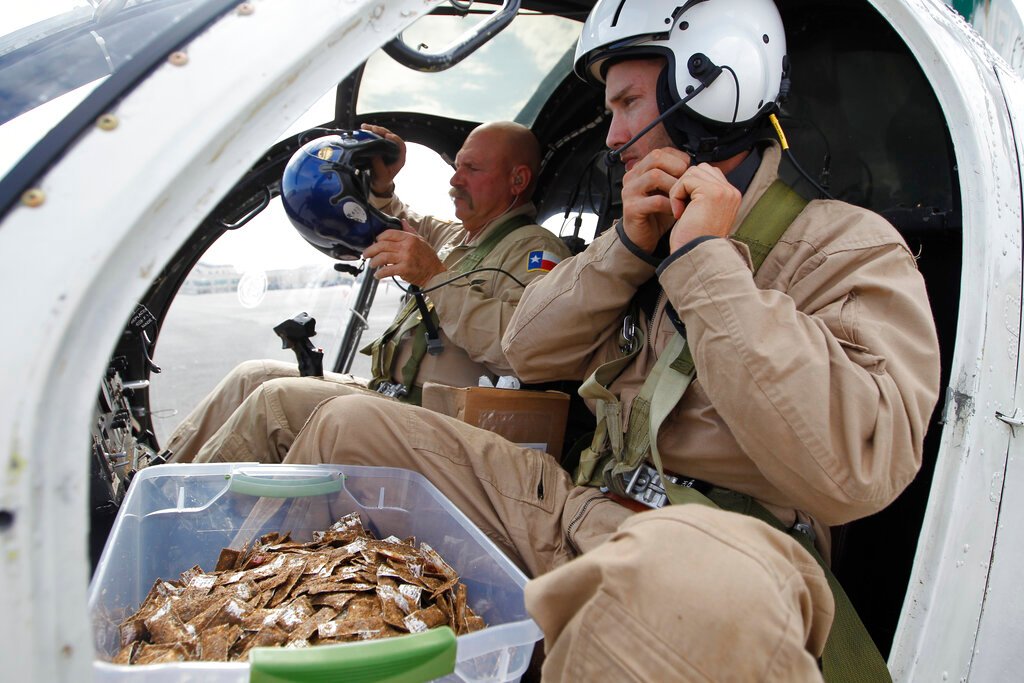
USDA wildlife specialist Will Guigou, right, and pilot Thomas Taylor prepare to distribute packets of baited rabies vaccine by helicopter from a container between Guigou's knees Tuesday, Oct. 22, 2013, at Chattanooga Metropolitan Airport's Lovell Field in Chattanooga, Tenn. The U.S. government has begun scattering millions of packets of oral rabies vaccine from helicopters and planes over 13 states from Maine to Alabama. The major aim is to keep raccoons from spreading their strain of the deadly virus to states where it hasn't been found or isn't widespread, said field trial coordinator Jordona Kirby. ( Doug Strickland/Chattanooga Times Free Press via AP)

NEW ORLEANS (AP) — The U.S. Department of Agriculture has begun scattering millions of packets of oral rabies vaccine from helicopters and planes over 13 states from Maine to Alabama.

The major aim is to keep raccoons from spreading their strain of the deadly virus to states where it hasn’t been found or isn’t widespread, said field trial coordinator Jordona Kirby.

The USDA is also continuing tests of a vaccine approved in Canada to immunize skunks as well as raccoons, said Kirby of Wildlife Services, which is part of the agriculture department’s Animal and Plant Health Inspection Service.

Rabies is spread through an infected animal’s saliva, usually through bites. However, saliva that gets into the eyes, nose or mouth can also infect someone, according to the Centers for Disease Control and Prevention.

Thirteen people in South Carolina were considered potentially exposed in March because they had bottle-fed or given medicine to a sick calf that turned out to have rabies, said Dr. Michael Neault, the state veterinarian.