
Monday, November 16, 2026Nov 16

Equity is goal, not mandate, in California electric car rule

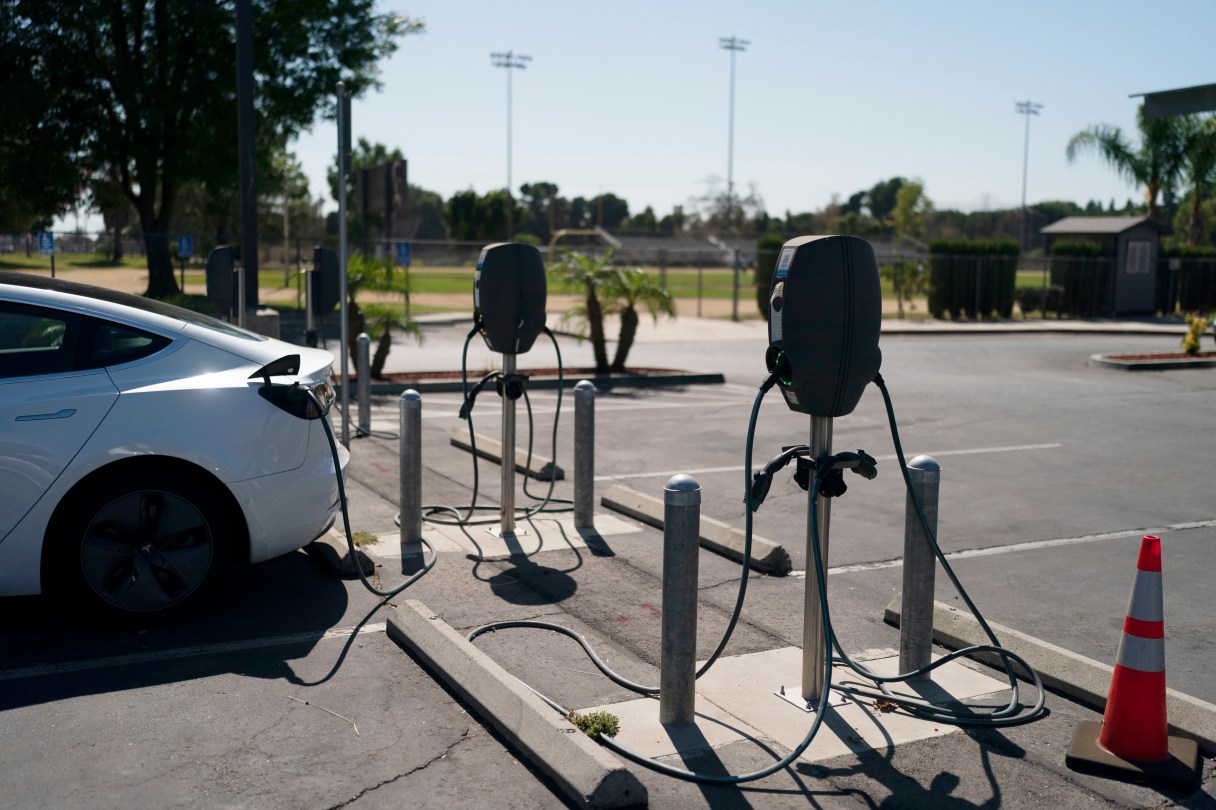
Electric vehicle chargers are seen in the parking lot of South El Monte High School in South El Monte, Calif., Friday, Aug. 26, 2022. Discounted prices, car-share programs, and a robust network of public charging stations are among the ways California will try to make electric vehicles affordable and convenient for people of all income levels as it phases out the sale of new gas cars by 2035. Advocates for the policy say the switch from gas- to battery-powered cars is a necessary step to reducing pollution in disadvantaged neighborhoods, but that the state make sure those residents can access the cars, too.(AP Photo/Jae C. Hong)


SACRAMENTO, Calif. (AP) — Discounted prices, car-share programs and at least one million more public charging stations are among the ways California will try to make electric cars easier to buy and drive as it phases out the sale of gas-powered cars.

But the state won’t force automakers to participate in any equity programs designed to ensure people of all income levels can buy electric cars.

“This rule had the opportunity to really set the path for lower income households to have increased access and affordability (for) electric vehicles, but it missed the mark,” said Roman Partida-Lopez, legal counsel for transportation equity with The Greenlining Institute.

Instead, car companies will get extra credit toward their sales quotas if they make cars available to car share or other programs aimed at disadvantaged Californians. Democratic Gov. Gavin Newsom has pledged $10 billion over six years for incentives to get electric vehicles into the hands of low-income residents, charging infrastructure, and other efforts to put cleaner cars and trucks on the road.