
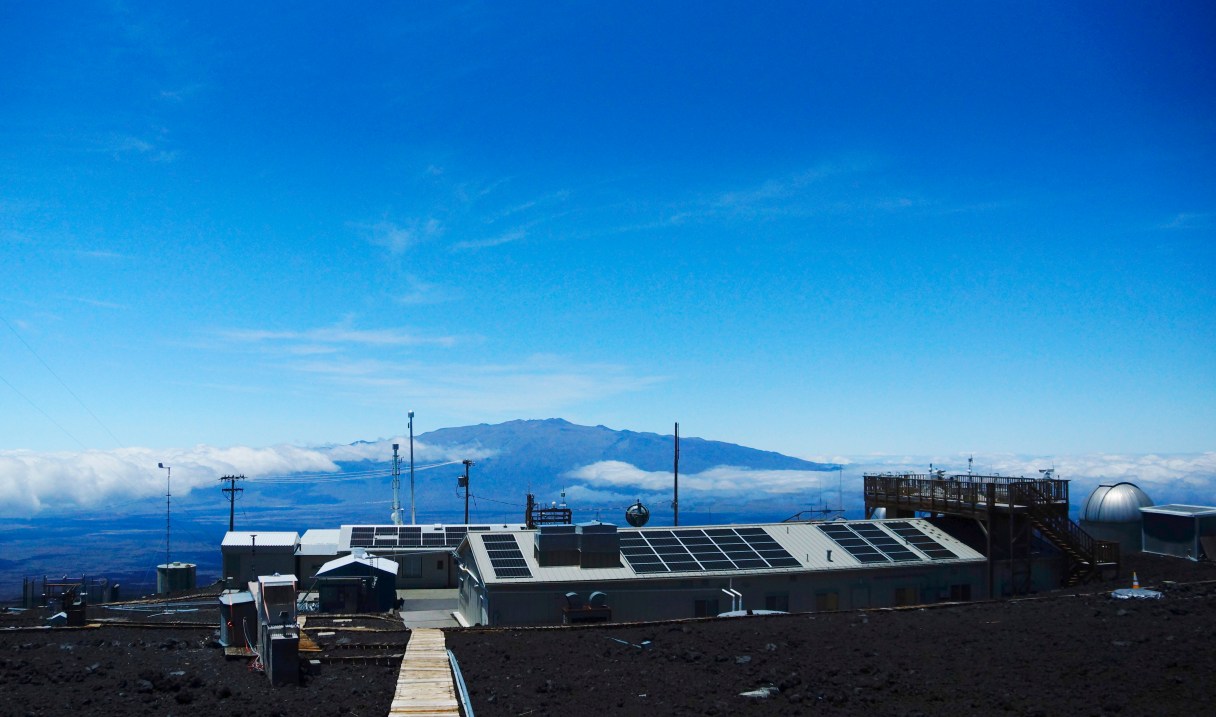
The eruption of Hawaii’s Mauna Loa volcano has temporarily knocked off power to the world’s premier station that measures heat-trapping carbon dioxide in the atmosphere, but officials Wednesday say it won’t be a problem.
There are hundreds of other carbon dioxide monitoring sites across the globe. The federal government is looking for a temporary alternate site on the Hawaiian island and is contemplating flying a generator to the Mauna Loa observatory to get its power back so it can take measurements again, said officials at the National Oceanic and Atmospheric Administration’s Global Monitoring Lab in Colorado that operates the station.
The Hawaiian station goes back to 1958 and is the main site for the famous Keeling Curve that shows rising carbon dioxide levels from burning of coal, oil and natural gas that tracks with rising temperatures. Levels of carbon dioxide at Mauna Loa have increased 33% since 1958.
The station at 11,300 feet high (3,444 meters), has a 131-foot (40-meter) tower that collects air to measure levels of carbon dioxide, radiation and other materials. Even though the flow of lava isn’t near the station it cut off power lines further down the mountain, officials said.
“This is sort of our flagship station,” said Colm Sweeney, the monitoring lab’s associate director. “The scientific value of Mauna Loa is really in what it stands for. It also is one of the cleanest signals that we have.”