
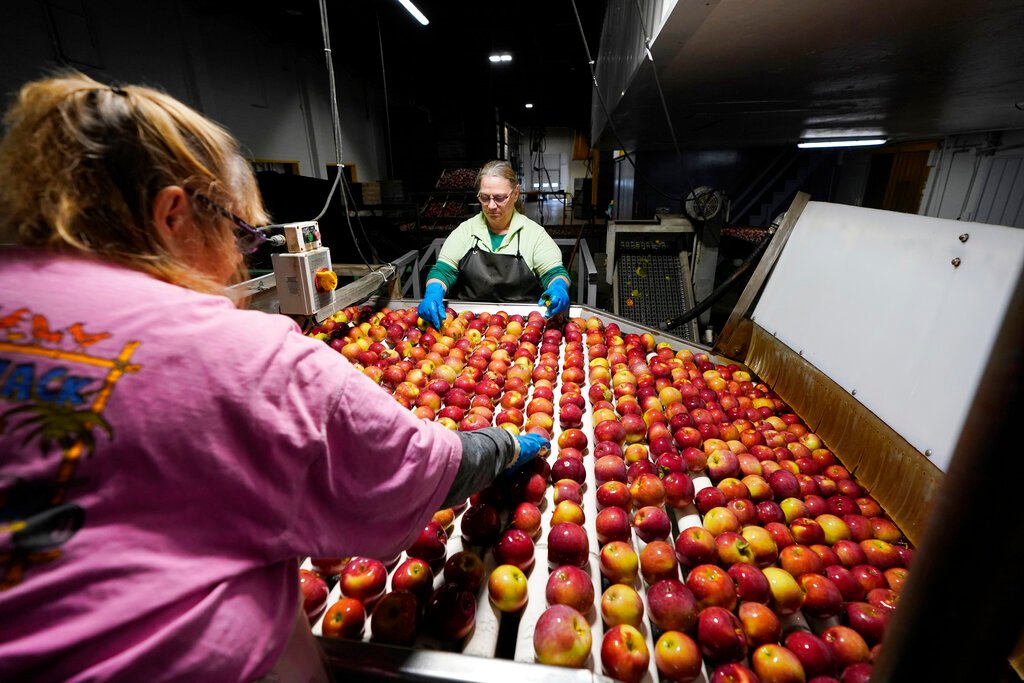
Hate mealy apples and soggy french fries? Science can help.
Restaurants, grocers, farmers and food companies are increasingly turning to chemistry and physics to tackle the problem of food waste.
Some are testing spray-on peels or chemically enhanced sachets that can slow the ripening process in fruit. Others are developing digital sensors that can tell — more precisely than a label — when meat is safe to consume. And packets affixed to the top of a takeout box use thermodynamics to keep fries crispy.
Experts say growing awareness of food waste and its incredible cost — both in dollars and in environmental impact — has led to an uptick in efforts to mitigate it. U.S. food waste startups raised $4.8 billion in 2021, 30% more than they raised in 2020, according to ReFed, a group that studies food waste.
“This has suddenly become a big interest,” said Elizabeth Mitchum, director of the Postharvest Technology Center at the University of California, Davis, who has worked in the field for three decades. “Even companies that have been around for a while are now talking about what they do through that lens.”