
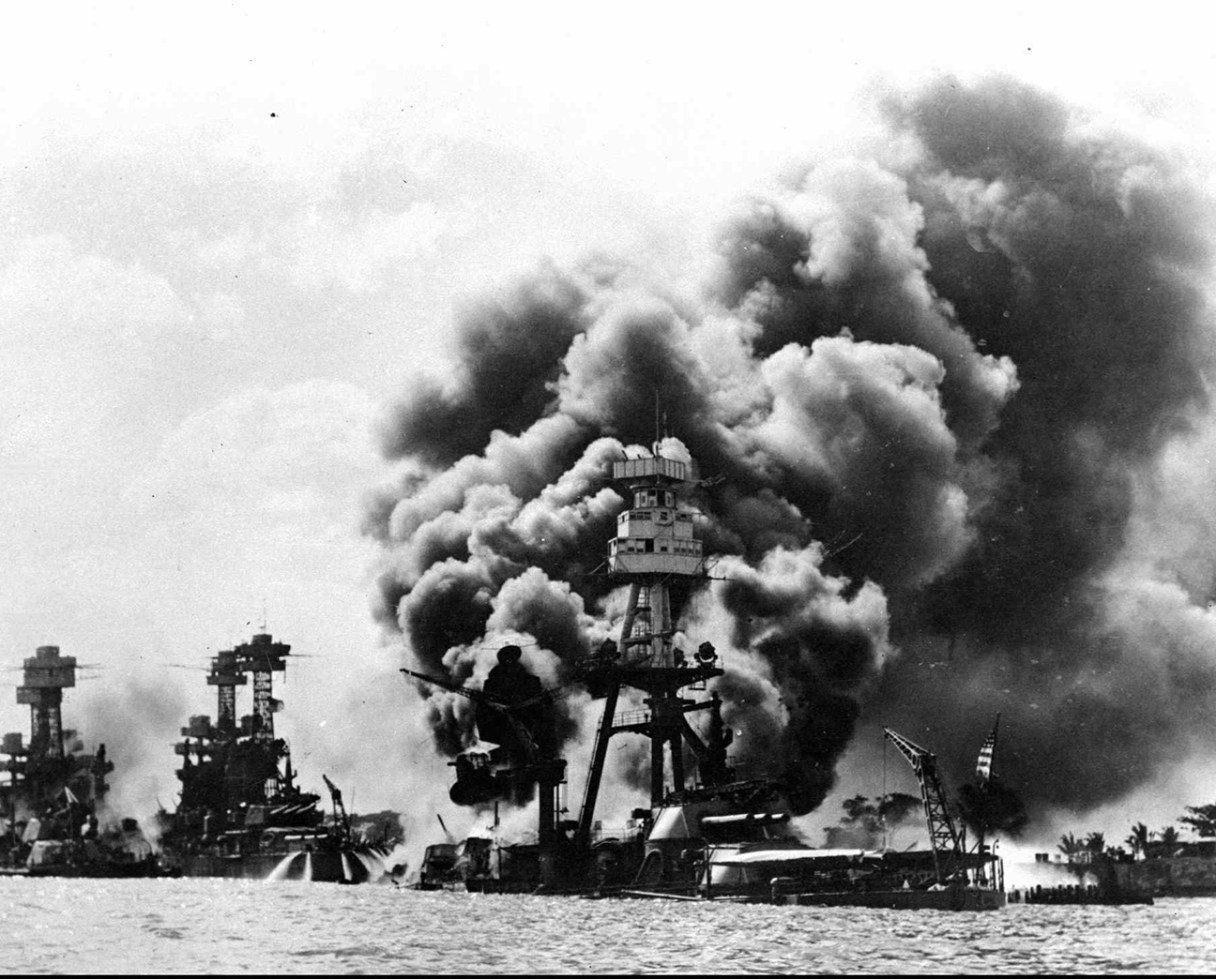
Last Wednesday, residents across the Tennessee Valley wrote a check or posted a social media entry, noticed the date and paused. While fewer readers each year actually remember hearing the news of that day in 1941, most of us understand the significance of the surprise attack on Pearl Harbor.
What had begun as a quiet December Sunday morning changed quickly as most families arrived home from church or synagogue and turned on their radios to the news that Japanese bombers had launched an attack against the U.S. Pacific Fleet based at Pearl Harbor. Even though the United States was a neutral country in the war that erupted on Sept. 1, 1939, when Germany invaded Poland, it was understood that the United States supported Great Britain and France. With the passage of the Lend-Lease Act in March 1941, the United States became a possible future adversary of Germany, Italy and Japan.
The attack on Pearl Harbor was deemed a “preventive action” designed to keep the U.S. Pacific Fleet from interfering in Japan’s planned actions in Southeast Asia against overseas territories controlled by the United Kingdom and the Netherlands. What few remember is that in the course of seven hours on Dec. 7, the Japanese also attacked the U.S.-held Philippines, Guam and Wake Island along with British bases in Malaya, Singapore and Hong Kong.
The following day, President Franklin D. Roosevelt addressed a joint-session of Congress, requesting a “Declaration of War” against Japan. As the Chattanooga Daily Times reported on Dec. 8, the president “ordered the army and navy to carry out previously prepared and highly secret plans for the defense of the country” as he awaited the official declaration. There was “no doubt that the country was at war. … Secretary Stimson order the mobilization of all military personnel. All officers were ordered to report in uniform.”
Chattanoogans were already on the front lines as the nation went to war.