
Monday, November 16, 2026Nov 16

Climate change and Christianity: Some Chattanooga area believers find small acts of stewardship are a start

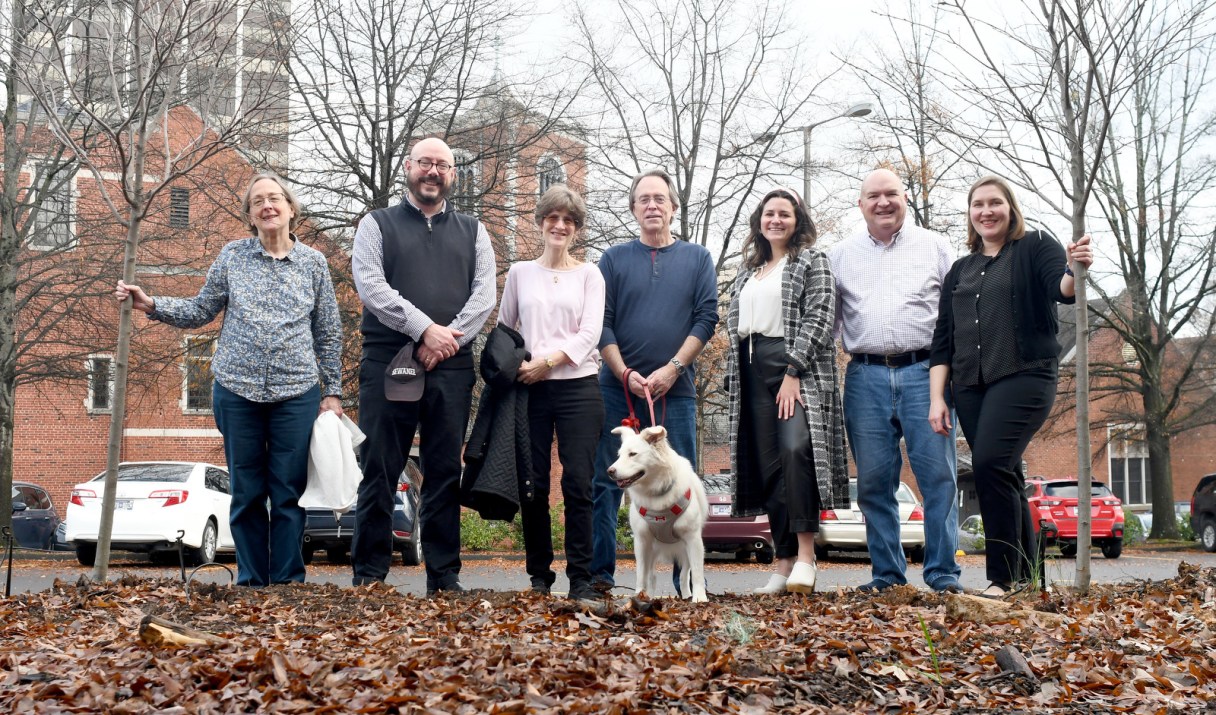
Staff Photo by Robin Rudd / Parishioners of St. Paul's Episcopal Church's landscaping volunteers pose for a photo next to trees they planted in November to increase the biodiversity of the downtown church's campus.  Photographed on December 8, 2022, from left are Mother Maribeth Manoff, Father Murdock Jones, Kate and Geoff Colquitt with Ella, Grace Wooten, Ron Colvin and Angela Dittmar.  Three types of trees, black gum, tulip poplar and serviceberry were planted along the west and north edge of the parking lot.
Staff Photo by Robin Rudd / Parishioners of St. Paul's Episcopal Church's landscaping volunteers pose for a photo next to trees they planted in November to increase the biodiversity of the downtown church's campus. Photographed on December 8, 2022, from left are Mother Maribeth Manoff, Father Murdock Jones, Kate and Geoff Colquitt with Ella, Grace Wooten, Ron Colvin and Angela Dittmar. Three types of trees, black gum, tulip poplar and serviceberry were planted along the west and north edge of the parking lot.


Among the only faith-based groups in the state that focuses on climate change, Tennessee Interfaith Power and Light in Knoxville has a single part-time paid worker, Dan Joranko. He’s pushing congregations to apply for the Cool Congregations Challenge — an effort to encourage religious groups to be “sustainable role models in response to climate change.”

Chattanooga-area participation has been slim so far, but Angela Dittmar intends to put a new St. Paul’s Episcopal Church project in the running. Recently, the congregation determined some invasive Bradford pear trees on its downtown grounds were threatening property damage and stunting native plant growth. Parishioners replaced them in November with, among other things, tulip poplars, Tennessee’s state tree.

Dittmar said the project, which on Thursday was officially named “St. Paul’s Native Garden,” helps her see the urban parish in terms of the ecosystem in which it participates.

“As Christians,” she said, “we are asked to think of the bigger picture.”