
Don’t let TVA or anyone else tell you that our rolling blackouts over Christmas weekend were cause to believe we rely too little (or might more so) on fossil fuels.
Instead, heed those who view coal and gas-fired power plants as the Grinch that tried to steal this Christmas — and the one looking to steal Christmases (and other power climate crisis days) of the future.
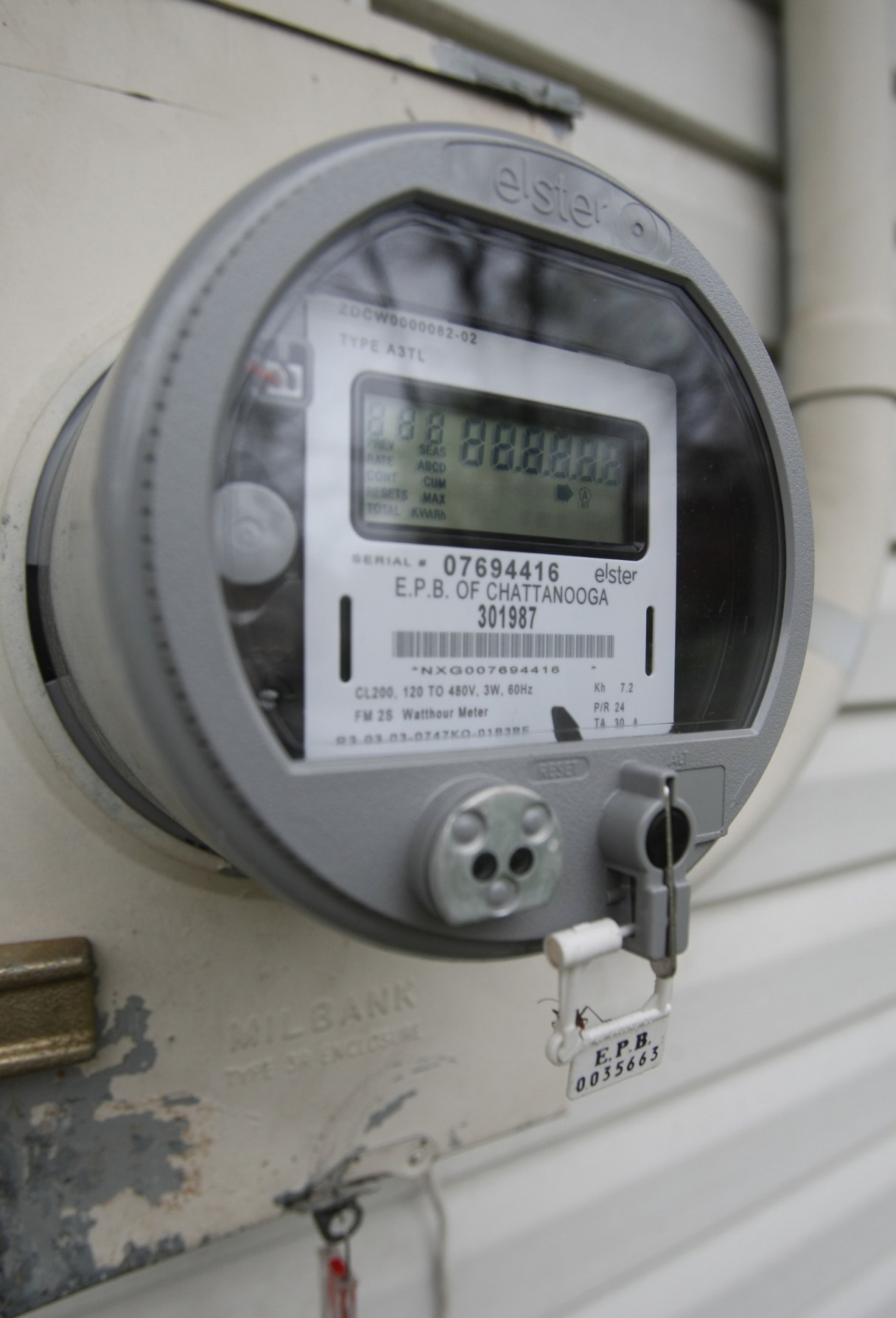
“This historic Arctic weather has been worse than we anticipated.” That was the Tennessee Valley Authority’s official line when it and EPB announced that homes and businesses would have electricity service interrupted with rolling blackouts for the first time in nearly nine decades.
True enough that the Arctic blast brought us single digits over several days — including a sudden drop-like-a-rock dip in Thursday overnight mercury from 46 degrees near midnight to 7 degrees by 6 a.m. Friday. The cold stayed with us until Tuesday, only grudgingly rising above freezing for an hour or two through the entire four-day deep freeze.
But our need for heat wasn’t the only thing driving TVA’s all-time December peak power demand or prompting the utility to order 153 local power companies across its seven-state region to “reduce their electric load to relieve stress on the power grid.”
Nearly 20% of TVA’s power generation was idled at one point.
TVA’s Cumberland Fossil Plant shut down and several gas-powered units also failed to operate when high winds and frigid temperatures combined to damage some of the instrument lines and equipment. Translation: They froze or broke in the cold. It wasn’t as much that they couldn’t keep up with our demand as much as that they faltered.
Overall coal-fired generation in the Tennessee region tracked by the U.S. Energy Information Administration fell by more than 68% during the cold weather Saturday morning.
EIA data showed TVA’s net power generation fell about 7,000 megawatts short of demand around midday Friday. TVA was generating about 23,000 megawatts and needed more than 30,000. (Three cheers, here, for our seven nuclear reactors, which supply about 40% of our power, for our 29 hydro plants and for our too-few solar and wind power plants.)
Yet we still have more fossil fuel hawks in the Tennessee Valley than alternative fuel hawks. Why? Maybe because all the big money is still entrenched in fossil fuels? Well, yeah. Money talks.
You may remember 2021’s “Texas chainsaw winter” movie. It was February when four days of record cold plunged the state into darkness and killed 246 people while some residents sawed up their furniture for firewood. Gov. Greg Abbott on Fox News blamed wind turbines that had frozen.
“This shows how the Green New Deal would be a deadly deal for the United States of America. … Our wind and solar got shut down, and they were collectively more than 10 percent of our power grid. And that thrust Texas into a situation where it was lacking power on a statewide basis,” Abbott told Fox News’ Sean Hannity.
Of course, that was just cold baloney.
As it would turn out, wind power disruption paled in comparison to the huge losses from natural gas plants faltering and from natural gas shortages, the Texas Tribune revealed the following April.
It’s the blame game. But how often do we hear about wind turbines in Iowa and North Dakota freezing up? Gas plants in Michigan seizing from cold? Texas was later found to have more than its share of blame for operator neglect.
We’re not saying that’s true in TVA’s case, although TVA has its share of warts — witness the massive $1.2 billion Kingston ash spill, a result of failed infrastructure allowed to worsen with no attention for years despite warning signs.
We are saying get ready for our region’s blame game.
Fossil fuel hawks already are insisting the power outages here underscore the need for TVA to maintain a diverse fossil fuel mix, and they often refer to natural gas as a “bridge” energy fuel.
“Natural gas is needed to produce power during early morning winter peaks or during overcast or rainy days,” Jacinda Woodward, senior vice president of TVA Power Operations, said in a recent statement. “Battery storage technology doesn’t currently provide the output duration needed to support system needs when solar is unavailable.”
Green fuel and clean energy advocates, on the other hand, claim we don’t have time to trade one costly and bad-for-the-climate fuel for another. Solar and wind power currently accounts for less than 3% of TVA’s power-making mix. Hydropower makes up 11%.
“Fossil fuels are not the answer, and the new [TVA] board needs time to assess the failures,” said Amy Kelly, the Tennessee representative for the Sierra Club’s Beyond Coal Campaign.
For our money, there are just two numbers to hold in our heads as we recall Christmas Eve blackouts in the 21st century Gig City:
> As the cold froze our pipes, TVA needed 30,000 megawatts to power us but had only 23,000, meaning it was about 24% short.
> And as TVA since 2018 pulled away from energy conservation programs, Tennessee residential customers on average have consumed nearly 25% more electricity than the national average.
It’s one thing to patch up energy needs and put off ash pond infrastructure fixes. It’s another entirely to pretend climate change, conservation and energy efficiency are not worthy of TVA’s mission.
It seems TVA opted for selling more electricity. Money talks.