
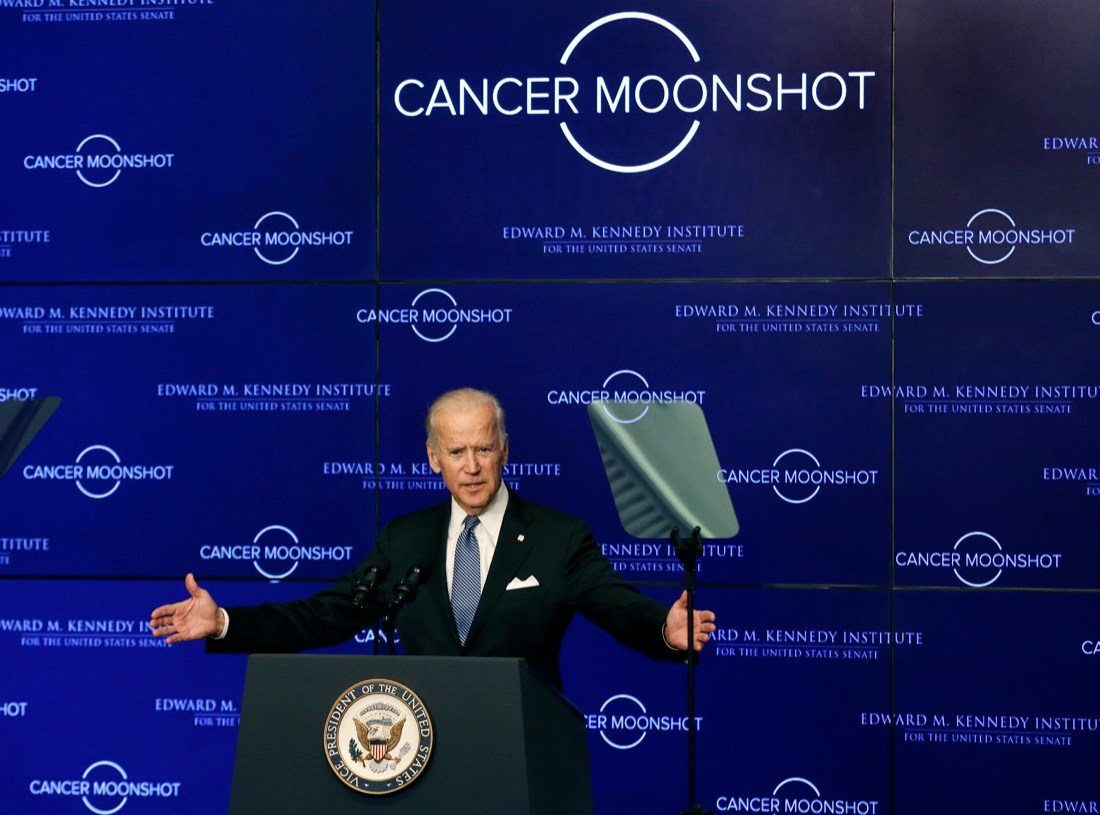
President Joe Biden is committing to reduce the cancer death rate by 50% – a new goal for the “moonshot” initiative against the disease that was announced in 2016 when he was vice president.
Biden has set a 25-year timeline for achieving that goal, part of his broader effort to end cancer as we know it, according to senior administration officials who previewed Wednesday’s announcement on the condition of anonymity.
The issue is deeply personal for Biden: He lost his elder son, Beau, to brain cancer in 2015. Yet the rollout comes without any new funding elements at a time when the gains from new research can be uneven, such that Biden is setting an aspiration for the country more than 50 years after President Richard Nixon signed the National Cancer Act and launched a war on the disease. The benefits of that act were seen recently in areas outside of cancer as well as vaccines that were developed for the coronavirus.
The pain experienced by Biden is shared by many Americans. The American Cancer Society estimates that there will be 1,918,030 new cancer cases and 609,360 cancer deaths this year. What the president is aiming to do is essentially save more than 300,000 lives annually from the disease, something the administration believes is possible because the age-adjusted death rate has already fallen by roughly 25% over the past two decades. The cancer death rate is currently 146 per 100,000 people, down from nearly 200 in 2000.
“The progress in cancer research is slow – some of the fruits of Nixon’s 1971 declaration were only harvested with the development of the COVID mRNA vaccine,” said Dr. Otis Brawley, a professor of oncology and epidemiology at Johns Hopkins University and former chief medical and scientific officer for the American Cancer Society. The research progress that has occurred has led to a “better understanding of the biology of cancer and will do even more for us in the future.”