
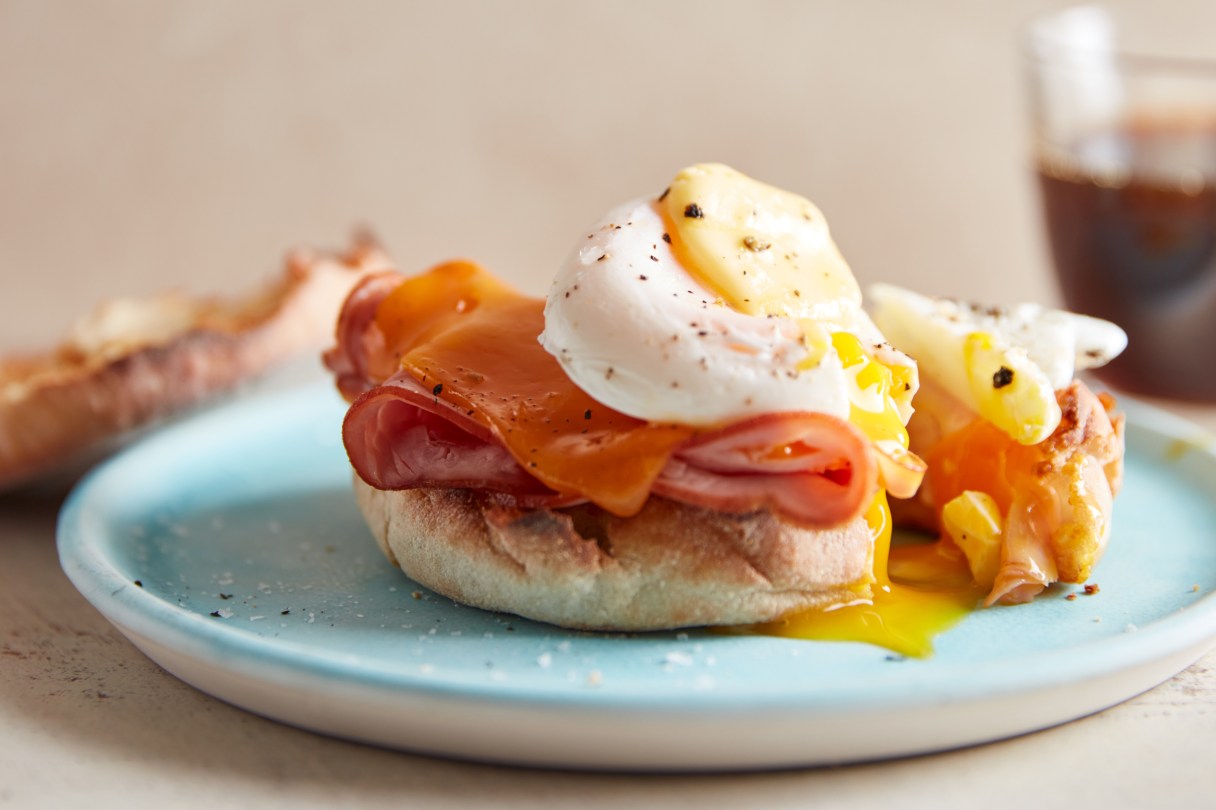
On most photo shoots for New York Times food stories, breakfast is sips of coffee and bites of muffin taken while setting up. But my former colleague, photographer Romulo Yanes, who died of cancer in June, would cajole us to begin each day with a hot meal together, even if we just wanted to get to work.
One morning, he walked into the kitchen to cook us breakfast. He craved a poached egg on a buttered English muffin and wanted to make each of us one. The stylists, assistants and I gathered around the stove, where Romulo put a skillet of water over the flame.
He carefully lowered half a dozen eggs into the boiling water and rolled them back and forth for 20 seconds or so, then scooped them back out, one by one. When asked why he first put the eggs into the pan while they were still in their shells, Romulo explained that the brief glide in bubbling water prevented the whites from later spreading into a lacy fringe. He confessed that he had no idea whether there was any scientific merit to this, then tipped a splash of vinegar into the pan, which definitely does help the whites set. He cracked the eggs in, spacing them apart as if on a sundial, and cheered when they didn’t spread.
The eggs immediately ballooned, staying nice and tight, and going from clear to white, then they began to bob as they firmed up. After a few minutes, Romulo nudged the yolks to make sure they wobbled only a bit and spooned the eggs out onto paper towels.
They weren’t five-star-hotel Benedict eggs, round as globes after spinning in a whirlpool of boiling water or being coddled in a ladle. They were shaped like friendly ghosts – no frilly rim but curved edges and the slope of diner-poached eggs. Because all six were ready at the same time, we got to sit together and eat them hot, the yolks running into the toasted crags of our English muffins.
It didn’t matter that the eggs weren’t picture-perfect. What did matter was the time we took to stop hustling and to connect with one another.
Romulo’s food photography is often recognized for his clear love of what’s on the other side of the lens. But those who were on set with him know that his images also convey how he valued the people around the food – how he turned our dishes into beautiful things, then gathered us around the table to share in them.
Skillet Poached Eggs
Yield: 2 to 6 servings
Total time: 10 minutes
2 to 6 large eggs
1 teaspoon distilled white vinegar
Butter and toast, for serving
Ham and cheese, for serving (optional)
Salt and pepper, for serving
Fill a large skillet, ideally one with straight, tall sides, with water to a depth of 1 1/2 inches. Bring to a boil over medium-high heat. Using a slotted spoon, carefully place the whole, uncracked eggs in the water and roll them around for 15 to 20 seconds, so they’re evenly warm. Take them out of the skillet. Add the vinegar to the boiling water.
Crack the eggs into the boiling water one at a time, spacing them apart (if they’re too hot to the touch, wait a few seconds until they feel OK to handle). Adjust the heat to keep the water steadily and lightly boiling. Let the eggs poach until the whites are opaque and firm and the yolks are set to your desired doneness, 3 to 6 minutes. Gently nudge the yolk with the spoon to check for doneness: Very runny yolks will wobble like a water balloon; standard runny yolks will feel soft but set; firm yolks will feel solid.
Transfer to paper towels with the slotted spoon, and gently pat dry. Butter toast and layer with ham and cheese, if using. Place poached eggs on top, season with salt and pepper, and top with another pat of butter, if you like.