
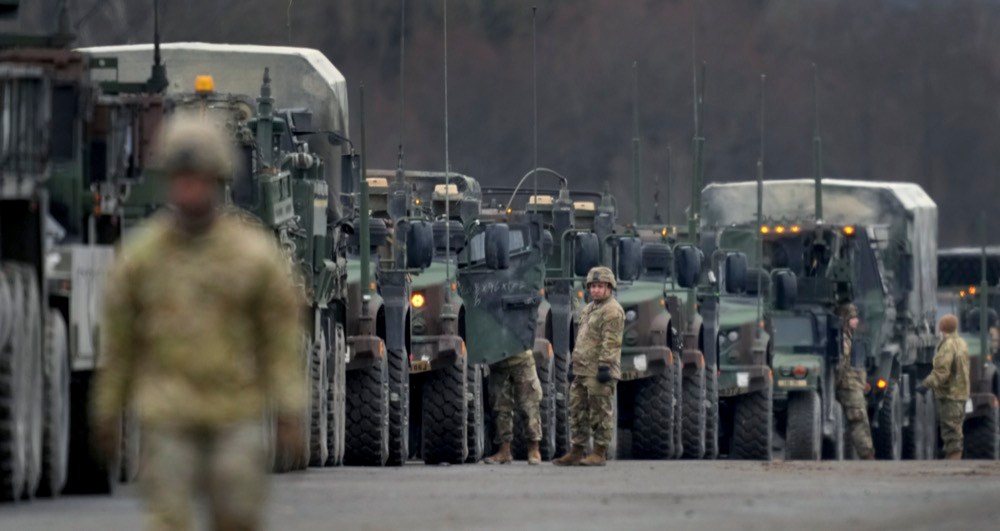
BRUSSELS (AP) – High-stakes diplomacy and military maneuvering continued Wednesday as Britain launched its own diplomatic effort to help avert a possible Russian invasion of Ukraine. No breakthrough in peace talks between Ukraine and Russia is in sight so far, and Russian President Vladimir Putin’s intentions remain as opaque as ever.
Here’s a look at what is happening where and why:
BRITAIN TAKES ITS TURN AT THE TABLE
Britain is preparing to follow France’s diplomatic foray into the Ukraine crisis. British Foreign Secretary Liz Truss flew to Moscow Wednesday for talks with Russian Foreign Minister Sergey Lavrov, and Prime Minister Boris Johnson plans to travel to Poland and NATO headquarters on Thursday.
Russia has deployed well over 100,000 troops near Ukraine, fueling fears of a possible invasion. French President Emmanuel Macron reported that Putin told him that Moscow would not further escalate the tensions.