
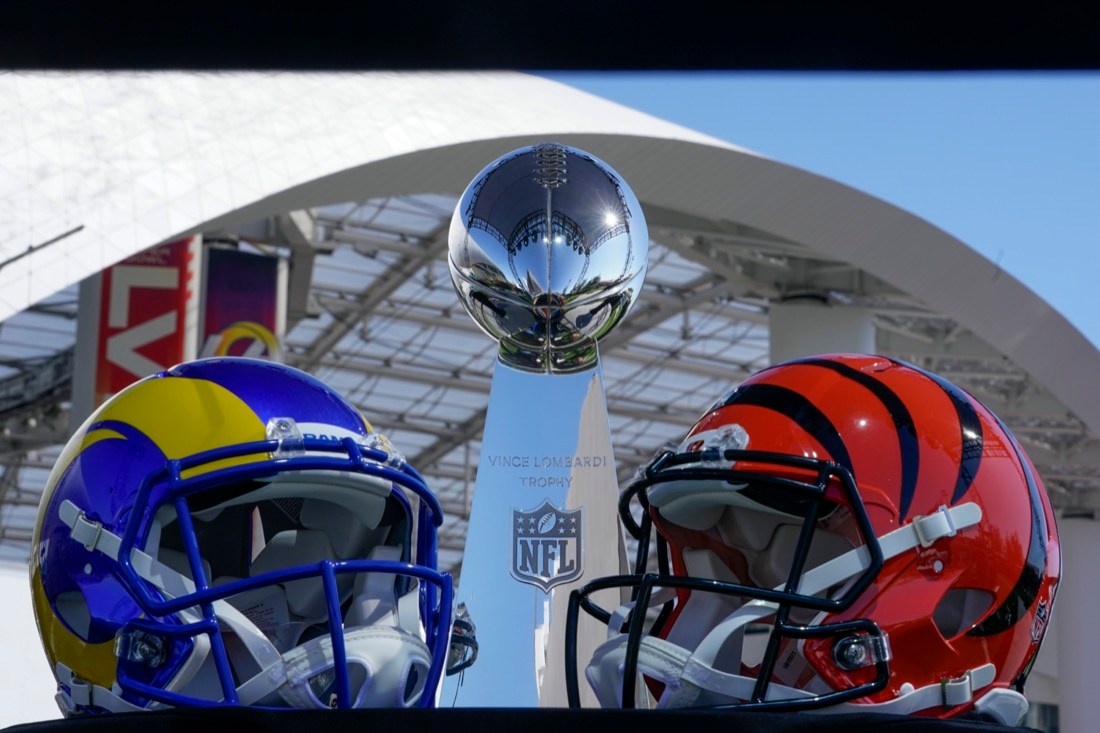
Super Bowl shuffle
Should the NFL make the Super Bowl a political chess piece?
It has in the past. Remember in 1990 the league took away the 1993 Super Bowl because the state of Arizona at that time refused to make Martin Luther Kind Jr.’s birthday a national holiday.
Now at least one Arizona columnist is saying the NFL should follow that same lead because of actions in that state’s legislature involving tighter voting security bills and conversations about public school teaching curriculums, most notably the critical race theory debate.
(Side note: Yes, I used voting security bills rather than the voter suppression tag. Tomayto, tomahto my friends. And while the Arizona columnist vaguely described the measure in that state, the political details that caused the hubbub that cost the city of Atlanta the MLB All-Star game were greatly overblown and spun out of context, including a serious discussion that not providing water in voting lines was racially divisive.)
We can – and have – had the debates in this space about those issues. I am happy to have them again. But at least this morning I would like to explore the conversation about whether this precedent is a wise one.
And if you think that is a wise move – to encourage the NFL or any outside business to wield its force – why is it so selective?
First, as for the wisdom. Let’s deal with the basic facts.
The NFL is the biggest pop culture endeavor in the world right now. When you sell out of 30-second commercials at $7 million a pop in less than an afternoon, well, there is no debating your value, popularity and impact.
Hosting a Super Bowl is at least a half-a-billion-dollar operation. Yes, billion with a b, all things considered when it comes to construction, tourism, exposure all of it. And that may be on the low-end of guesstimations.
So this is a big ask on issues that generate big headlines in this country. And the NFL is dealing with some racial issues of its own, even before these conversations about hot-button racial issues in our country.
With that comes the realization that the NFL could use some good PR in the discussions and perceptions about race relations in this country.
But should they? And moreover, should we want them to?
Big picture, the NFL and the stakes could make meaningful political waves in Arizona by even whispering that moving the Super Bowl is on the table.
So could Amazon in the discussion of doing away with unions. So could car plants when it comes to anything that they want in the discussions to land manufacturing plants. The list is lengthy.
Most of those debates happen on the front end. They are called negotiations. These negotiations have already happened, so this is more of a hostage situation so that one side can leverage a a nine-figure event for the state and its citizens for its political view?
Is that fair, and do we want a NYC company that has 32 branches in roughly half the U.S. states to start dictating policy to state governments? Now, take the hot-button racial conversation out of this for one second, and ask that question again. Should any enterprise be given that much power?
And if you still think that they should, then why are we not wielding that sword at injustices beyond the conversation of Black and white? Where were these calls to completely boycott the China Olympics?
Asking corporations to fight for moral issues and sway our political leaders has a very Frankenstein feel to it, if you ask me.