
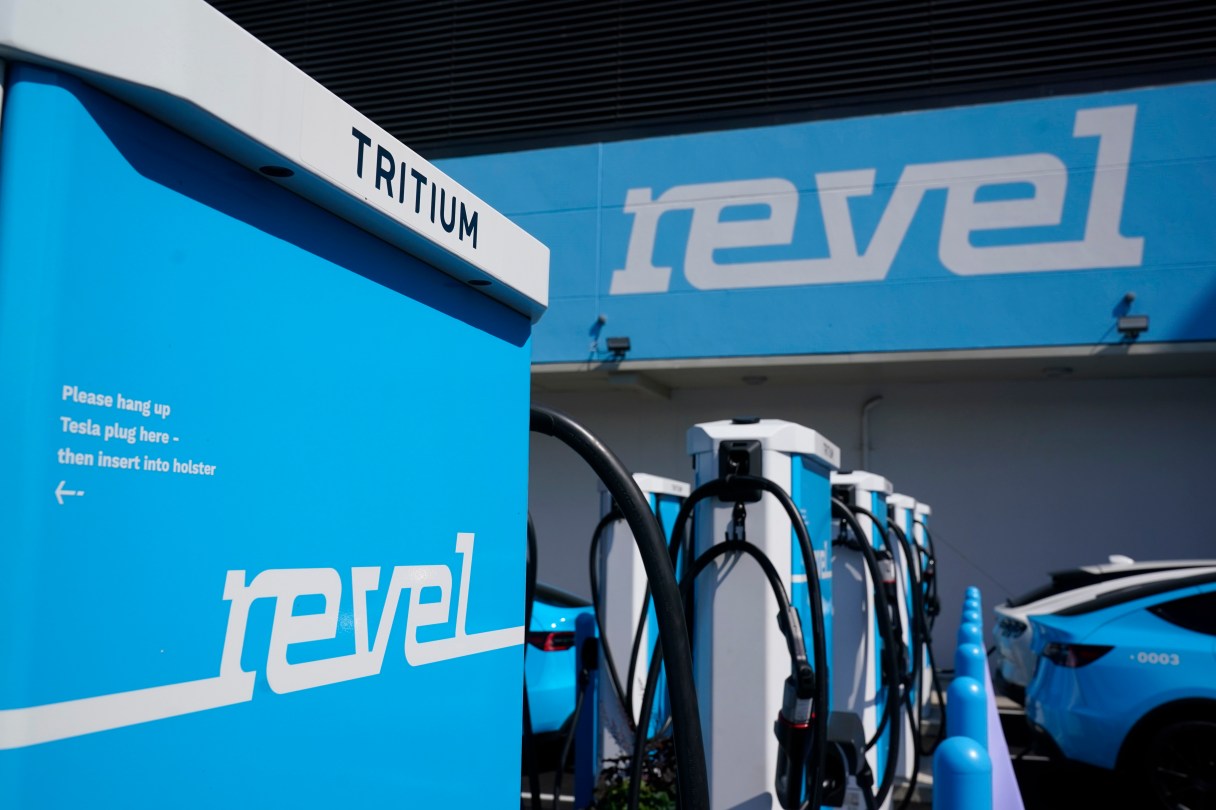
WASHINGTON (AP) – States are getting the go-ahead to build a nationwide network of electric vehicle charging stations that would place new or upgraded ones every 50 miles (80 kilometers) along interstate highways as part of the Biden administration’s plan to spur widespread adoption of the zero-emission cars.
The administration on Thursday announced the availability of $5 billion in federal money to states over five years under President Joe Biden’s infrastructure law, sketching out a vision of seamless climate-friendly car travel from coast to coast.
Under Transportation Department requirements, states must submit plans to the federal government and can begin construction by this fall if they focus first on highway routes, rather than neighborhoods and shopping centers, that can allow people to take their electric vehicles long distances. Each station would need to have at least four fast-charger ports, which enable drivers to fully recharge their vehicles in about an hour.
Many technical details are to be worked out, and the administration acknowledges it will take work to persuade drivers accustomed to gas-powered cars, particularly in rural areas. The money is far less than the $15 billion that Biden had envisioned to fulfill a campaign promise of 500,000 charging stations by 2030, and it may take substantial private investment to make the plan work.
“A century ago, America ushered in the modern automotive era; now America must lead the electric vehicle revolution,” said Transportation Secretary Pete Buttigieg, who will have final signoff over most aspects of the funding.