
It was Thursday. “A relentless downpour in a mountainous region of Brazil’s Rio de Janeiro state triggered flooding and massive mudslides that have killed at least 110 people, authorities said” as they “braced” for the toll to rise.
Rise it did. Reuters on Monday reported 176 killed and more than 110 missing.
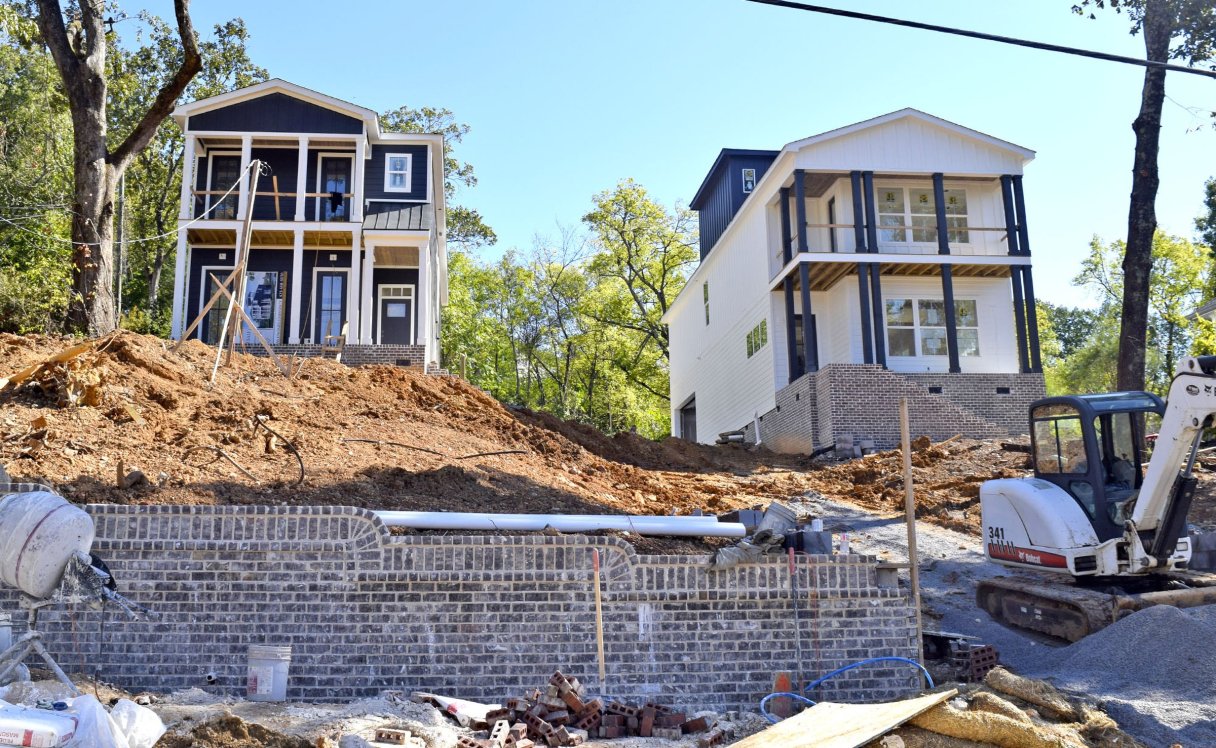
The tragedy may be thousands of miles away, but aerial video of rushing water and splintered homes looks like what we might imagine on the hills and ridges of Chattanooga if similar unimaginable record rains fell on newly built, dense housing developments that have cropped up on the bowl-like sides of our metro area.
Here’s the difference. In Brazil – home to the world’s greatest rainforest – that record rain for the city of Petrópolis, set in a mountainous region much like ours but 40 miles northeast of the oceanfront Rio de Janeiro, was a mere 10.2 inches in 24 hours – surpassing the city’s previous record set in 1932.
In Chattanooga, we’ve not yet seen that kind of rain concentrated here. Our city’s highest rainfall total in one day was 9.49 inches on Sept. 5, 2011, according to the National Weather Service. And we often have 2-to-3-inch rain events in just one day.
But in our river-rich state, rainfalls are increasing as they are in many other areas of the globe, thanks to climate change. We’re seen record rainfalls in recent years, including one that dumped 20.73 inches of rain in 24 hours last August in Milan, Tennessee. And 17.03 inches in McEwen, Tennessee. That was the same day that much of nearby Waverly washed away – killing 20 people, destroying 270 homes and causing major damage to 160 more.
This week, East and Middle Tennessee once again are under a heavy rainfall and flood watch thanks to not one but two winter storms with potential for strong to severe storms and flooding, according to National Weather Service forecasts.
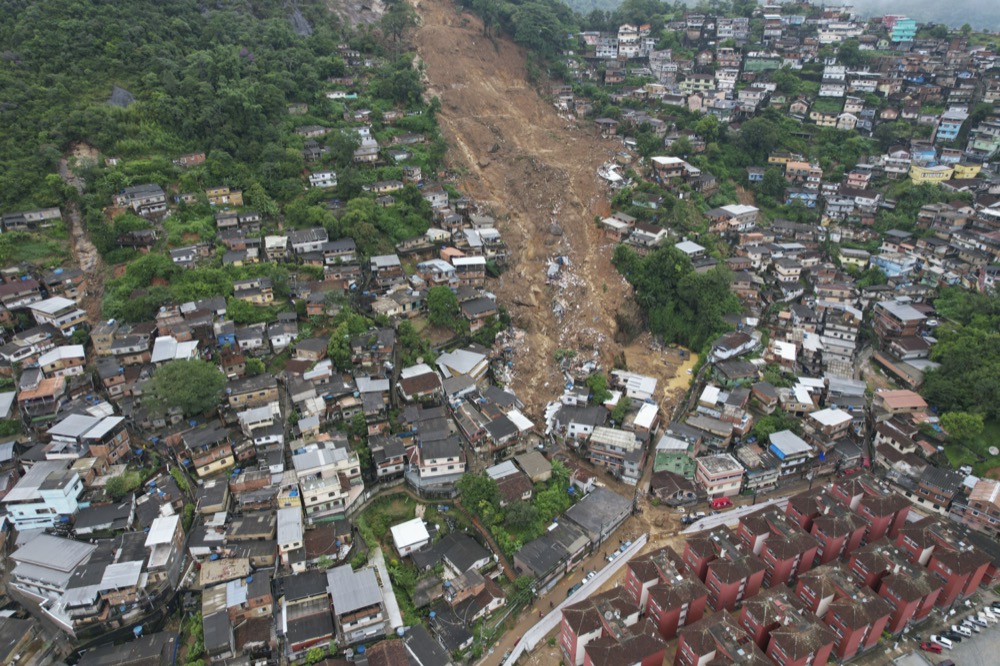 An aerial view shows a neighborhood affected by landslides in Petropolis, Brazil, Wednesday, Feb. 16, 2022. Heavy rains set off mudslides and floods in a mountainous region of Rio de Janeiro state, killing multiple people, authorities reported. (AP Photo/Silvia Izquierdo)
The worst of the rain is expected in Middle Tennessee, and Chattanooga may dodge the bullet again with only as much as 2 inches, according to NWS map late Monday. The watch is expected to be in effect from 7 p.m. tonight through 7 a.m. Wednesday.
But knowing we are often in the path of rains like this is why it’s important that the city continue to stick to its guns on the rules passed at the end of last March to limit building on steep slopes.
Petrópolis, Brazil, shows us the toll if we ignore common-sense building rules.
Petrópolis was founded in the 1840s by Brazilian Emperor Pedro II, who sought respite in the temperate mountains, ridges and hills from the scorching summer heat. It became one of the country’s first planned cities, but home construction has since grown vertically. Homes built atop mountains are especially at risk during downpours.
This is sounding familiar, isn’t it?
Our own steep slopes rule had been a controversy here for years and when it passed, it was a compromise of what had been suggested by the regional planners. The Chattanooga City Council passed unanimously a rule that anything above a 30% grade would be considered a steep slope – down from the recommended 33%.
Even at that developers squawked that the world would come to end and that the rule ultimately would amount to a de facto moratorium on building. At the very least, they warned, it would drive prices up outrageously.
In reality, what the rule means is not that homes and buildings can’t be built on those slopes, but rather that the amount of trees and soil distrubed must account for a small percent of the building parcel. The idea being that trees and green growth hold the soil and discourage erosion.
The problem with that for developers is that they want to put more homes and structures on less space: High density occupation on less land means more profit for them.
But Petrópolis, Brazil, shows us the toll. The land, homes, businesses and lost lives at the bottom of that mudslide are gone forever.
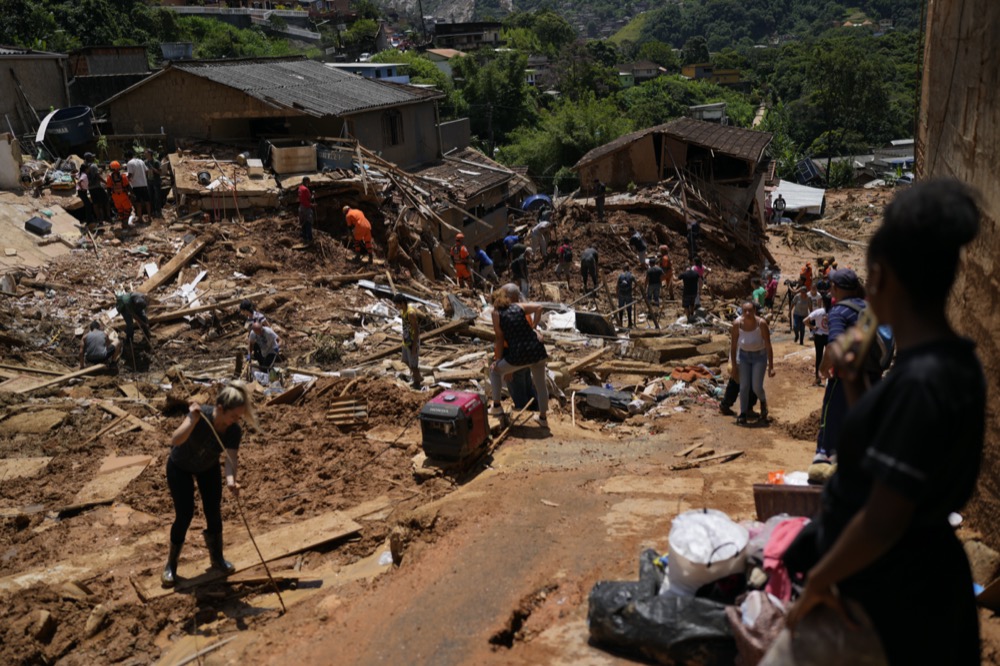 Residents help rescue workers on the second day of efforts to find survivors and victims after deadly mudslides in Petropolis, Brazil, Thursday, Feb. 17, 2022. Deadly floods and mudslides swept away homes and cars, but even as families prepared to bury their dead, it was unclear how many bodies remained trapped in the mud. (AP Photo/Silvia Izquierdo)