
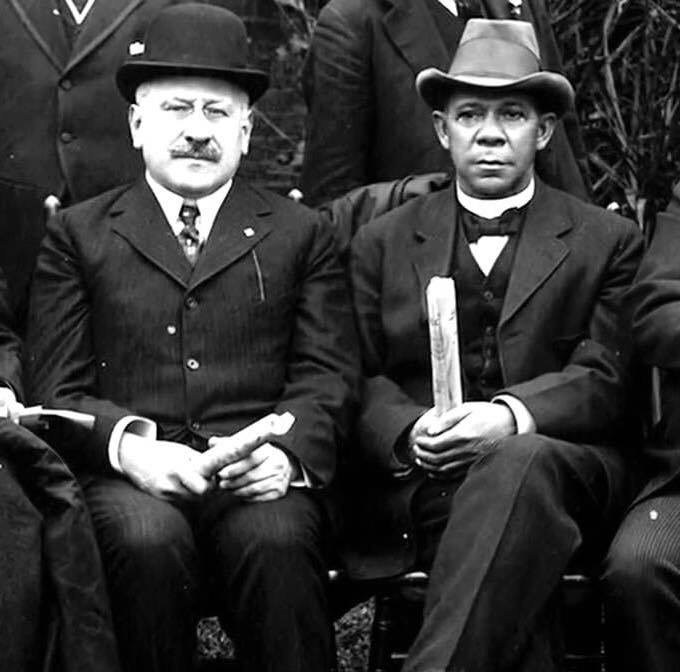
When Julius Rosenwald read Booker T. Washington’s “Up from Slavery,” the Sears magnate sought an introduction to the former slave and leader of the Tuskegee Institute. Washington invited the Jewish leader to join Tuskegee’s board. That friendship formed in 1912 led to educating more than 662,000 Black students across the South and fostered community growth in a way that altered the landscape of philanthropy.
Both men were passionate about increasing opportunities for African Americans and saw education as the critical vehicle. The movement these men created has been called the most important initiative to advance Black education in the early 20th century.
More than 5,377 schools were built across the country between 1917 and 1932 and bridged the gap between the absence of fair treatment for African Americans and federal laws mandating services. To promote collaboration between Black and white people, Rosenwald and Washington devised a program that required matching funds from white school boards and self-help or construction funds from African American communities. This model empowered communities as the driving force to achieve meaningful education for their children, enabled construction of Rosenwald Schools in 15 states and 883 counties from Texas to Maryland, and changed the trajectory of life for a generation of students and families.
Although Chattanooga’s Booker T. Washington School was built during a time when segregation was the law and inequity the norm, former students recalled that “within those walls we were assured that we could do and be anything that we desired. We were inspired by teachers who cared about the students’ well-being as much as the teaching material.”
Nationally, Rosenwald School alumni became thought leaders, change-makers and social justice icons. Zora Neale Hurston, Medgar Evers, Maya Angelou, Congressman John Lewis and the Rev. Martin Luther King Jr. were a few of the notables who learned from the institutions supported by the Sears magnate and the former slave. Can you imagine the world without their dreams, initiative and commitment?