
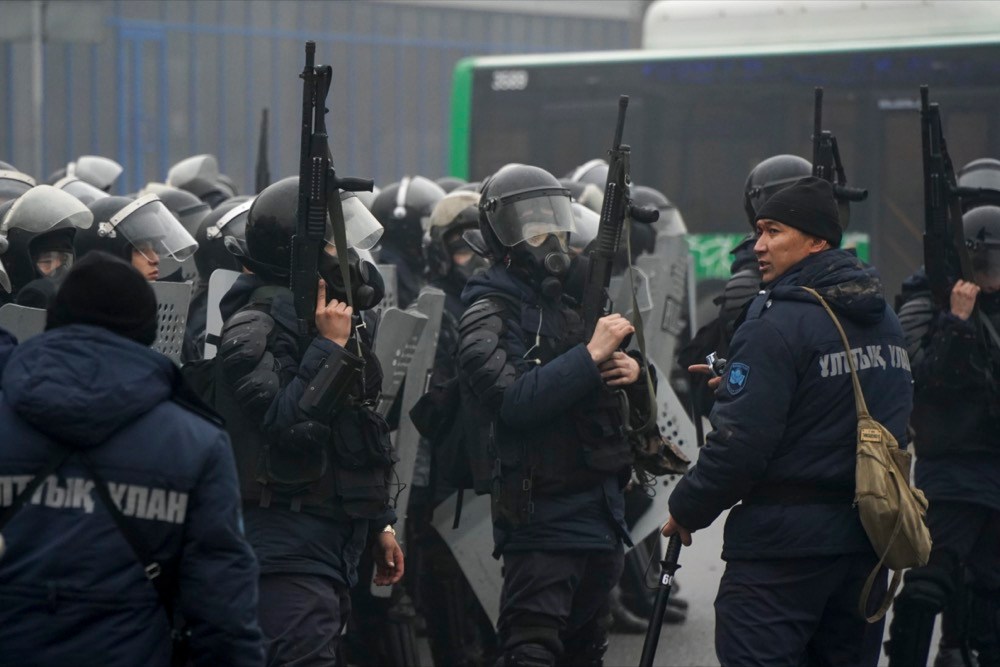
MOSCOW (AP) – Kazakhstan’s president authorized security forces on Friday to shoot to kill those participating in unrest, opening the door for a dramatic escalation in a crackdown on anti-government protests that have turned violent.
The Central Asian nation this week experienced its worst street protests since gaining independence from the Soviet Union three decades ago, and dozens have been killed in the tumult. The demonstrations began over a near-doubling of prices for a type of vehicle fuel and quickly spread across the country, reflecting wider discontent with authoritarian rule.
In a televised address to the nation, President Kassym-Jomart Tokayev used harsh rhetoric, referring to those involved in the turmoil as “terrorists,” “bandits” and “militants” – though it was unclear what led the peaceful protests to first gather steam and then descend into violence. No protest leaders have emerged so far.
“I have given the order to law enforcement and the army to shoot to kill without warning,” Tokayev said. “Those who don’t surrender will be eliminated.”
Concerns grew in recent days that an even broader crackdown might be coming, as internet and cellphone service was severely disrupted and sometimes totally blocked, and several airports closed – making it difficult to know what was happening inside the country and for images of the unrest to reach the outside world.