
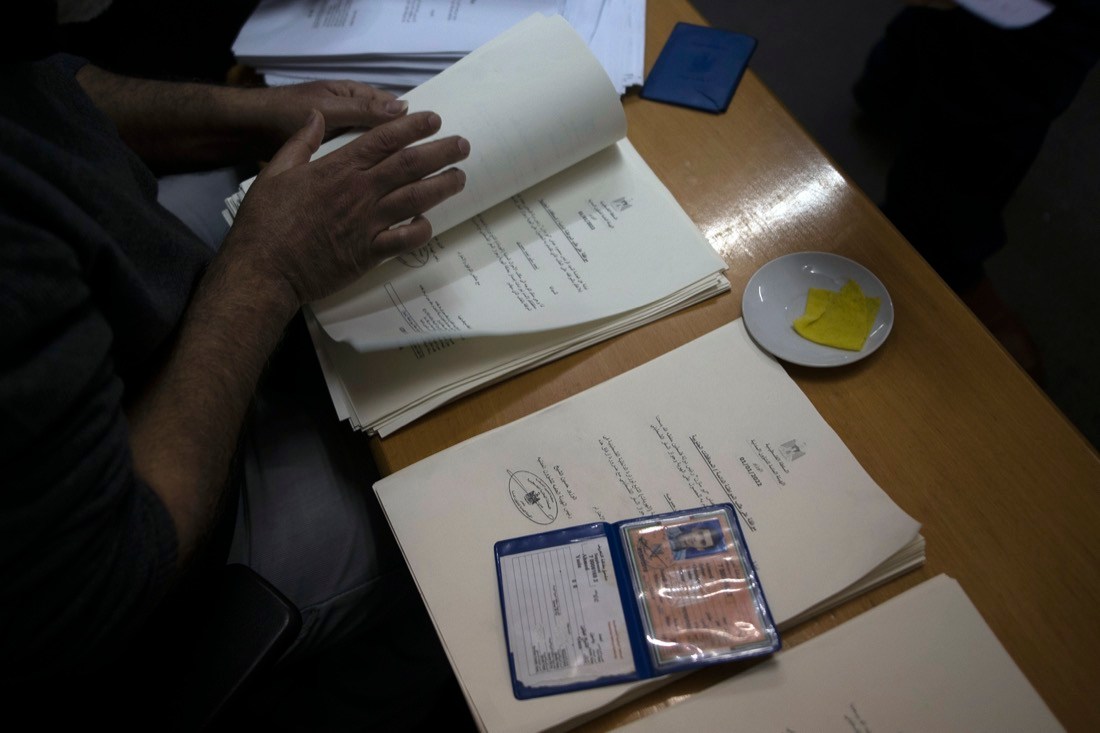
GAZA CITY, Gaza Strip (AP) – Khader al-Najjar has been unable to leave the Gaza Strip since he returned to the Palestinian territory 25 years ago, not even to seek medical treatment for a spinal ailment or to bid farewell to his mother, who died in Jordan last year.
The reason: Israel refused to allow the Palestinian Authority to issue him a national ID. That made it virtually impossible to leave, even before Israel and Egypt imposed a punishing blockade when the Hamas militant group seized control of Gaza in 2007.
In recent months, Israel has approved residency for thousands of Palestinians in the occupied West Bank and Gaza in an attempt to ease tensions while maintaining its decades-long control over the lives of more than 4.5 million Palestinians.
“My suffering was huge,” said al-Najjar, a 62-year-old carpenter, who described a “nightmarish” series of failed attempts to get permits to leave the tiny coastal territory. Now he is among more than 3,200 Palestinians in Gaza who will soon get a national ID.
That will make it easier to travel, but he will still have to navigate a maze of bureaucratic obstacles linked to the blockade. Israel says the restrictions are needed to contain Hamas, while rights groups view the blockade as a form of collective punishment for Gaza’s 2 million Palestinians.