
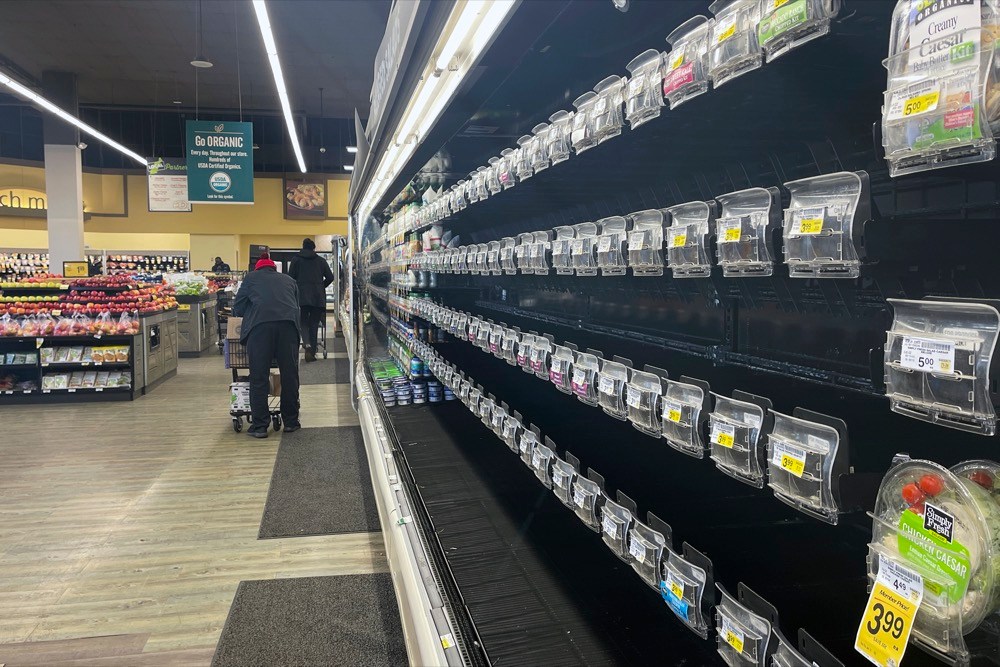
Benjamin Whitely headed to a Safeway supermarket in Washington D.C. on Tuesday to grab some items for dinner. But he was disappointed to find the vegetable bins barren and a sparse selection of turkey, chicken and milk.
“Seems like I missed out on everything,” Whitely, 67, said. “I’m going to have to hunt around for stuff now.”
Shortages at U.S. grocery stores have grown more acute in recent weeks as new problems – like the fast-spreading omicron variant and severe weather – have piled on to the supply chain struggles and labor shortages that have plagued retailers since the coronavirus pandemic began.
The shortages are widespread, impacting produce and meat as well as packaged goods such as cereal. And they’re being reported nationwide. U.S. groceries typically have 5% to 10% of their items out of stock at any given time; right now, that unavailability rate is hovering around 15%, according to Consumer Brands Association President and CEO Geoff Freeman.
Part of the scarcity consumers are seeing on store shelves is due to pandemic trends that never abated – and are exacerbated by omicron. Americans are eating at home more than they used to, especially since offices and some schools remain closed.