
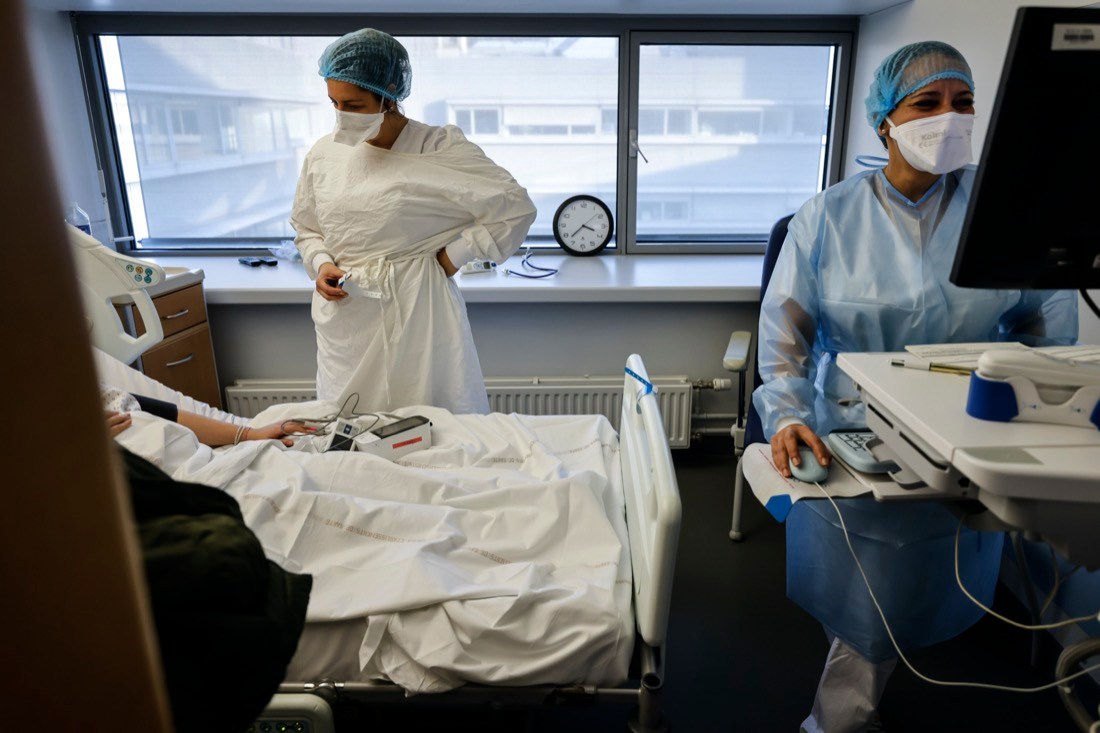
STRASBOURG, France (AP) – A World Health Organization official warned last week of a “closing window of opportunity” for European countries to prevent their health care systems from being overwhelmed as the omicron variant produces near-vertical growth in coronavirus infections.
In France, Britain and Spain, nations with comparatively strong national health programs, that window may already be closed.
The director of an intensive care unit at a hospital in Strasbourg is turning patients away. A surgeon at a London hospital describes a critical delay in a man’s cancer diagnosis. Spain is seeing its determination to prevent a system collapse tested as omicron keeps medical personnel off work.
“There are a lot of patients we can’t admit, and it’s the non-COVID patients who are the collateral victims of all this,” said Dr. Julie Helms, who runs the ICU at Strasbourg University Hospital in far eastern France.
Two years into the pandemic, with the exceptionally contagious omicron impacting public services of various kinds, the variant’s effect on medical facilities has many reevaluating the resilience of public health systems that are considered essential to providing equal care.