
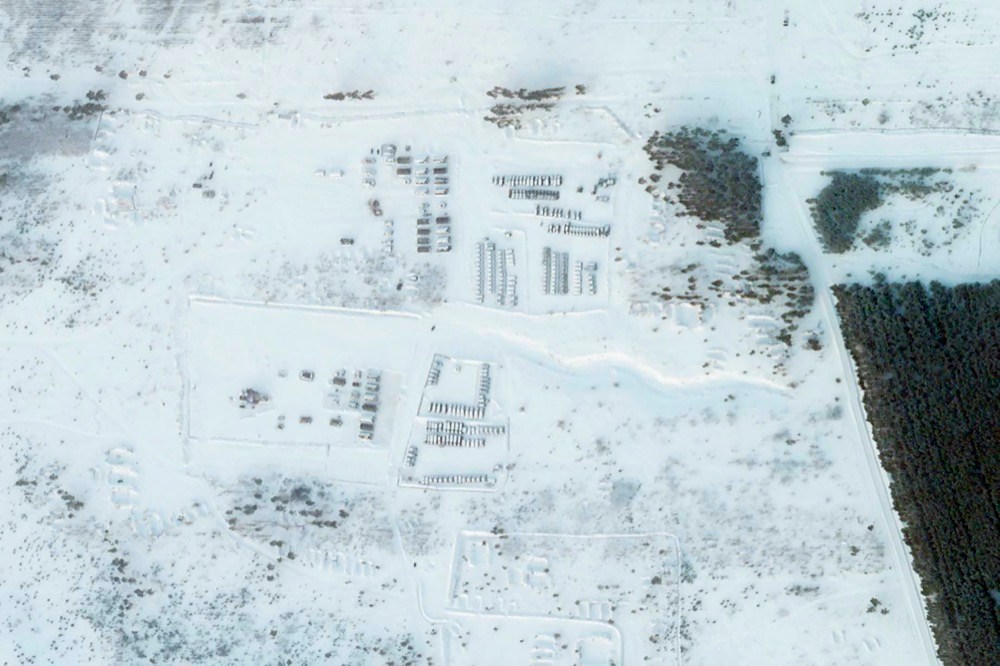
WASHINGTON (AP) – In a break from the past, the U.S. and its allies are increasingly revealing their intelligence findings as they confront Russian preparations for a possible invasion of Ukraine, looking to undercut Russian President Vladimir Putin’s plans by exposing them and deflecting his efforts to shape world opinion.
The White House in recent weeks publicized what it said was a developing Russian “false-flag” operation to create pretext for an invasion. Britain named specific Ukrainians it accused of having ties to Russian intelligence officers plotting to overthrow President Volodymyr Zelenskyy. The U.S. also released a map of Russian military positions and detailed how officials believe Russia will try to attack Ukraine with as many as 175,000 troops.
Experts credit the White House for declassifying intelligence and moving to rebut false claims before they’re made – a so-called “prebuttal” that undercuts their effectiveness better than an after-the-fact explanation.
But the release of information isn’t without risks. Intelligence assessments carry varying degrees of certainty, and beyond offering photos of troop movements, the U.S. and its allies have provided little other proof. Moscow has dismissed Washington’s claims as hysteria and invoked past American intelligence failures, including false information put forward about Iraq’s weapons programs.
There are no clear signs of change so far from Russia, which continues to move forces toward Ukraine and into Belarus, an ally to Ukraine’s north. There is growing pessimism in Washington and London about ongoing diplomatic efforts and a belief that Putin will likely mount some sort of invasion in the next several weeks.