
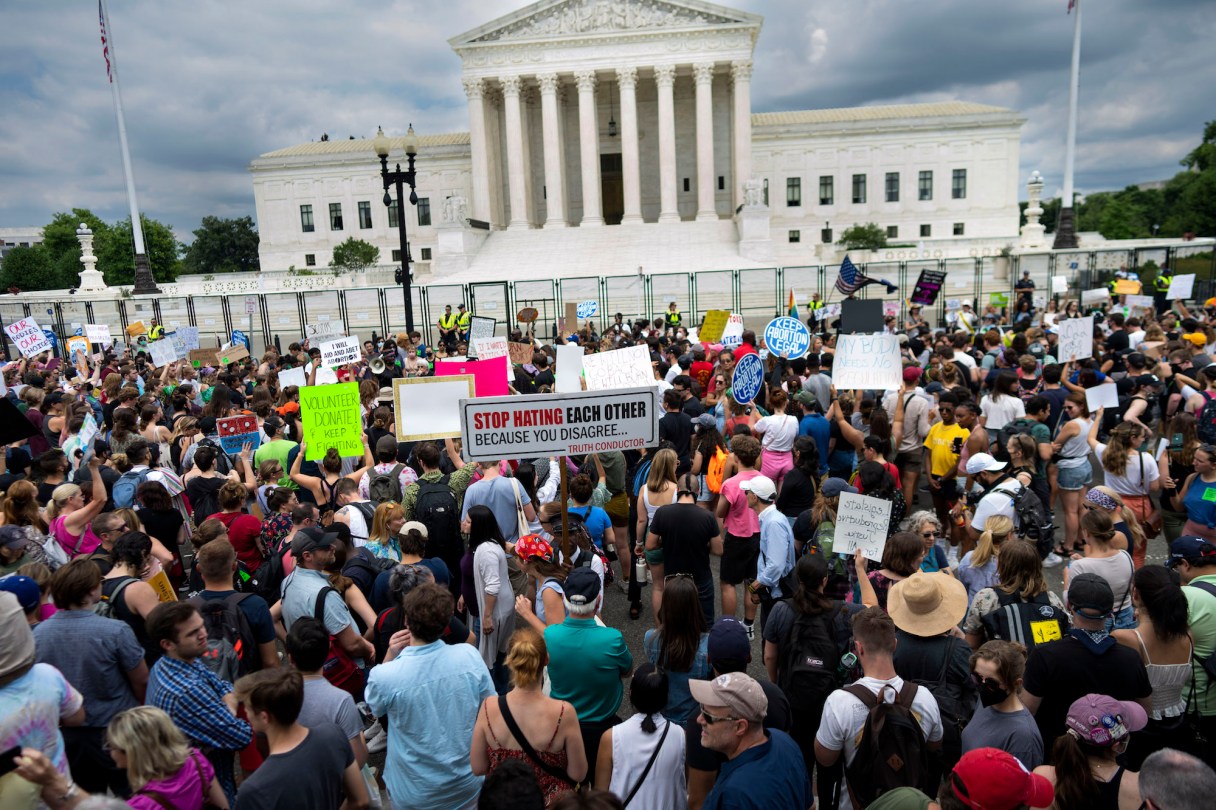
WASHINGTON – The polarization of American politics, a trend that began long before Donald Trump ran for president, isn’t running out of steam. If anything, it’s accelerating.
Last month it got a boost from a new source: a conservative Supreme Court majority pushing hot-button issues back to the states – not only abortion, but also gun control and environmental regulation, with others likely to come.
The result is a Pandora’s box of new questions: Can a state prohibit its citizens from traveling elsewhere to seek an abortion? From buying mifepristone pills through the U.S. mail? From merely seeking information about abortion options?
The battle won’t be confined within state boundaries. It’s already turning into a virtual war between the states. Texas has passed a law allowing its citizens to sue abortion providers in other states if they treat Texan women. Missouri’s Legislature is considering similar legislation. California, in return, has not only passed a law protecting its citizens from liability for aiding an abortion, but Gov. Gavin Newsom has also promised to provide “sanctuary” for out-of-state women who seek the procedure in his state.
“It’s very hard to find any area where divisions among states are not growing,” Donald F. Kettl of the University of Maryland, a leading scholar of federalism, said last week. “You can see it in income, education, health and basic governance – and now, how we count the votes after Election Day. It’s increasingly the case that the government we get depends on where we live.”