
The outcome of the Civil War hung in the balance in late June and early July of 1863 as the Union Army of the Cumberland under Gen. William Rosecrans completed his masterful Tullahoma, or Middle Tennessee, campaign. From June 24 to July 3, the Union general employed a series of well-rehearsed feints, as well as the new seven-shot Spencer rifle, to uproot his Confederate counterpart from Middle Tennessee. The day before Confederate Gen. Robert E. Lee quit the field at Gettysburg and the Confederates surrendered the city of Vicksburg to the Union, Gen. Braxton Bragg was retreating his forces back to Chattanooga. Instead of pursuing Bragg into the city, Rosecrans chose to regroup his forces before continuing the campaign toward Chattanooga.
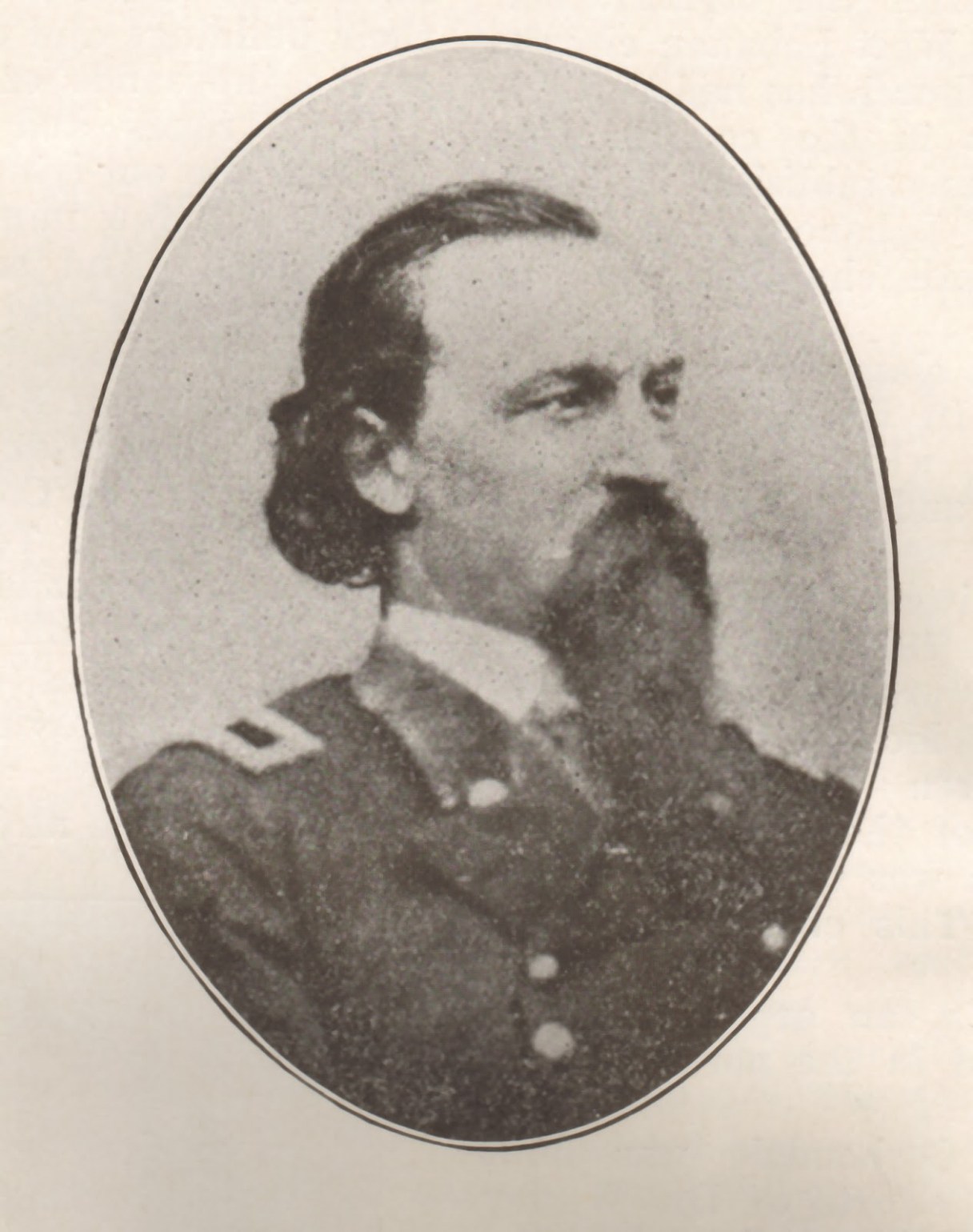
One of the first Union units to reach the outskirts of Chattanooga was the brigade under Brig. Gen. George Day Wagner. A politician and farmer from Indiana, he had joined the Union Army as a colonel not long after the bombardment of Fort Sumter outside Charleston, S.C., in 1861. He saw combat notably at the battle of Shiloh in Western Tennessee, Perryville in Kentucky, and Stones River near Murfreesboro, Tenn. Wagner achieved the rank of brigadier general following the latter battle in April 1863.
On the morning of Aug. 16, 1863, Wagner received commands to leave his position in Pelham, Tenn., and begin marching toward Chattanooga. On Aug. 19, his divisional commander, Thomas J. Wood, ordered Wagner up the western slope of Walden’s Ridge along the Anderson Pike “to make something of a show of force.”
One soldier in Wagner’s brigade, Hiram Hines of the 57th Indiana Volunteer Infantry, wrote in his diary about the brigade’s movement that morning: “Arrived at the foot of the mountain about 10 A.M. and began its ascent slowly and thoughtfully. Some two hours and a half were consumed in gaining the mountain summit.” That evening, the brigade camped on the property of James C. Connor, who operated the Anderson Pike toll house (known today as the Connor Toll House), and a small force was sent to protect the top of Anderson Pike along the eastern brow of Walden’s Ridge, near the top of where the “W” Road lies today. Wagner’s units frequently moved along both positions while on the ridge, rotating regiments between the camp at Connor’s and the camp on the brow.
To many of Wagner’s men, who were all either from Indiana or Ohio, the view from the eastern brow was unlike anything they had ever seen. Hines wrote, “A fine view of the Tennessee Valley, Chattanooga, and the distant range of the Allegheny Mountains.” Andrew F. Davis, a soldier in the 15th Indiana Volunteer Infantry, wrote home to his wife that the view was “[b]y far the most romantic thing I ever saw.” Samuel T. Smith, another soldier in the 15th Indiana, also wrote home to his wife, stating, “Lizzie, I am on the highest mountain you ever saw and we can look down on Chattanooga.” Joshua DeWees of the 97th Ohio Volunteer Infantry wrote in his diary: “From this ridge the most grand and picturesque view I ever saw with glasses.”
While beautiful, the view from the eastern brow also caused anxiety among the soldiers of Wagner’s brigade, as while they could see the gorgeous scenery, they also could see the Confederate army in position only a few miles away. Asbury Kerwood of the 57th Indiana volunteers wrote in his diary: “We could see smoke of the rebel camps south of the river, and occasionally a train of cars might be seen gliding along beneath the white steam, as it approached the great center of rebel military operations.” Davis wrote: “[Chattanooga] may be a hard place to take and we may have a hard battle within a week and maybe not for a month or maybe not at all.” DeWees wrote, “The city of Chattanooga or village is a very formidable point and strong hold. The rebels will fight for it no doubt.”
However, the Confederates chose not to fight for the city and fell back into Georgia. The Union army pursued them and were defeated at the bloody battle of Chickamauga. Wagner’s brigade moved off Walden’s Ridge into Chattanooga on Sept. 9 and garrisoned the city during the battle.
Aidan “Mitch” Shakespeare, a student at Sewanee, currently works as an intern at McCoy Farm and Gardens. Visit Chattahistoricalassoc.org for more information.