
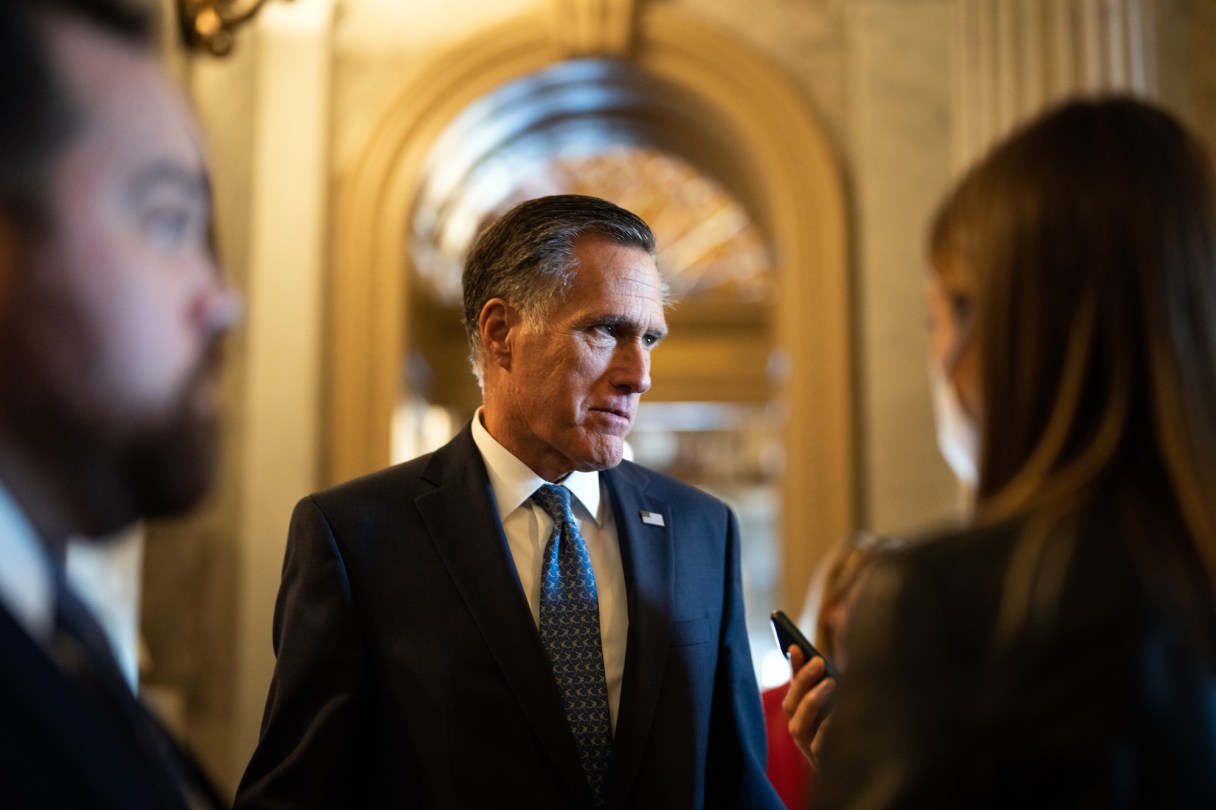
Last year, as an alternative to the temporary expansion of the child tax credit under President Joe Biden’s American Rescue Plan, Sen. Mitt Romney of Utah introduced a plan to give every family a monthly benefit of up to $350 per child for children 5 and under and $250 per child for children 6 to 17. It was simple, generous (it included a payment before birth, too) and – on paper, at least – effective. According to the Niskanen Center, which helped devise the proposal, the Romney plan would cut overall child poverty by roughly a third and the deepest child poverty by half.
Republicans hated it. His Senate colleagues Marco Rubio and Mike Lee denounced Romney’s plan as “welfare assistance,” and called for “pro-work” policies to assist families. “An essential part of being pro-family is being pro-work,” the senators said. “Congress should expand the child tax credit without undercutting the responsibility of parents to work to provide for their families.”
Romney, who voted against Biden’s rescue package, went back to the drawing board and recently unveiled a less generous version of his plan aimed at winning Republican support in the Senate. In this iteration, which would fill the gap left by the expiration of the Biden expansion in December, a family with children would have to earn at least $10,000 per year to qualify for the full credit. Below that, the benefit would scale proportionally so that a family earning $5,000 per year would receive 50% of the credit. The most impoverished families would receive the smallest benefits.
This version of the child benefit, to use the lingo of Romney’s earlier conservative critics, would “reward work.”
And yet, there’s little indication that any more than a token group of Republican lawmakers is interested in Romney’s latest proposal. There’s no appetite for it. For the vast majority of Republicans in Congress, passing a new child benefit is not the kind of work they came to Washington to do.