
Presuming we can stop slaughtering each other with our assault rifles long enough to string together a few news cycles more emblematic of a typical summer groove, here’s your intermittent update on looming weather-related catastrophes.
See, that’s better, right?
As firefighters in California fight valiantly to save some of Yosemite’s grandest sequoias – one in particular is some 3,000 years old – temperatures in Phoenix are such that Arizona’s capital now averages more than 110 days a year in the triple digits, and nighttime lows are rising even faster. Add those issues to the forecasts for tornadoes and hurricanes across America and you’re looking at some ominous weather that can stretch across the next few months.
The National Oceanic and Atmospheric Administration, always a more reliable forecaster of hurricane season than, say, the National Federation of Professional Bull Riders, predicts three to six major hurricanes before the season ends Nov. 30, which doesn’t even count the hurricane playoffs, where, as you know, anything can happen.
But if the weather looms as merely crazier than ever, the craziest development relative to its climate change-driven instability came from the craziest conference of alleged brainiacs in America today, the Supreme Court of the United States. Not satisfied with torching a half-century of established reproductive rights this summer, or with blowing a giant hole in the bedrock principle known as the separation of church and state, or with making it easier to tote a hidden gun in a culture besotted by weaponry, the court’s addled majority all but stripped the Environmental Protection Agency of its enforcement authority in dealing with the very polluters who continue to heat the planet toward uninhabitablility.
Wow. Can’t wait till you people get back to work in October.
That’s when they’ll start swinging a conservative legal sledgehammer called the “major questions doctrine,” at every other government sector that traffics in regulation. “As a result, I am sure that enterprising attorneys general for red states will use it to challenge climate regulations, environmental regulations and all kinds of other regulations,” Richard Revesz of the Institute for Policy Integrity at NYU Law School told The Washington Post last week.
Fortunately, scientists at MIT figured out a way to reverse global warming over the weekend, a story that probably got underplayed a little.
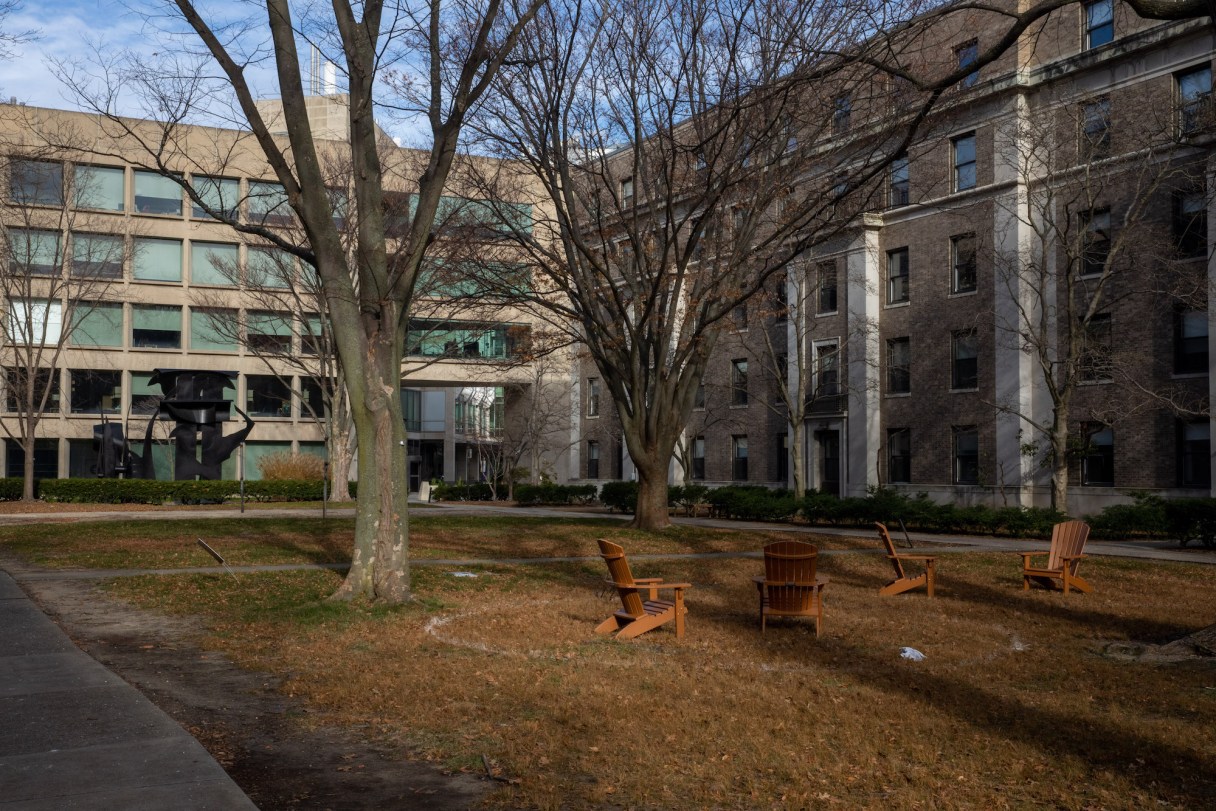
Still, when an interdisciplinary team of scientists at the Massachusetts Institute of Technology says they might have found a way back from the climatological precipice, it’s probably worth a look.
As I understand it, sort of, the planet-saving technology required for this mission is the deployment of “space bubbles,” a thin layer of which are strung together in a kind of raft that reflects enough solar radiation to change the game.
Yes, they’re very serious.
“Geoengineering might be our final and only option,” it says on their web page. “Yet, most geoengineering proposals are earthbound, which poses tremendous risks to our living ecosystem. Space-based solutions would be safer.”
Getting the bubble raft into position could prove a little vexatious, it turns out. It’d have to be about the size of Brazil, and you’d have to put it precisely at the Lagrangian point, the location between the Earth and the sun that is outside of either body’s gravitational pull – a place where it just floats.
So far, reporting on the process says the scientists are cautioning that the space bubbles solution is not an alternative to our current mitigation, and should be used only if things get out of control.
Ya mean, we’re not there yet?
Pittsburgh Post-Gazette