
Monday, November 16, 2026Nov 16

3 men cleared in 1995 killing of New York City subway token clerk

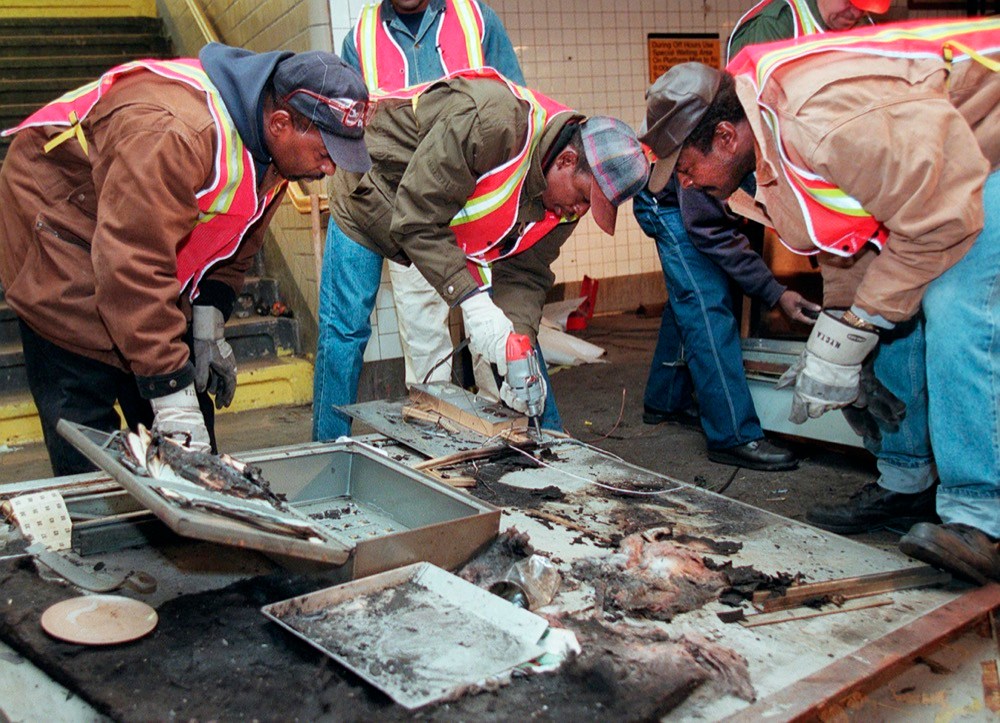
Transit workers dismantle the charred inner wall of a token booth at the Kingston Avenue and Fulton Street subway station in the Bedford-Stuyvesant section of Brooklyn, Nov. 26, 1995, after attackers sprayed a flammable liquid into the token booth and lit it on fire, according to police. Prosecutors are disavowing the convictions of three men who spent decades in prison for one of the most horrifying crimes of New York's violent 1990s — the killing of a clerk who was set on fire in a subway toll booth. (AP Photo/Rosario Esposito, File)

NEW YORK (AP) – After decades in prison, three men were cleared Friday in one of the most horrifying crimes of New York’s violent 1990s – the killing of a clerk who was set on fire in a subway toll booth.

A judge dismissed the murder convictions of Vincent Ellerbe, James Irons and Thomas Malik after prosecutors said the case was built on falsehood-filled confessions, shaky witness identifications and other flawed evidence.

The three confessed to and were convicted of murdering token seller Harry Kaufman in 1995. The case resounded from New York to Washington to Hollywood, after parallels were drawn between the deadly arson and a scene in the movie “Money Train,” which had been released days earlier.

Malik and Irons, both 45, left court free for the first time in over a quarter-century. Ellerbe, 44, was paroled in 2020.

“What happened to us can never be fixed,” Ellerbe told the court as he quietly described the ordeal of prison. “They break you, or they turn you into a monster.”