
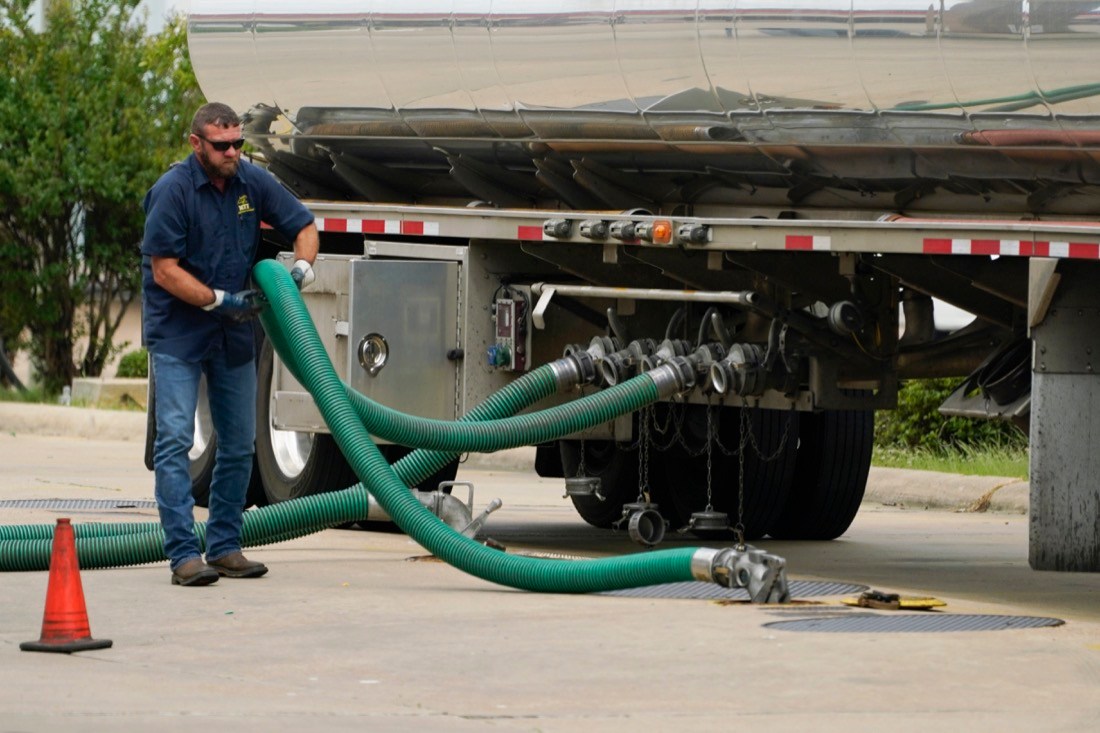
NEW YORK (AP) – When long-haul trucker Deb LaBree sets out on the road to deliver pharmaceuticals, she has strategies to hold down costs. She avoids the West Coast and the Northeast, where diesel prices are highest. She organizes her delivery route to minimize “deadheading” – driving an empty truck in between deliveries.
And if a customer’s load is too far away or they can’t pay more for fuel? She turns the job down.
“It breaks my heart because I either have to say, ‘No, I can’t afford to,’ or ‘I can, but you’re going to have to pay some of my fuel to get me there,’ ” LaBree said. “I hate doing both of those things because it’s not the customer’s fault. It’s not our fault.”
The price of diesel fuel has skyrocketed in recent months – much more even than regular gasoline – especially after Russia invaded Ukraine in February. Moscow’s attack led numerous nations to spurn Russian fuel, removing from the market a major source of oil, the main component of diesel fuel, and driving prices drastically up.
For months, motorists have felt the pain of high gasoline prices. Many may not know that they’re also absorbing the impact of much costlier diesel fuel. That’s because the goods consumers buy – from cereal and orange juice to Amazon deliveries of diapers – are delivered by trucks, trains or ships that run on diesel. Those inflated prices are then passed on from company to company until they reach consumers in the form of costlier goods.