
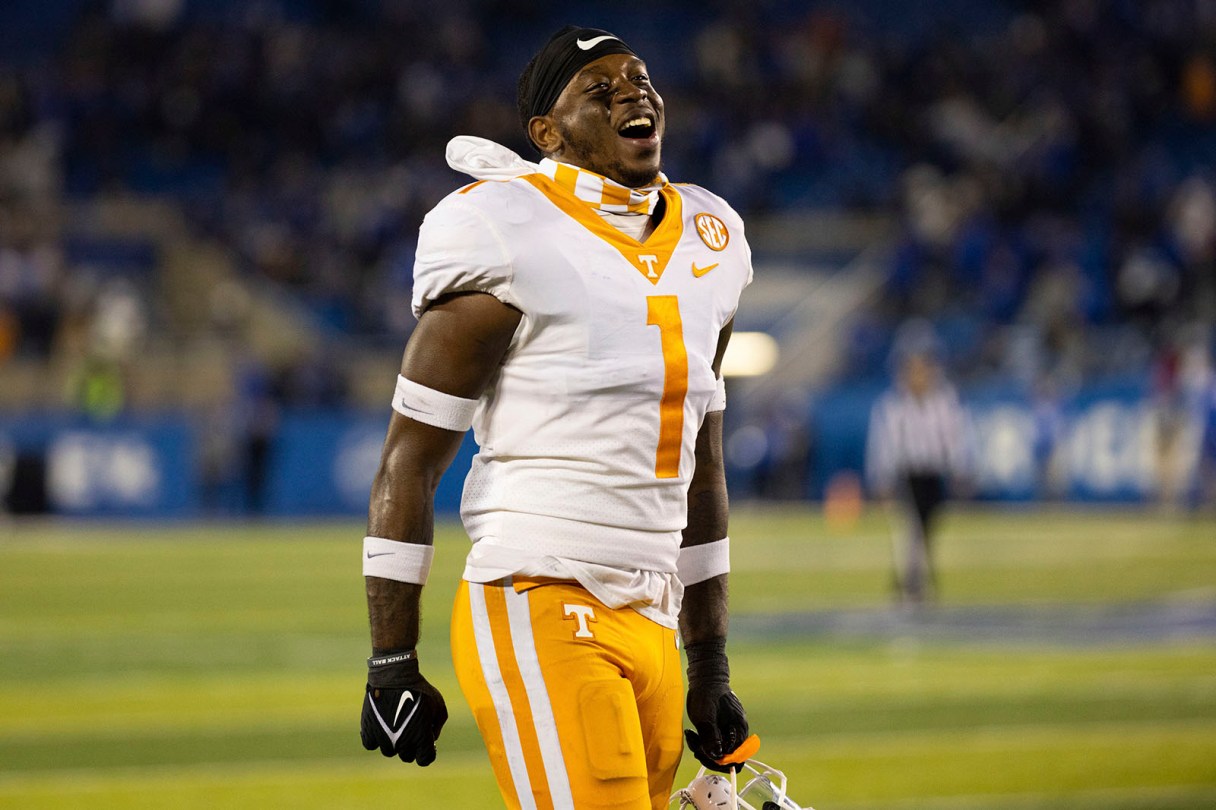

ATLANTA – Unlike last year at this time, when much of the discussion around the University of Tennessee football team at SEC media days focused on the abject failure of the Jeremy Pruitt era – the on-field embarrassment surpassed only by his firing for a slew of recruiting violations – there was a noticeable air of optimism as the Vols took centerstage here Thursday.
But for that enthusiasm to become reality, Tennessee will need to show considerable improvement on the defensive side of the ball. That is an undeniable necessity if the Vols are to take the next step to climb from mediocrity into becoming a legitimate threat to the league’s premier programs.
Gaudy offensive numbers – 38.8 points and 459 yards per game – cannot camouflage a defense that ranked in the lower half of the league in practically every category. Most telling was ranking 12th in the league in total defense, average points allowed (27.5) and dead last in touchdowns allowed in the red zone.
“You look at yourself to see what you did wrong,” said senior safety Trevon Flowers, a three-year starter who finished sixth among the league’s defensive backs with a career-best 82 tackles last season. “We watched all the bad and negative and talked about what’s the next step, what are we going to do to be better.
“It all comes down to discipline and how we can do our job better. Honestly it just relates to offseason stuff, what we’re doing now. How accountable we’re being. Focusing on the little details that, when it’s third down in the fourth quarter and we’re tired, we can relate back to what we’ve trained our bodies to do and make those plays that are needed.”
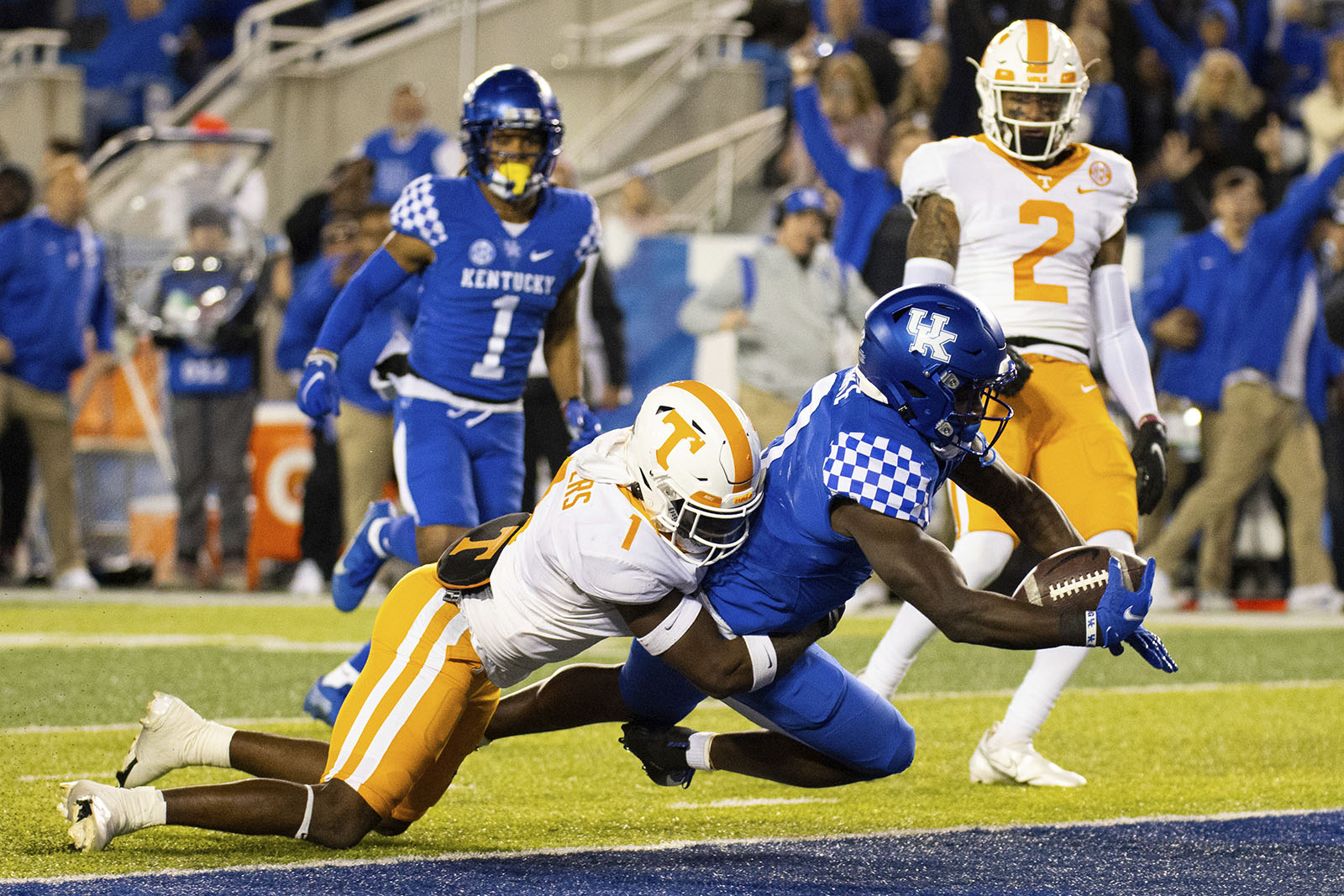 Kentucky running back Kavosiey Smoke (0) is tackled into the end zone by Tennessee defensive back Trevon Flowers (1) during their NCAA college football game in Lexington, Ky., Saturday, Nov. 6, 2021. (AP Photo/Michael Clubb)
In its first season under Josh Heupel, Tennessee exceeded humble preseason expectations by winning three of its last four regular-season games to climb to 7 wins and earn a Music City Bowl berth – only its fifth non-losing season since 2007. But even the bowl game highlighted the defensive defects as Purdue rolled up 627 total yards and needed just three plays to score in each of its last two regulation drives, covering 90 and 75 yards.
That loss was one of three by single digits, all of which were the result of the defense’s inability to get needed stops in key situations late, and those frustrating failures prevented a pedestrian season from ending with a more impressive win total.
The defense was particularly frustrating on third downs, where it allowed opponents to convert 42.5% of their attempts, ranking 13th in the league. Even in its most impressive road win, a three-point decision over Kentucky, the Vols gave up 612 yards on 99 plays and the Wildcats converted 12 of 17 third-down chances.
Honestly, the defense has nowhere to go but up, yet is the case with any recurring issue, the first step to correcting it is to admit there is a problem, which Heupel didn’t shy away from on Thursday.
“Part of that is being able to affect the quarterback not just with pressures but with a four-man rush,” Heupel said. “We’ve got to have some competition on the defensive line. You look at our tackles for loss, getting people into third-and-long. We got to be better in third-and-long situations, which you’re playing where you want to defensively when you’re in that position.
“We’ve got to get better in the red zone, too, forcing field goals and creating negatives there, not giving up seven points. It comes down to your work habits every single day. We have a long ways to go before we kick off on opening night.”
Because the basis of the offense is its rapid-pace style – UT led the SEC with an average of 2.93 plays per minute and 70.1 plays per game – much more weight is placed on the defense’s depth due to the added number of snaps that unit will be on the field.
Tennessee ranked last in the FBS in time of possession by almost a full two minutes, and although Heupel has said he believes that’s the most useless stat in the game, the extreme number of snaps for the defense – 77.5 per game, which ranked behind only Ole Miss and Michigan State nationally – undoubtedly takes a toll.
It also forces the defense to gamble with blitzes more than should be necessary, a tactic that helped UT finish second in the league in tackles for loss, but also in the bottom half of the league in explosive plays allowed.
As important as the return of the team’s two leading tacklers – linebackers Jeremy Banks and Aaron Beasley – is the addition of two four-star edge rushers and the development of several younger linemen who could help make the difference between a deep rotation and watching the front-line defenders wilt in the waning minutes once again.
“A year ago we were the thinnest football team in America, hands down, not even close,” Heupel said. “We’re deeper than we were. We’re not as deep as we need to be. But I think the depth, the competition, the year inside of our system, inside strength and conditioning, the ability to strain, finish, focus at the end of football games should allow us to take a step defensively for sure.”
Contact Stephen Hargis at shargis@timesfreepress.com or 423-757-6293. Follow him on Twitter @StephenHargis