
JOHANNESBURG (AP) – Russian, French and American leaders are crisscrossing Africa to win support for their positions on the war in Ukraine, waging what some say is the most intense competition for influence on the continent since the Cold War.
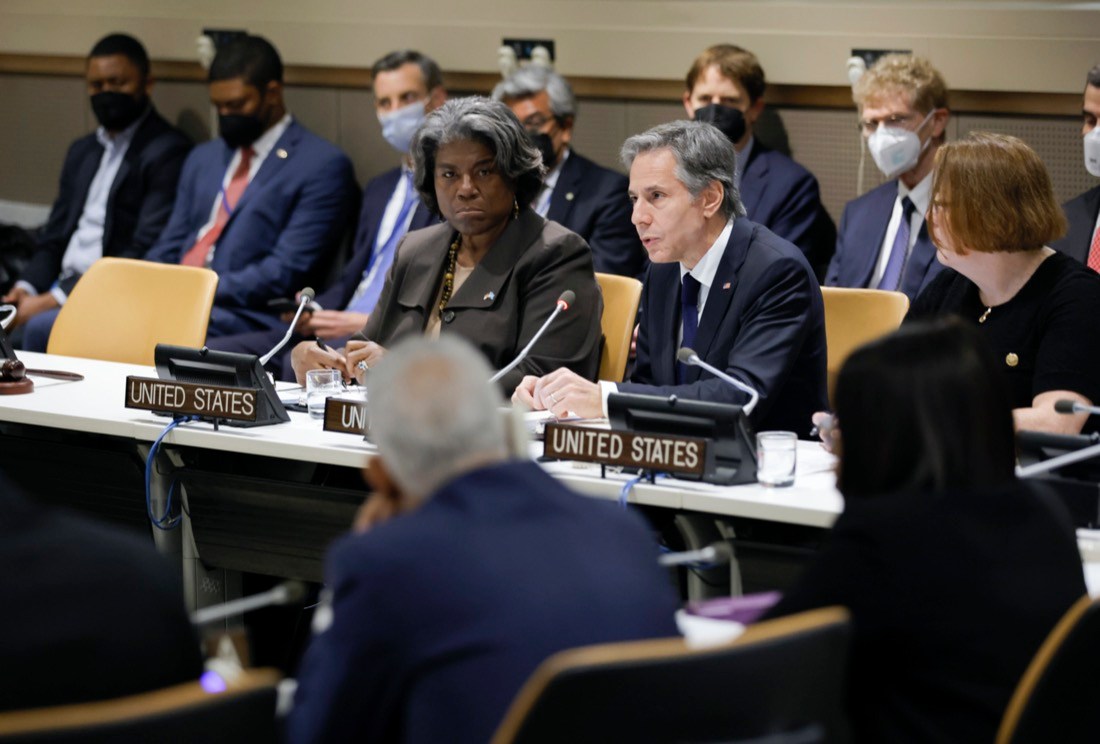
Russian Foreign Minister Sergey Lavrov and French President Emmanuel Macron are each visiting several African countries this week. Samantha Power, head of the U.S. Agency for International Development, went to Kenya and Somalia last week. The U.S. ambassador to the U.N., Linda Thomas-Greenfield, will go to Ghana and Uganda next week.
“It’s like a new Cold War is playing out in Africa, where the rival sides are trying to gain influence,” said William Gumede, director of Democracy Works, a foundation promoting good governance.
Lavrov, in his travels across the continent where many countries are suffering drought and hunger, has sought to portray the West as the villain, blaming it for rising food prices, while the Western leaders have accused the Kremlin of cynically using food as a weapon and waging an imperial-style war of conquest – words calculated to appeal to listeners in post-colonial Africa.
Under President Vladimir Putin, Russia has been working to win support in Africa for several years, reinvigorating friendships that date back a half-century, when the Soviet Union backed many African movements fighting to end colonial rule.