
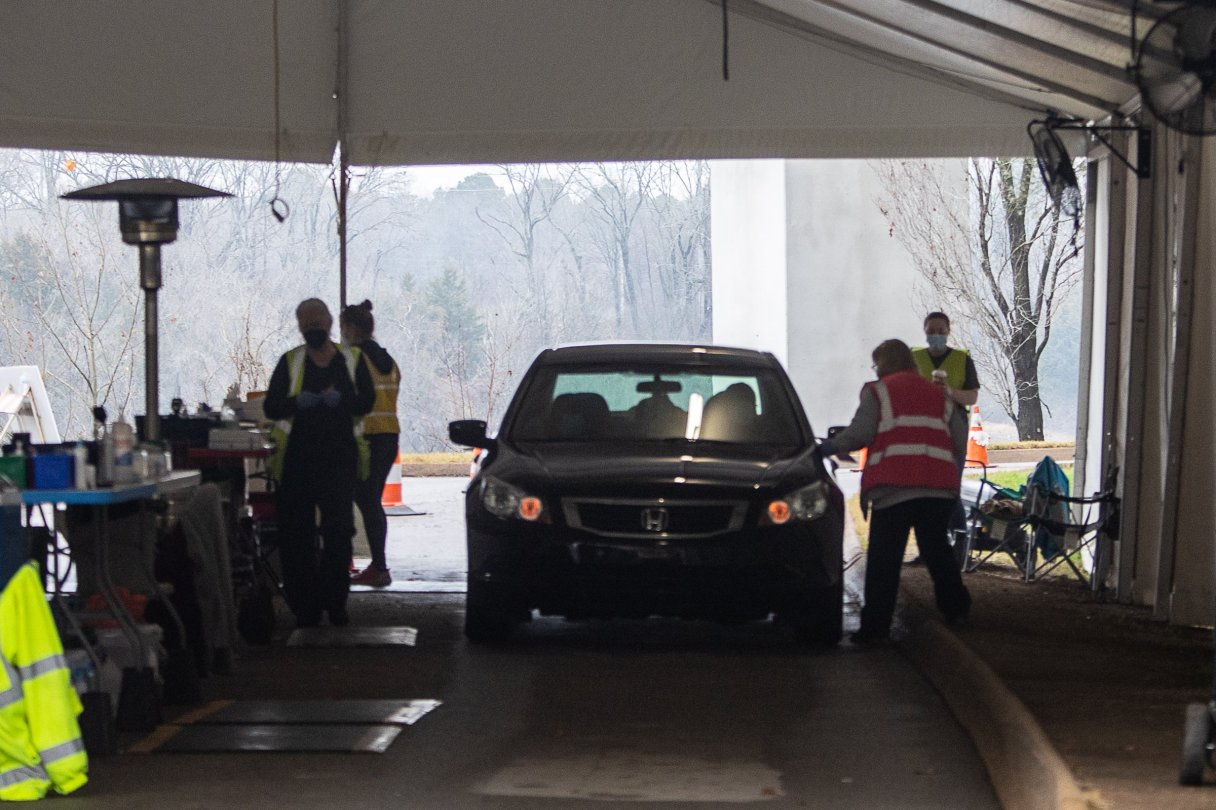

The main front-page headline in the Chattanooga Times Free Press two years ago today was “First Tennessee Case Confirmed.”
We don’t even have to tell you the headline was about the COVID-19 virus.
“We feel very prepared as a state, starting before cases ever begin to arrive in the state,” Tennessee Gov. Bill Lee was quoted as saying. “Preparedness is critical, and I have full confidence in our preparedness plan that we’ve put in place.”
The Volunteer State, our story noted, was the 14th state to have a case confirmed.
The Tennessee Department of Health commissioner said most patients experience only a mild respiratory illness with fever, cough and shortness of breath. Older adults and people with chronic conditions could develop severe pneumonia that requires hospitalization, she said.
“We want to continue to emphasize that the risk to the general public is low,” the commissioner said.
We didn’t know what we didn’t know.
These two years, we believe, have changed life in these United States more than anything since the terrorists bombing of Sept. 11, 2001.
Unfortunately, most of the changes have not been for the better.
Perhaps, most importantly, vaccinations have become political.
You know the backstory. The Trump administration initiated Operation Warp Speed to develop a vaccine for the COVID-19 virus. Trump opponents, including the current president and vice president, suggested they wouldn’t recommend the vaccine on the word of Trump. By the time the vaccine was deemed safe to deliver, Trump had lost the 2020 election. When the Biden administration came to power, and more of the vaccine could be delivered, many Trump supporters refused to take it.
Before COVID-19, people who refused to take vaccines that were widely vetted and recommended for the public were few and far between and were seen as dinosaurs or ostriches who buried their heads in the sand.
The politicization of the vaccine, in turn, it might be argued, has widened the hyper-partisanship in the country, making it difficult to come together on legislation and public policy.
Similarly, most advice and guidelines from federal health officials before COVID-19 were sacrosanct, or at least highly regarded by most people.
With advice about the virus, the potential for deaths, the efficacy of masks, the length the virus would be around and the potential treatments all over the place from those officials, and the then-president loudly objecting to some of their advice, Americans found they could not trust the country’s top health officials and epidemiologists for accurate information.
As above, we didn’t know what we didn’t know.
Meanwhile, with pandemic shutdowns, millions of employers learned their employees not only could work at home but that if they worked at home, the employers could save money at offices, the employees could take care of their children and the employees’ productivity would suffer little, if at all.
Today, a recent survey by Owl labs found remote employees save an average of 40 minutes of daily commuting, 92% of workers after COVID-19 expect to work from home at least one day a week and 80% at least three days a week, and 81% said they believe their employers would continue to support remote work at the end of the virus.
With public schools, it was a different story. Most districts across the country switched to remote learning for the end of the 2019-2020 school year, many continued through parts or all of the 2020-2021 school year, and some have spent part of the 2021-2022 school year in remote learning.
Unfortunately, the results weren’t as positive as for full-time employees working from home. Grades fell, retention plummeted, teachers were overworked and controversy arose from parents who felt they weren’t given a say over whether their children should attend in person and whether their children would be forced to wear a mask if they did attend in person.
And while they were at it, after monitoring their children’s online work, many parents didn’t like what their children were being taught. It was too politically slanted or too race-based or lacked the moral values they thought their children were getting in public schools.
Now, an entire movement of parents has emerged that demands a say in what goes on in their local schools. To our way of thinking, if some of them had looked a little closer a little sooner, things might not have reached the point they are now.
So, as federal health agencies once again begin to relax COVID-19 guidelines, we marvel at how much has changed in two short years.
Perhaps as life returns to a semblance of normality, we’ll remember “trust but verify,” the Russian proverb popularized in the U.S. by former President Ronald Reagan. He was referring to his 1980s Soviet counterparts, but it’s equally useful in dealing with practically any information that comes our way today. Trust authorities, but be responsible enough to determine if facts back up what you’re seeing and hearing.