
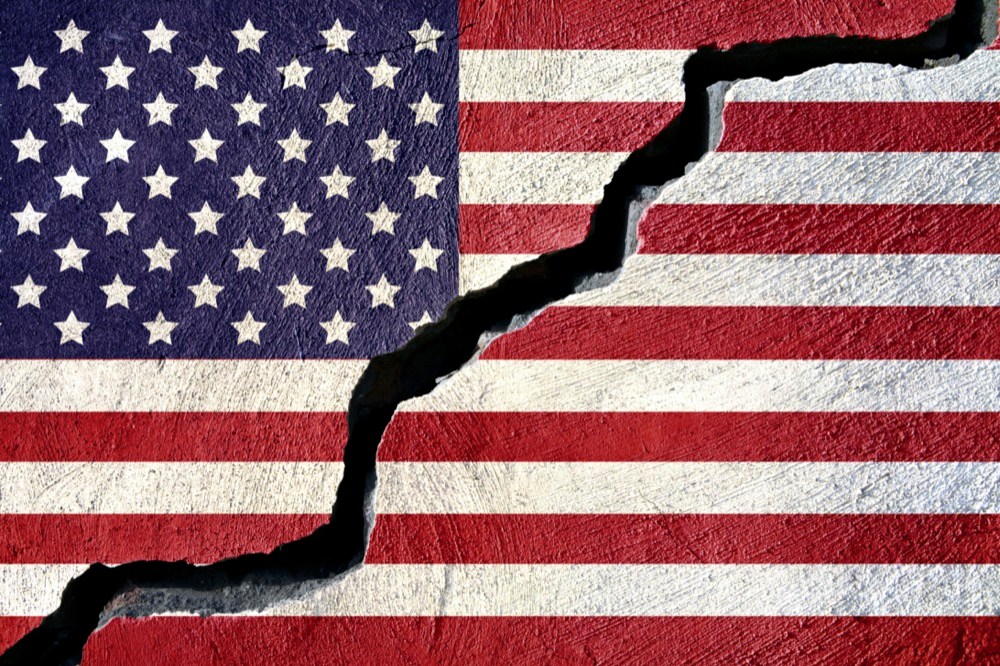
According to a Gallup Poll, 62% of Americans don’t believe the two major parties are doing a good job of representing Americans. A majority of American voters still identify as members of one of the two parties, and the vast majority limit their voting to candidates from them.
Third parties are seen as spoilers and not doing much else. The fear of disrupting a system, even one viewed as corrupt, is crippling America.
The indoctrination into the duopoly starts early, and everything in our political culture reinforces the view that no matter how unhappy we are with our choices, the only options are left and right. Little attention is paid to the most fundamental purpose of our government – provide solutions that make our lives better. The two parties aren’t interested in solving problems, as a solved problem can’t be used to drum up their base.
The good news when it comes to a course correction might stem, tragically, from the disheartening polarization that’s currently gripped our nation. Signs are showing that people are sick of it, and, outside of the partisans in the media and on social media, people are ready for a different approach to politics.
This is why you’re seeing so many third parties and nonpartisan organizations spring up to engage Americans interested in change.
It’s easy to assume that there’s some “middle ground” inhabited by most Americans between the left and the right, and on certain topics that’s true. Most Americans support some common sense gun control measures. Most Americans want to minimize police violence while still supporting our law enforcement officers.
However, on other topics, most Americans are more on the left or the right. Most Americans do believe in climate change and think that more needs to be done to combat it, aligning more with the left. But they also believe that unemployment payments should be limited, and work should be encouraged – standing closer to the political right. Most Americans support investing in small businesses while also raising the minimum wage. It’s not clear where these voters, when their individual views are analyzed, fall on the left-right spectrum. And while they may say that they’re in the middle, that’s not always the case.
So it’s not always a middle ground that Americans are looking for. In many cases, it’s shared ground.
Axios reported on the findings of a think tank, Populace, conducted in 2020 that revealed that Americans are united by nine of the 15 top priorities for voters of each major party, including access to high quality health care, community safety, reforming the criminal justice system, building up opportunity for our middle class, and infrastructure. Eighty percent of voters support term limits. The areas of overlap go on and on.
There are many parties and candidates out there fighting for these reforms and attempting to bring Americans together, but the system – built up by the current two parties – makes it harder and harder with each ballot access law and party recognition hurdle for these groups to gain traction.
Electoral reforms such as ranked-choice voting and nonpartisan primaries can help with this, but breaking the “major political party” habit is going to require people to believe change is possible.
By shifting our voting from the binary choice of left versus right, we can find that “just right” lies not in one party, but in a well-balanced multi-party system where a focus on values and problem-solving become the new political habit. Where elected officials from a variety of parties are willing to work together in good faith to solve problems, and to try out solutions they disagree with but that are proposed by people who truly believe they will work.
Let’s restore governance to its fundamental purpose – lifting the nation with solutions for all Americans. Let’s move the nation forward.
Matt Shinners is interim executive director of the Forward Party. He wrote this for InsideSources.com.
Tribune Content Agency