
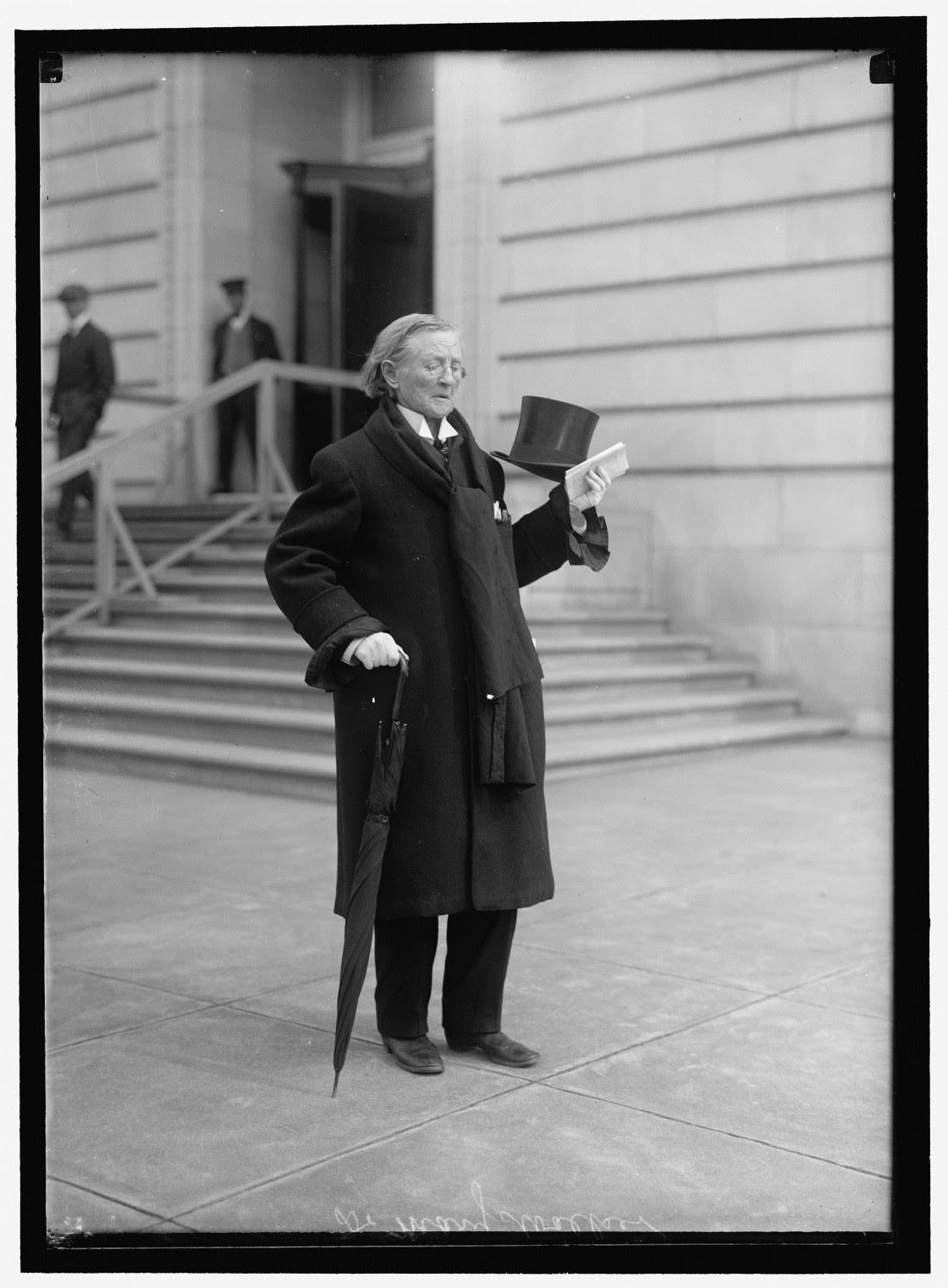
Chattanooga has a history of producing and fostering interesting women. March, Women’s History Month, gives us an ideal time to remember some of Chattanooga’s feistiest women. These heroines struggled to save lives, protest government policies, cross oceans to support the war effort, and defend their homes and families. Their stories inspire all women.
Mary Edwards Walker was born in 1832 in upstate New York and boldly entered Syracuse Medical College to earn a doctor ate in medicine, traditionally an all-male degree. After the Civil War broke out, she began working in Union hospitals on and off the field in Virginia and Tennessee, where she performed operations on soldiers wounded in the Battle of Chickamauga. She was the first female surgeon in the U.S. Army.
In April 1864, Walker crossed enemy lines to help a Confederate doctor perform an amputation on a civilian. She was captured by Rebel troops, arrested as a spy and held as a prisoner of war, later to be awarded the Medal of Honor. She continued service after the war as a suffragette, known for her pants, top hat and bravery.
Emma Alcock and her fellow artist, James Cameron, had just returned to Philadelphia from their honeymoon in Italy when they met Chattanooga entrepreneur James Whiteside, who persuaded the couple to come south and paint. They took Whiteside up on his offer. The husband created in 1859 the iconic portrait of the Whiteside family sitting on the terrace of their Lookout Mountain home near today’s Point Park, a copy of which hangs in the Hunter Museum. Whiteside paid the couple with what is now Cameron Hill. When the Civil War broke out, the Camerons fled to California. After the war, Alcock returned to Chattanooga and became infuriated at the sight of a denuded Cameron Hill, the bald victim of soldiers from both sides cutting trees for building materials and heating. She stood her ground, re-established her claim to the land and gained a healthy award from the federal government of $30,000 for the timber taken from her hill.
Harriet Whiteside was born in 1824 in North Carolina. At age 19, she arrived in Chattanooga to teach music to one of the five children of Col. James Whiteside, a 40-year-old widower and Chattanooga’s leading businessman. A woman of strong intellectual interests, she ably supported her husband in his many ventures, plus bearing nine children. Harriet left Chattanooga and then returned after the Civil War, becoming a force to be reckoned with. When he died in 1861, she inherited his considerable Lookout Mountain land holdings, railroad stock and mines. She instituted her own battle, this one over turnpikes and fees that she charged people for the iconic view from her mountaintop land. Her shotgun-wielding employees ensured that fees were collected. The land conflict inspired publisher Adolph Ochs to preserve the acreage that would become the Point Park Battlefield Park. Some called her one of the most successful and wealthiest women in Tennessee and “having the highest degree of culture, education, polish, [and] refinement while never forgetting she was a lady.”
Once the United States entered World War II, Fort Oglethorpe became an induction and processing center as well as a major training center for the Women’s Army Corps. The 6888th Central Postal Battalion was the first Black WAC unit sent overseas during the war. Maj. Charity Adams led this battalion.
Born in Kittrell, N.C., Adams was first in her high school class, studied math and Latin in college, and became a teacher. In 1942, she enlisted in the WAAC and became its first African American officer, rising to lead the 6888th. Following training at Fort Oglethorpe, the unit’s 855 women were tasked with clearing a two-year backlog of mail to GIs fighting in Europe. After leaving Fort Oglethorpe, the 6888th had a harrowing trip across the Atlantic Ocean with the ship pursued by submarines. Women became seasick before arriving in Birmingham, England, to face unheated aircraft hangars full of undelivered mail. Their motto was “No mail, no morale.” Tasked with accomplishing its goal in six months, her team worked around the clock, sorted 65,000 pieces of mail daily and finished the job in months.
These stories represent just a sampling of the shared history of some of the incredible women who have influenced Chattanooga and our country.
Jennifer Ley Crutchfield, a Chattanooga native, is an author and educator with a passion for connecting national history to local landmarks for students and families. Find her online at ChattanoogaAdventures.org and chattanoogalandmarks@gmail.com.