
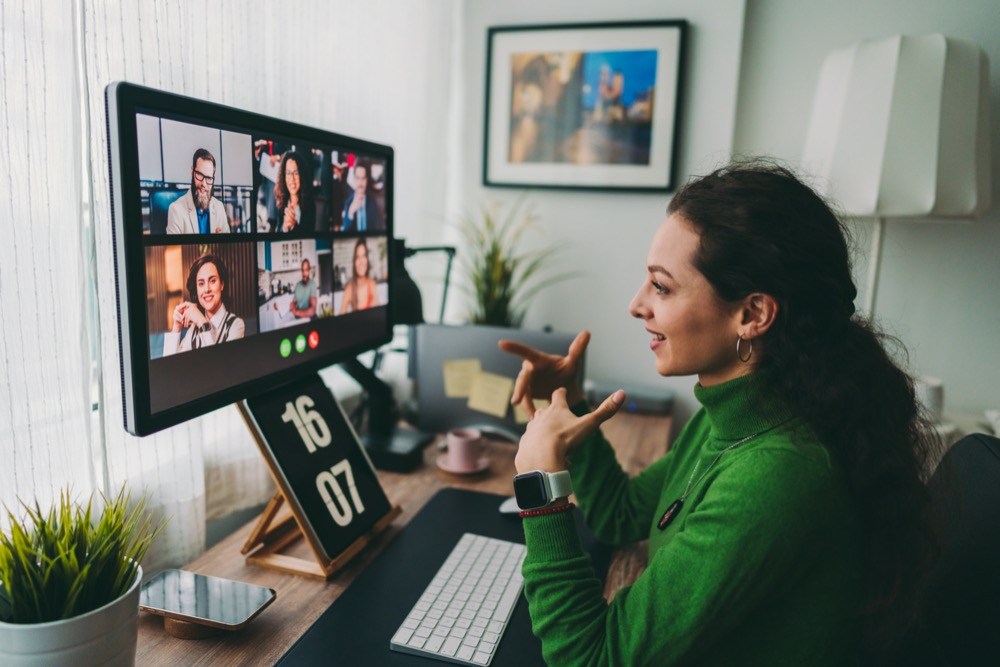
COVID-19 might be winding down into an endemic disease like the cold and the flu – maybe. But even if the virus has more curveballs in store, it is time to start thinking ahead. A lot of people are ready to get back to normal, especially in the workplace. But that is the wrong way to look at it. There likely won’t even be a single normal model going forward. The only constant will be change. To face this new reality, workers and employers must not chain themselves to any particular labor model.
Companies that shoehorn workers back into the office, or don’t provide a workspace for employees who want one, will both have a hard time attracting talent. Industrial policy ideologues and labor unions wanting to codify their own preferences risk displacing workers, thus slowing the COVID recovery. It was all heading in this direction anyway; COVID just sped up the timeline.
Two main factors drove this shift. The first began about 20 years ago, when email and the Internet became widespread. That made it possible to do certain office jobs remotely for the first time, such as accounting and copywriting.
Upwork’s Adam Ozimek estimates that 12% of workers were already full-time remote when COVID-19 first hit – which rose to over 41% when the pandemic was at its worst. In the long run, he expects full-time remote work to remain above 22%, or almost double pre-COVID levels. And a new 2022 Pew Research poll finds that 59% of workers who can work from home are doing so – of which 61% are doing so by choice, not necessity.
The second factor is the rise of the sharing economy that began about a decade ago. Uber drivers set their own hours and use their own cars instead of company-provided taxis. The company was founded in 2009 and was operating in 35 cities by 2013. Taskrabbit and Fiverr, which allow office workers, journalists, translators, video editors, and musicians to market their services, were also founded around this time.