
Let me offer two theories about recent events. You tell me which you find more credible.
Theory A: The reason President Joe Biden has been sounding so forceful and effective lately is that the Disney Corporation has secretly replaced the real Biden with an animatronic robot.
Theory B: Biden’s socialist economic policies are the reason U.S. gasoline prices have shot up so much lately.
If forced to choose, I’d go for theory A. It’s ridiculous, of course, but it’s not quite as easy to refute, not quite as cynical an insult to voters’ intelligence as theory B. But theory B is, of course, what Republicans are running with.
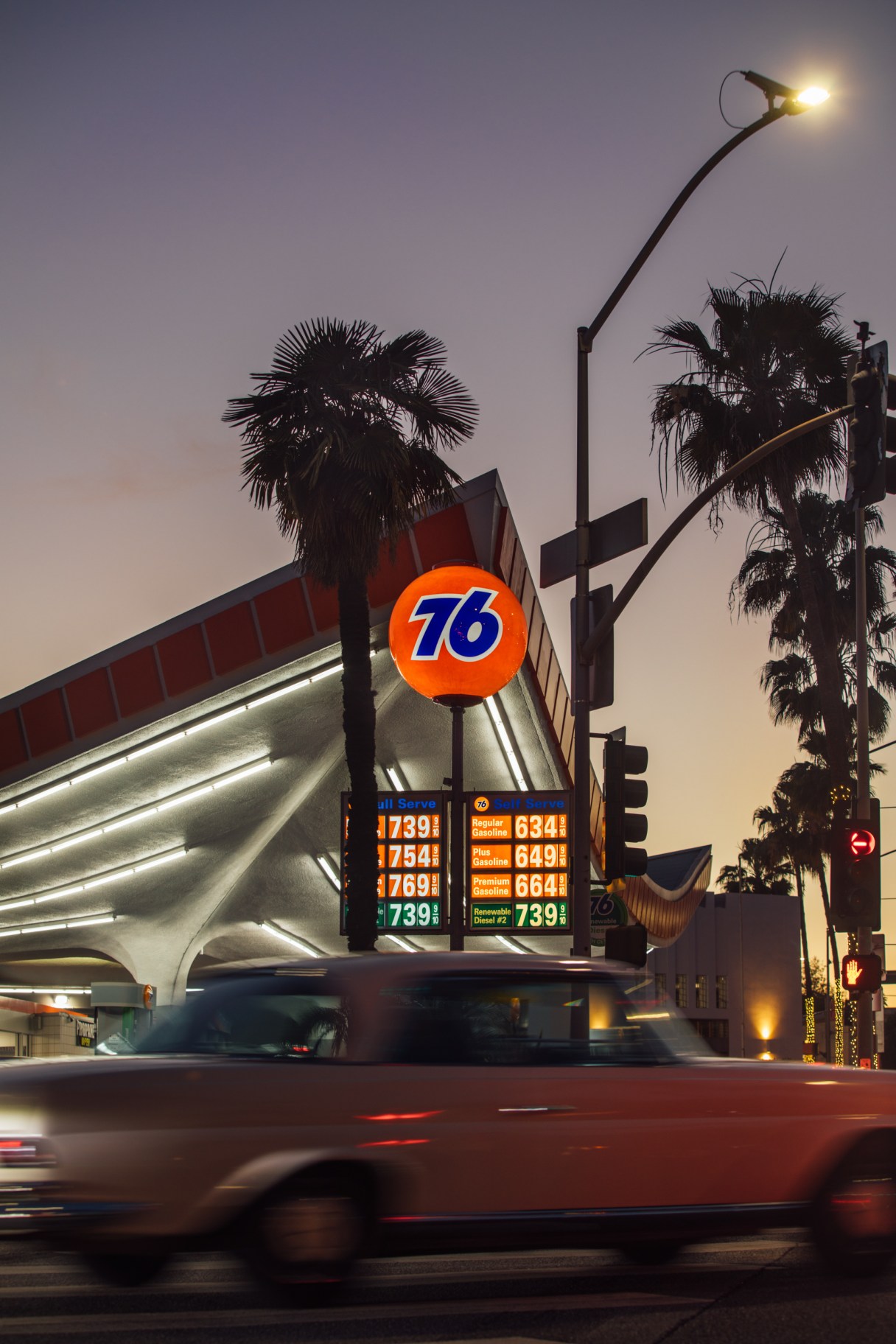
There are three things you need to know about gasoline prices. First, the price of crude oil – the stuff that comes out of the ground – is set in a global market, not country by country. Second, fluctuations in the price of gasoline, which is refined from crude, overwhelmingly reflect fluctuations in that global price. Third, U.S. policy has little effect on world oil prices and virtually none at all in the short run – say, the 14 months that Biden has been in office.
About crude prices: A number of countries export oil: Saudi Arabia and other Persian Gulf producers, Venezuela, Norway, various others and, in normal times, Russia. Where they ship the oil depends on the price they can get. This more or less levels prices around the world: Any country with above-average prices will attract extra shipments, driving prices down; any country with below-average prices will see imports fall off, driving prices up.
There are two widely cited prices of oil: West Texas Intermediate, which reflects prices in, duh, Texas; and Brent, which reflects prices in Europe. And they move almost perfectly in tandem.
There has been a big recent run-up in both prices. This crude run-up has been reflected, pretty much one-for-one, in gasoline prices at the pump – everywhere. It’s true that average prices for gasoline differ at lot among countries, because taxes on consumers are much higher in Europe than they are in the United States. But short-run fluctuations are driven by the price of crude and are similar everywhere.
So for those blaming Biden for rising prices here, I regret to inform you that he is not the prime minister of Britain, or the German chancellor or …
So rising gas prices in America, then, are part of a global story that has nothing to do with the policies of the current administration. Still, can’t the United States have some impact on that global story? We are, after all, the world’s largest oil producer, accounting for about 20% of world output in 2020. Can’t America do something to reduce global oil prices?
Yes, in principle. Not so much in practice.
U.S. oil production did increase a lot after 2010 – a trend that, as it happens, began under the Obama administration and continued for part of Donald Trump’s term.
But this had little to do with policy; it was all about new technology – specifically, fracking. Oil production then slumped in 2020, not because of policy but because prices plunged during the pandemic. Now it’s coming back.
Of course, that’s not what Republicans would have you believe. They want the public to give Trump credit for low prices in 2020, when demand for oil was low because COVID had the world economy on its back. They want voters to blame environmental concerns, which have blocked the Keystone XL pipeline and might block drilling on public land, for high prices at the pump right now – even though it will take years before these policy changes will have any effect.
Will voters see through this latest Republican disinformation campaign? Will Democrats make an effective case for the truth? I wish I was more optimistic than I am.
The New York Times