
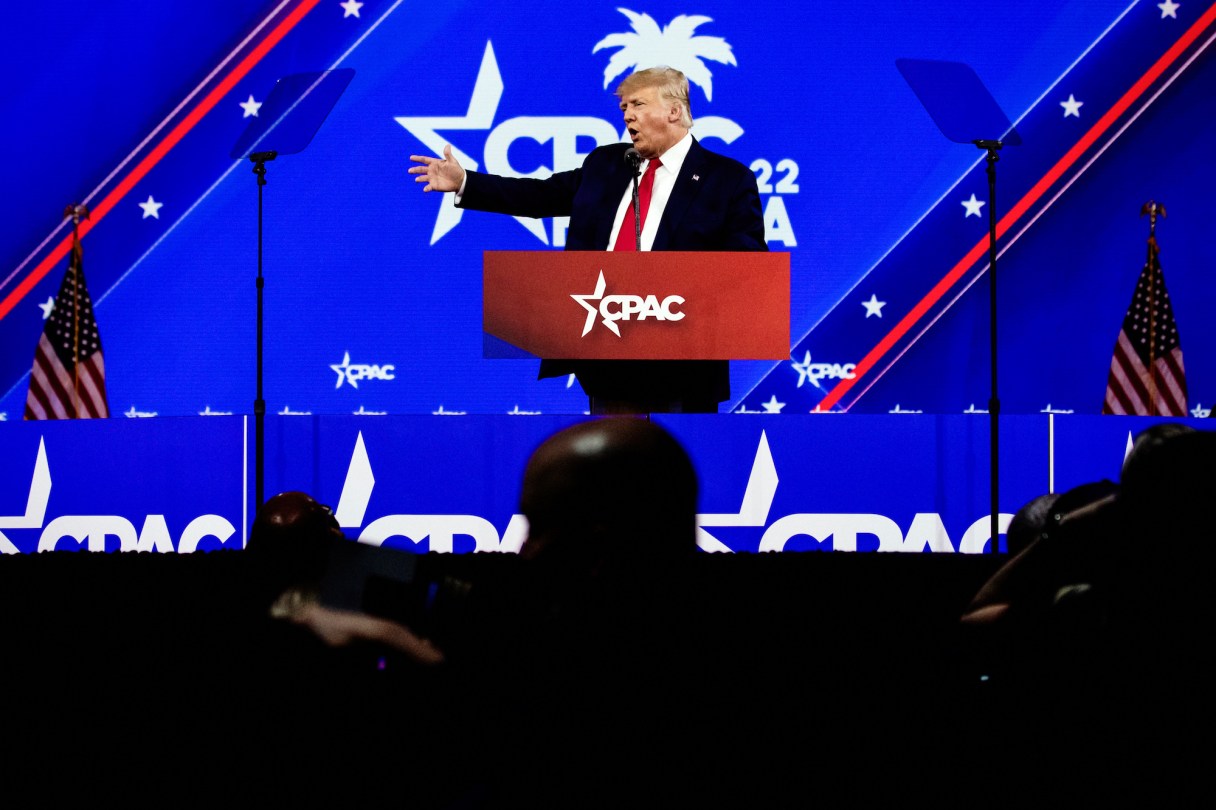
The early stages of the 2024 Republican presidential nomination contest are picking up steam. Former President Donald Trump continues to all-but-officially run for the 2024 nomination, although that doesn’t guarantee that he’ll actually run. The small anti-Trump faction of the party appears to have at least three candidates, the most impressive of whom is U.S. Representative Liz Cheney of Wyoming – never mind that she may well lose her House seat in 2022. A couple of dozen others are testing the waters, ranging from solid Trump supporters to occasional Trump critics. They’re all waiting to see the shape of the contest. It’s possible that one or more would formally announce candidacies even if Trump enters the primaries and caucuses, but most of them would drop out.
Normally, we would call the early maneuverings the “invisible primary,” but that hardly seems appropriate this time around with a former president involved. Well, with this particular former president involved. Not too much that Trump does is invisible to begin with. But more than that, Trump’s method of wooing party actors is basically to go around publicly threatening everyone that he’ll drum them out of the party if they oppose him. So we have a more visible invisible primary than usual.
It’s also a more complicated nomination cycle than usual. A lot of pundits assume the nomination is Trump’s if he wants it, but it’s hard to be sure. Trump continues to poll well among Republicans, but that’s not especially meaningful; most party politicians are well-liked by party voters. He also does well in hypothetical match-ups against other Republicans, but early polls can be misleading. Once the primaries begin in February of 2024, the most serious contenders will be better known than they are now, and candidates tend to seem more “presidential” as the cycle goes along.
There’s no way to predict something for which we have no modern experience at all – an attempt by a defeated former president to win the party’s nomination. When Teddy Roosevelt attempted a comeback in 1912 after retiring three years earlier, and when Grover Cleveland won back the White House in 1892 after losing the 1888 election, nominations were decided by the leaders of the formal state party organizations. Not, as has been the case since 1972, by voters in state primaries and open caucuses.
Party actors like former and present elected officials, major contributors, interest-group activists and party-aligned media members are still important, because they can supply valuable resources to favored candidates, but on the Republican side in 2016, voters defied skeptical party actors and chose Trump anyway.