
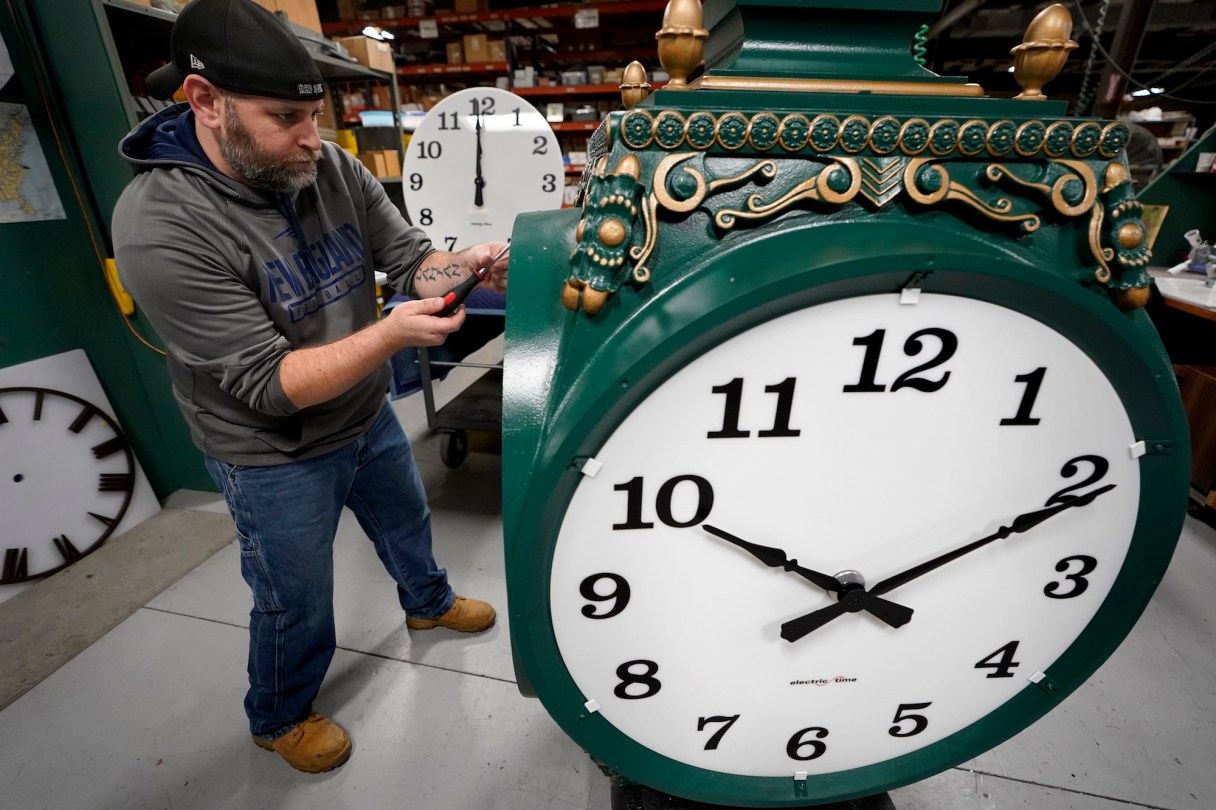
Doesn’t the light in the sky at 7 p.m. feel great? How nice it would be to stay in daylight saving time year-round and not have to adjust the clocks to “fall back” or “spring forward.”
Perhaps U.S. senators were thinking the same thing when they voted swiftly and unanimously on Tuesday, two days after we sprang forward an hour, to make daylight saving time year-round, beginning in November 2023. Of course, it would be even better if the Senate could vote unanimously to strengthen voting rights and offer more support for families with children. But sunlight, at least, appears to be something on which the nation can agree.
The twice-annual changing of the clocks is worse than annoying. It causes sleep problems for some, as well as general discombobulation. Studies have found a correlation between the clock shift and accidents and heart attacks. It’s hard to find anyone who loves the change, which makes the only remaining question whether to stick with daylight time year-round or forever shorten our evenings with permanent standard time.
Our preference is to remain on permanent daylight saving time, which is now observed from March until November. That’s what California voters endorsed as well when they passed Proposition 7 in 2018.
Perhaps there used to be a valid reason for standard time – that during the shorter winter months, children would be walking to school in the dark, particularly in northern states. Times have changed. Largely because of parental concerns about safety, the percentage of students who walked or biked to school (even among those who lived within a mile) dropped from 89% in 1969 to 35% in 2009, according to the National Center for Safe Routes to School. And fewer kids live within a mile of campus these days.