
There has been much in the news lately about censorship. The major media have been reporting on Vladimir Putin’s efforts to keep the Russian people from hearing the truth about his war against Ukraine and what President Biden has called war crimes.
Dictionary.com offers this definition of a censor: “an official who examines books, plays, news reports, motion pictures, radio and television programs, letters, cablegrams, etc., for the purpose of suppressing parts deemed objectionable on moral, political, military, or other grounds.” That “official” can be a head of state, like Putin, the head of a news operation or even an individual reporter. Anyone who chooses to suppress a story or fails to investigate one because it does not conform to their worldview could be labeled a censor.
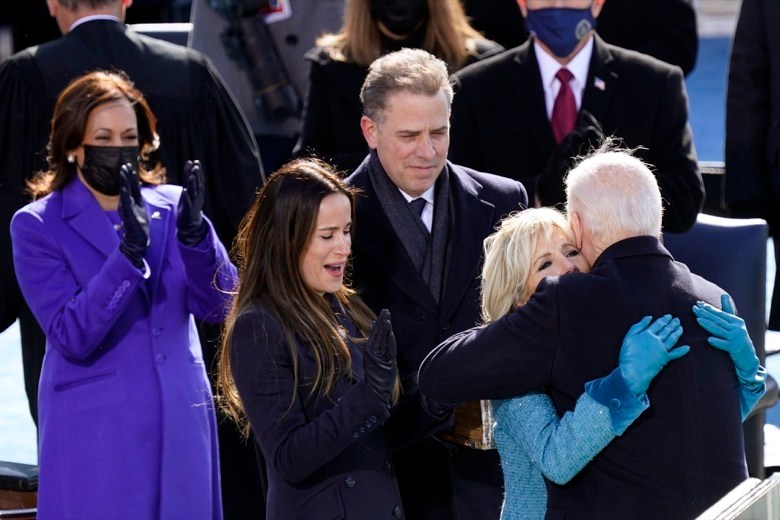
Which brings me to the Hunter Biden laptop story – the “discovery” by The New York Times that his laptop and its contents are real, after all. Not only did the Times and other major and social media ignore the story; in some cases, the story was deemed fraudulent and blocked on several platforms.
I think the more accurate explanation as to why the story was censored by these entities is that it was broken by The New York Post, which the mainstream media deem a “conservative” newspaper and by their standard, unreliable. The line favored by much of the suppression press was that the laptop story was Russian “disinformation.”
The real unreliable purveyors of disinformation (or no information) are those who failed to do their journalistic duty and investigate. That the story was not followed up on during the 2020 presidential campaign adds to the suspicion, especially among many conservatives, that the information suppression was deliberate. NPR last year “corrected an online article that falsely asserted that documents from first son Hunter Biden’s laptop had been discredited by U.S. intelligence.” The correction came after the election. It took the Times and others until this year to fess up. According to the New York Post, 51 intelligence officers who signed a public letter claiming the laptop story was Russian disinformation have so far refused to apologize.