
Why do we now say Kyiv instead of Kiev? It’s because Kyiv is the Ukrainian pronunciation, and Russia’s invasion is a culture war. Their disputes are old as dirt; Ukrainian Nikita Khrushchev tried to enable a Ukrainian revival with the transfer of Crimea from Russia. But Soviet repression went beyond land and sovereignty.
With the USSR dissolution, Ukraine established a new government with its own national anthem (in Ukrainian, not Russian). It’s no accident that Vladimir Putin’s treaty demands include protection for the Russian language. It may seem trivial, but imagine if England suddenly tried to re-establish British control over America and insisted that we revert to British English. If England were like Putin, you might go to jail if you refused to spell “color” as “colour,” the original, British version. Or what about our patriotic song, “My Country, ‘Tis of Thee”? That melody was originally an unofficial national anthem of England. We wouldn’t tolerate going back to its original title: “God Save the Queen.” We’d fight a new War of Independence.
Language counts. Putin has attempted a Russian cultural homogeneity by reinforcing the Soviet-era stereotype that Ukrainian is the “language of peasants.” Combating Putin’s attempt at cultural homogeneity, Ukraine’s government mandated that all print media outlets must publish a Ukrainian-language version. Given that language and music are closely intertwined, Ukraine mandated that 35% of radio music must be performed in Ukrainian.
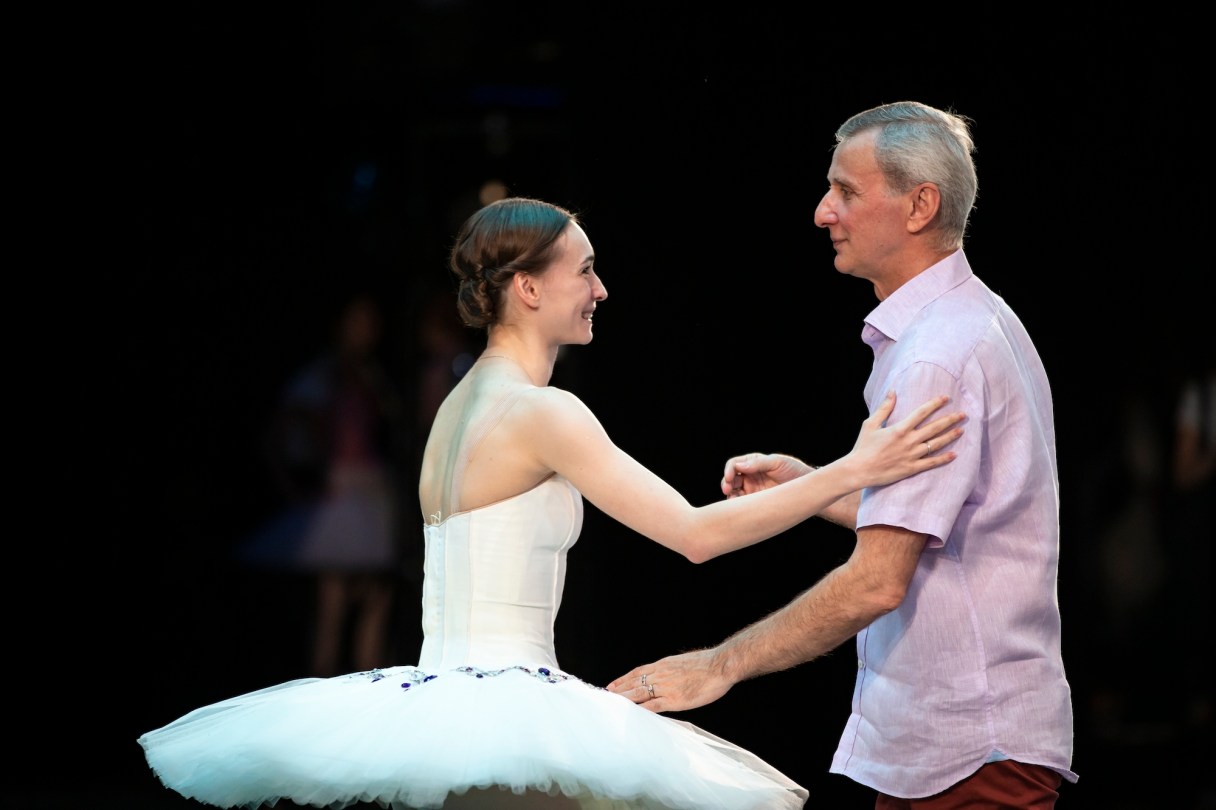
Olga Smirnova of Russia’s famous Bolshoi Ballet defected and joined the Dutch National Ballet. Her words were memorable: “… I never thought I would be ashamed of Russia. I have always been proud of talented Russian people, of our cultural and athletic achievements. But now I feel that a line has been drawn … We may not be at the epicentre of the military conflict, but we cannot remain indifferent to this global catastrophe.”
The influence of celebrity has prompted international competitions to protest against Putin by banning Russian artists. Last year, the annual songwriting contest of Eurovision awarded 5th place to the first Eurovision performance sung entirely in Ukrainian. Now, Eurovision has banned Russia from competing in this year’s contest.