
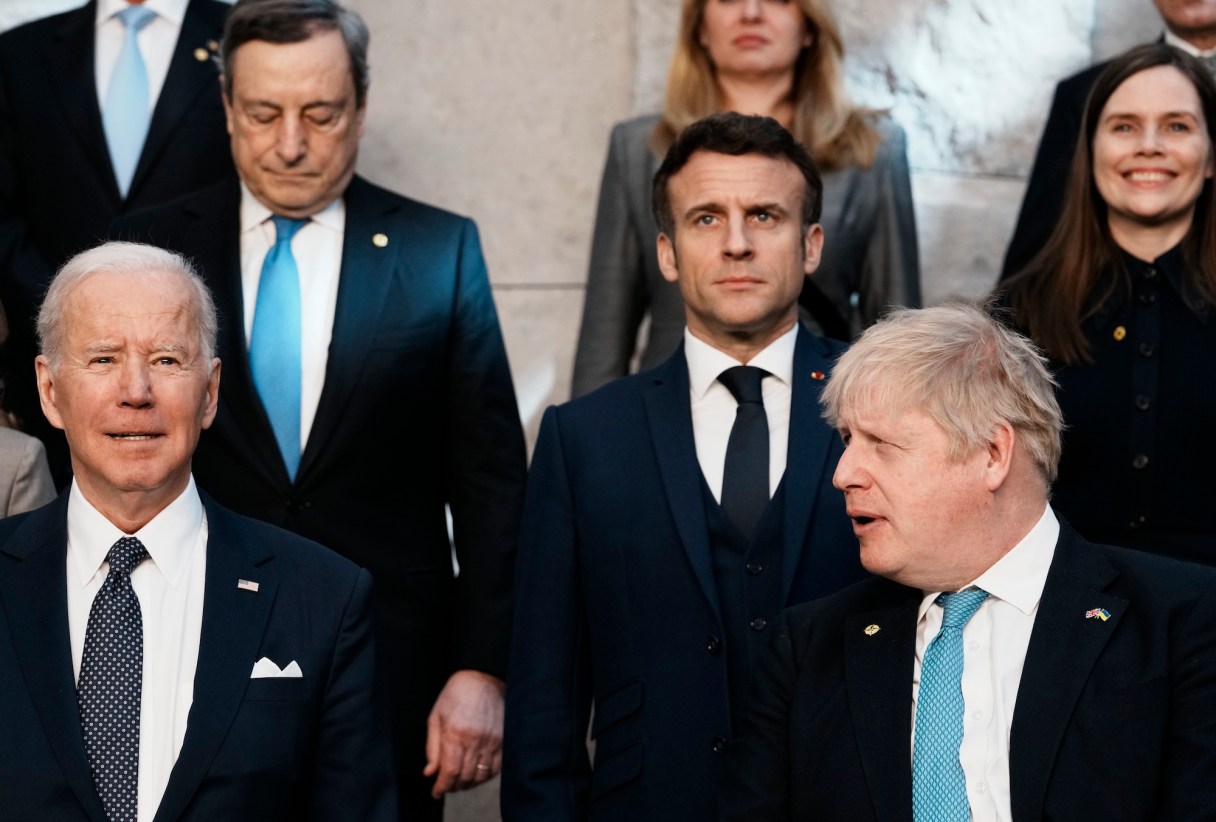
The leaders of NATO nations and the G-7 posed for traditional “family photos” during their summits in Brussels on Thursday. And unlike at previous events, the two groups did indeed seem to be cohesive families, bonded tightly over Russia’s invasion of Ukraine.
That unity will need to endure for Ukraine to survive as a nation, for countries within the alliance to better enhance their own defenses against Russia and for democracy to survive the autocratic wave represented by Moscow and Beijing.
Both meetings were a continuation and confirmation of previously announced strategies, but also were enhanced by ever-stricter sanctions. This time the economic penalties include Russia’s rubber-stamp parliament, the Duma, and 328 specific legislators. Also sanctioned were the head of Russia’s Sberbank, 17 board members of Sovcombank, 48 state-owned defense entities, and Russian elite businessman Gennady Timchenko, his family and his companies. Equally important is a new initiative to prevent other nations from “backfilling” the Russian economy.
“We are determined to continue to impose costs on Russia to bring about the end of this brutal war,” NATO Secretary-General Jens Stoltenberg said at the summit.
Those costs come with a price, which the U.S. and other nations are admirably willing to pay. In just the latest example, Biden pledged $11 billion over the next five years to contend with the coming food-security challenges the war will cause, as well as $1 billion for humanitarian needs triggered by the war. The need is great in Ukraine, of course, but also in Europe, especially in front-line nations Moldova, Romania, Slovakia and Poland.