
Monday, November 16, 2026Nov 16

West Virginia group begins monkeypox education efforts in Appalachia

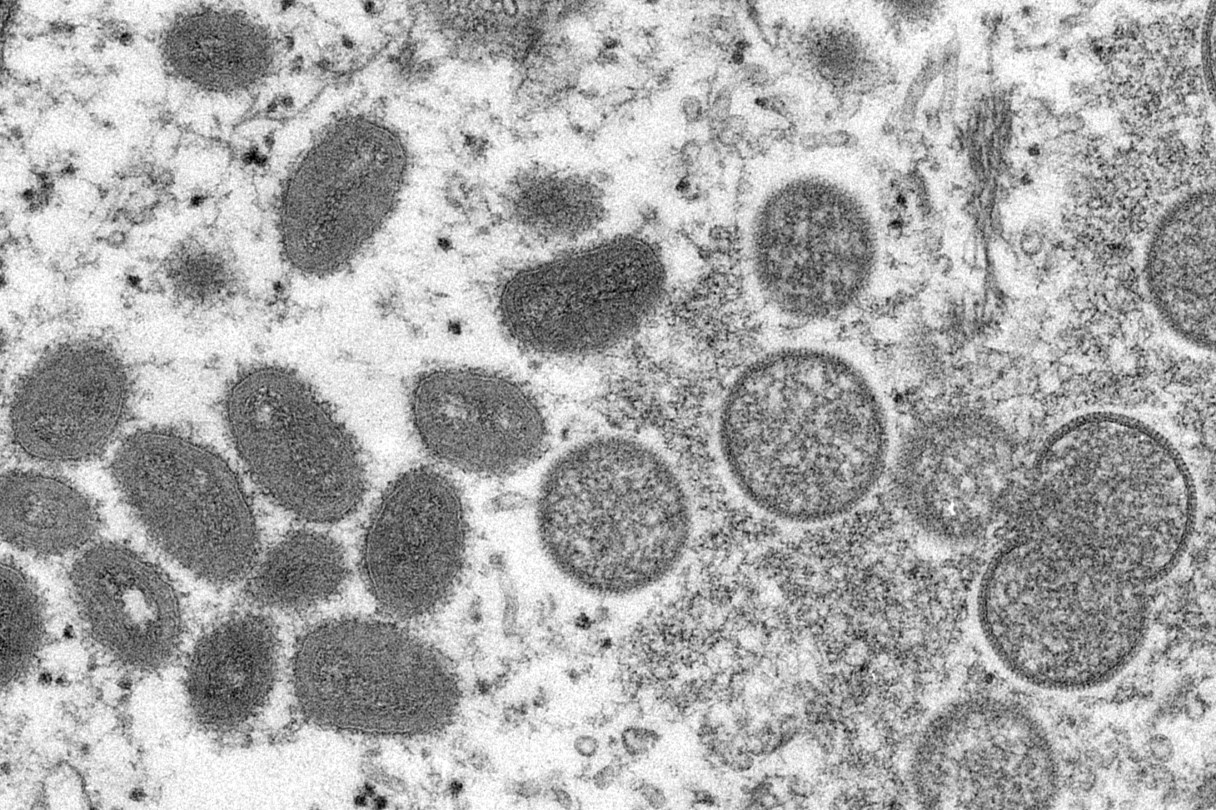
FILE - This 2003 electron microscope image made available by the Centers for Disease Control and Prevention shows mature, oval-shaped monkeypox virions, left, and spherical immature virions, right, obtained from a sample of human skin associated with the 2003 prairie dog outbreak. A leading doctor who chairs a World Health Organization expert group described the unprecedented outbreak of the rare disease monkeypox in developed countries as "a random event" that might be explained by risky sexual behavior at two recent mass events in Europe. (Cynthia S. Goldsmith, Russell Regner/CDC via AP, File)

CHARLESTON, W.Va. (AP) — A West Virginia nonprofit group said Monday it has been awarded $100,000 in grants for monkeypox vaccination and education efforts among LGTBQ individuals in 13 Appalachian states.

The Community Education Group received $50,000 grants each from Gilead Sciences and ViiV Healthcare to develop and distribute materials, offer grants and hold meetings aimed at reducing cultural stigmas and barriers related to the virus, the group said in a statement.

CEG will create and distribute monkeypox digital resource guides to more than 300 Appalachian health departments, along with rural healthcare associations and LGBTQ groups.

CEG also will accept applications for mini-grants from organizations in Alabama, Georgia, Kentucky, Maryland, Mississippi, New York, North Carolina, Ohio, Pennsylvania, South Carolina, Tennessee, Virginia, and West Virginia, the statement said.

The virus has mainly spread among gay and bisexual men, though health officials continue to stress that anyone can be infected.