
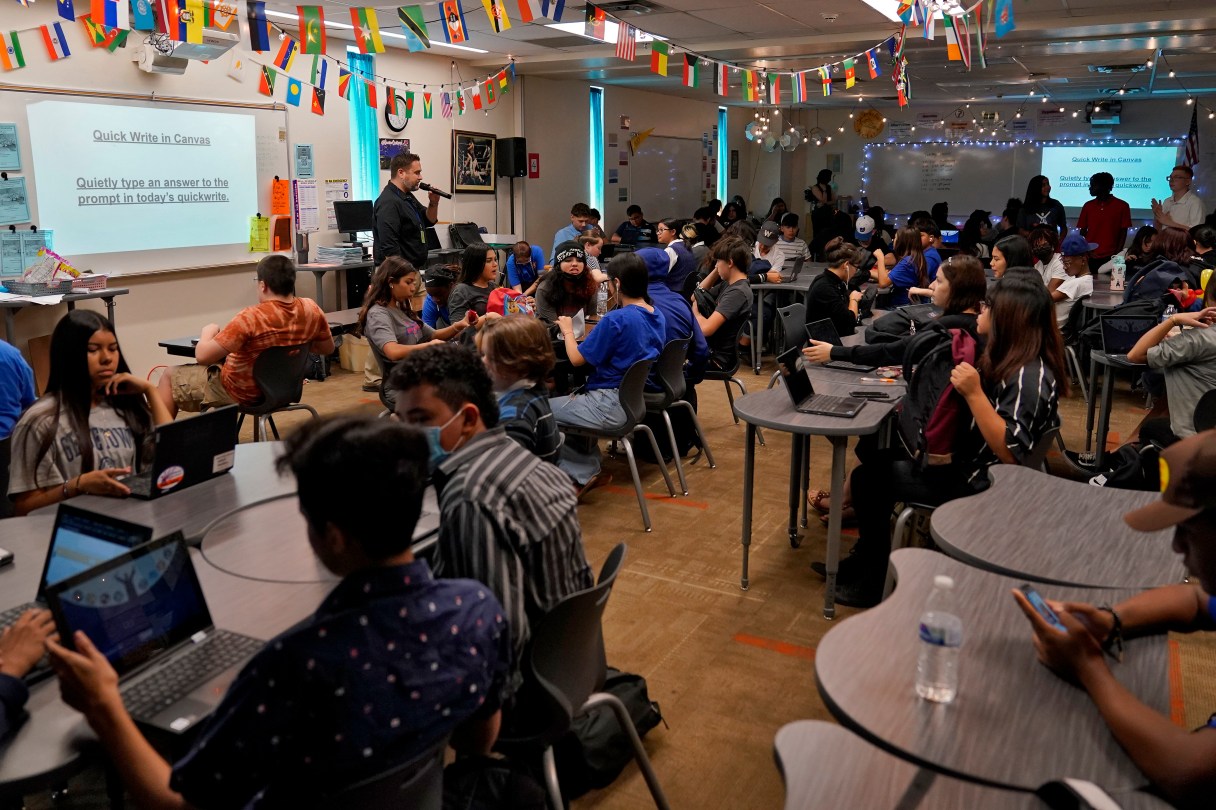
MESA, Ariz. (AP) — A teacher-in-training darted among students, tallying how many needed his help with a history unit on Islam. A veteran math teacher hovered near a cluster of desks, coaching some 50 freshmen on a geometry assignment. A science teacher checked students’ homework, while an English teacher spoke into a microphone at the front of the classroom, giving instruction, to keep students on track.
One hundred thirty-five students, four teachers, one giant classroom: This is what ninth grade looks like at Westwood High School, in Mesa, Arizona’s largest school system. There, an innovative teaching model has taken hold, and is spreading to other schools in the district and beyond.
Five years ago, faced with high teacher turnover and declining student enrollment, Westwood’s leaders decided to try something different. Working with professors at Arizona State University’s teachers college, they piloted a classroom model known as team teaching. It allows teachers to dissolve the walls that separate their classes across physical or grade divides.
The teachers share large groups of students — sometimes 100 or more — and rotate between group instruction, one-on-one interventions, small study groups or whatever the teachers as a team agree is a priority that day. What looks at times like chaos is in fact a carefully orchestrated plan: Each morning, the Westwood teams meet for two hours of the school day to hash out a personalized program for every student, dictating the lessons, skills and assignments the team will focus on that day.
By giving teachers more opportunity to collaborate and greater control over how and what they teach, Mesa’s administrators hoped to fill staffing gaps and boost teacher morale and retention. Initial research suggests the gamble could pay off. This year, the district expanded the concept to a third of its 82 schools. The team-teaching strategy is also drawing interest from school leaders across the U.S., who are eager for new approaches at a time when the effects of the pandemic have dampened teacher morale and worsened staff shortages.