
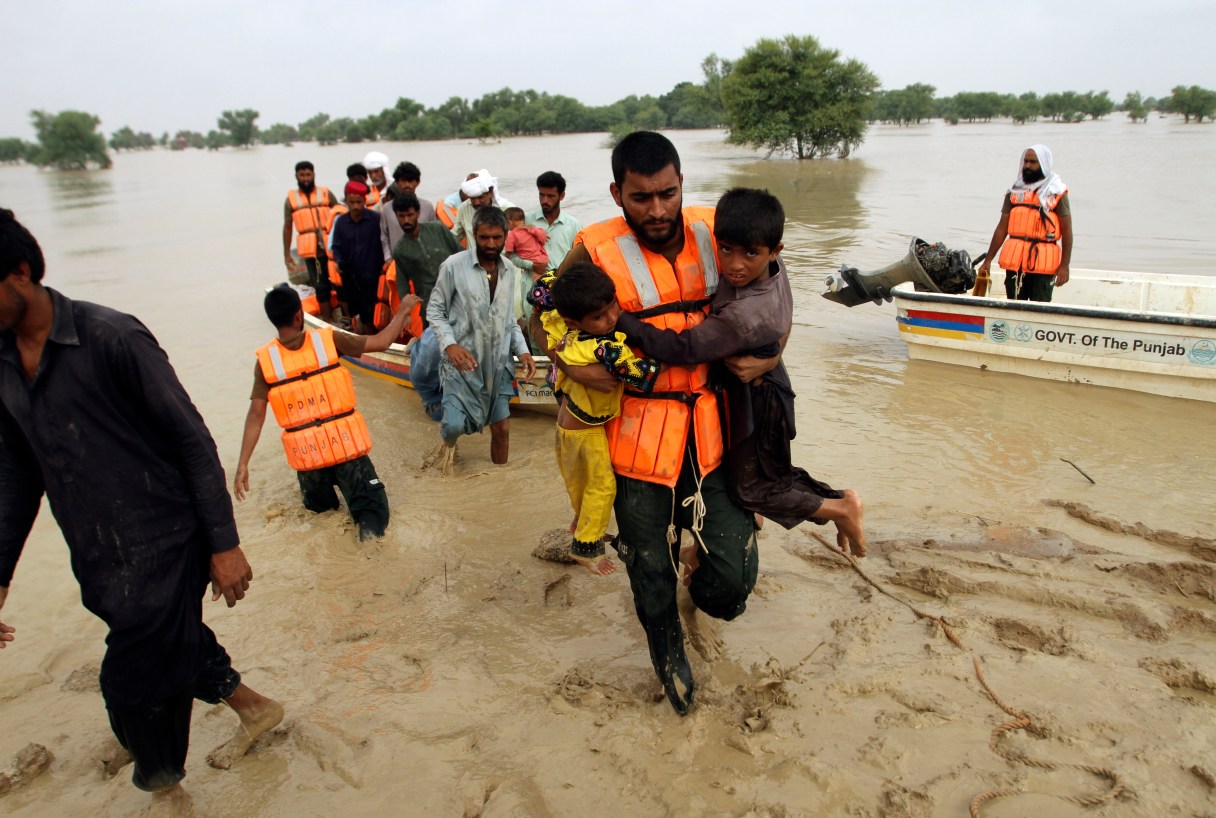
SHARM EL-SHEIKH, Egypt (AP) — It was a total loss — the type that is usually glossed over in big impersonal statistics like $40 billion in damage from this summer’s Pakistan floods that put one-third of the nation underwater.
“We lost everything, our home and our possessions,” said Taj Mai, a mother of seven who is four months pregnant and in a flood relief camp in Pakistan’s Punjab province. “At least in a camp our children will get food and milk.”
This is the human side of a contentious issue that will likely dominate climate negotiations in Egypt this month. It’s about big bucks, justice, blame and taking responsibility. Extreme weather is worsening as the world warms, with a study calculating that human-caused climate change increased Pakistan’s flood-causing rain by up to 50%.
While Pakistan was flooding, six energy companies — ExxonMobil, Chevron, Shell,BP, Saudi Aramco and Total Energies — made $97.49 billion in profits from July to September. Poorer nations, United Nations Secretary-General Antonio Guterres, Europe’s leaders and U.S. President Joe Biden are calling for fossil fuel firms to pay a windfall profits tax. Many want some of that money, along with additional aid from rich nations that spewed the lion’s share of heat-trapping gases, to be used to pay countries victimized by past pollution, like Pakistan.
The issue of polluters paying for their climate messes is called loss and damage in international climate negotiations. It is all about reparations.