
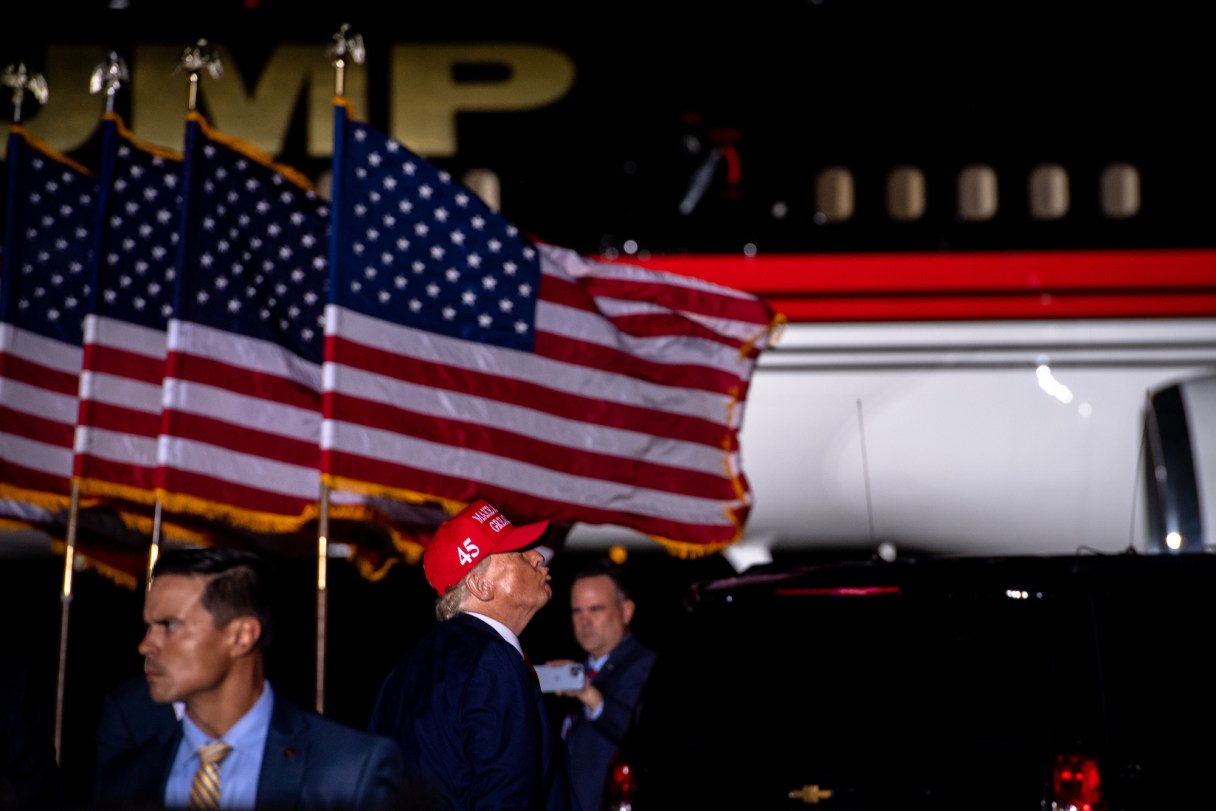
We’re used to watching Donald Trump going on offense. In announcing that he will run for president once more, though, Trump sounded unusually defensive. Last week’s midterm elections, he suggested, had gone well for Republicans, giving them control of the House, and would have gone even better if only the American public fully understood how dire the country’s condition is.
For the first time in years, Trump is running against prevailing Republican emotions. Most Republicans are upset about the election results, which include the loss of governorships and possibly a Senate seat. The leading explanation for the Republican disappointments is that they’re Trump’s fault: He picked “low quality” candidates in crucial races. Widespread acceptance of that idea has led a lot of Republicans, even ones who backed him strongly in the past, to say or signal that the party should find a new leader.
This blame-Trump narrative is oversimplified. Trump didn’t select the candidates; Republican primary voters did. And they had shown a weakness for candidates who are better at getting attention than votes long before Trump rode down his escalator. Remember when Herman Cain led the polls for the Republican presidential nomination in 2011? That moment ended only when several women accused him of sexual harassment, a revelation that may have come to light earlier if he had made credible runs for office before.
The truer, more complicated story doesn’t make Trump look any better. His success in 2016 encouraged the assumption that the usual laws of political gravity no longer applied. Outrageous statements and scandals, a lack of what had previously been considered qualifications for office, even unpopularity: None of this mattered any more. The seeming overthrow of the old rules encouraged runs by candidates who would not have attempted them before, and encouraged primary voters to support them.