
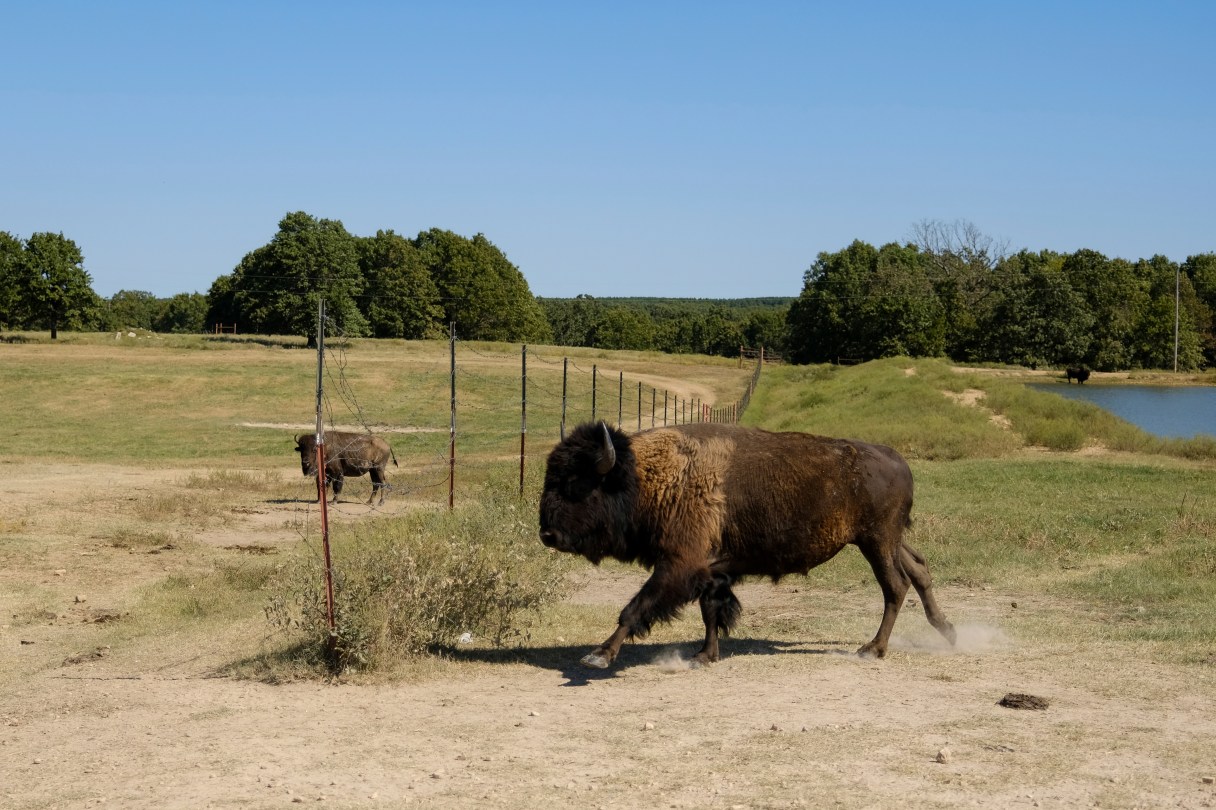
BULL HOLLOW, Okla. (AP) — Ryan Mackey quietly sang a sacred Cherokee verse as he pulled a handful of tobacco out of a zip-close bag. Reaching over a barbed wire fence, he scattered the leaves onto the pasture where a growing herd of bison — popularly known as American buffalo — grazed in northeastern Oklahoma.
The offering represented a reverent act of thanksgiving, the 45-year-old explained, and a desire to forge a divine connection with the animals, his ancestors and the Creator.
“When tobacco is used in the right way, it’s almost like a contract is made between you and the spirit — the spirit of our Creator, the spirit of these bison,” Mackey said as a strong wind rumbled across the grassy field. “Everything, they say, has a spiritual aspect. Just like this wind, we can feel it in our hands, but we can’t see it.”
Decades after the last bison vanished from their tribal lands, the Cherokee Nation is part of a nationwide resurgence of Indigenous people seeking to reconnect with the humpbacked, shaggy-haired animals that occupy a crucial place in centuries-old tradition and belief.
Since 1992 the federally chartered InterTribal Buffalo Council has helped relocate surplus bison from locations such as Badlands National Park in South Dakota, Yellowstone National Park in Wyoming and Grand Canyon National Park in Arizona to 82 member tribes in 20 states.