
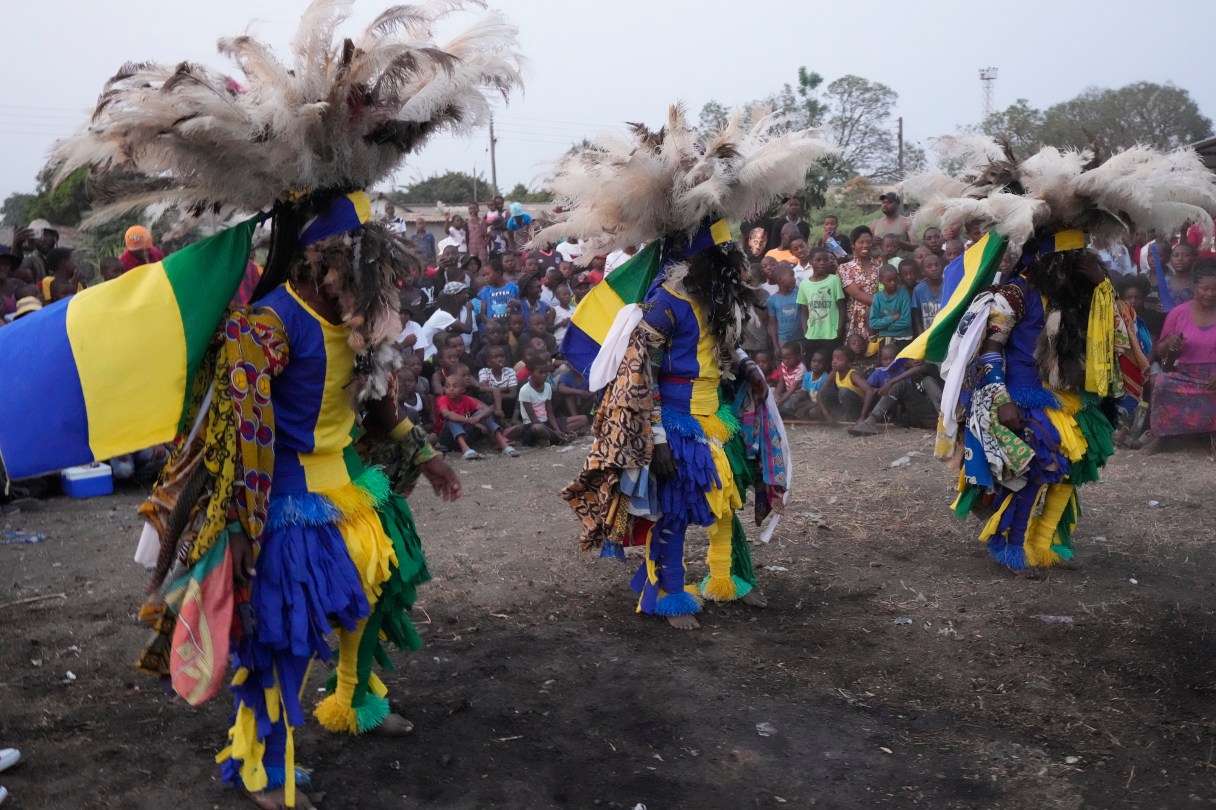
HARARE, Zimbabwe (AP) — Deep into the night, the sound of drums reverberated through the township of Mufakose in Zimbabwe’s capital city. Barefoot dancers pulsated to the beat in colorful clothing and gory masks. Some had their faces and heads covered with poultry feathers.
In the past, the mere sight of members of the group performing the Gule Wamkulu ritual dance would have sent shivers down the spine of many outsiders. But on this night dozens of people, including young children, squeezed in for a closer look, their cellphones lighting up the spectacle.
Previously, “even the adults would prefer to watch our dances from a distance. People were scared of us,” said Notice Mazura, organizer of the jamboree.
Long seen as a secretive, ritualistic society with mysterious connections to the spirit world, performers of the Gule Wamkulu, or “the great barefoot dance,” are increasingly opening to the public as part of an engagement drive that seeks to counter such negative impressions and rehabilitate the group’s reputation in society.
Gule Wamkulu traces its roots to the Chewa people of the countries of Malawi, Mozambique and Zambia in southern Africa. It gained a foothold in neighboring Zimbabwe in the early 1900s, when thousands of people from those countries came to what was then colonial Southern Rhodesia as migrant laborers.