
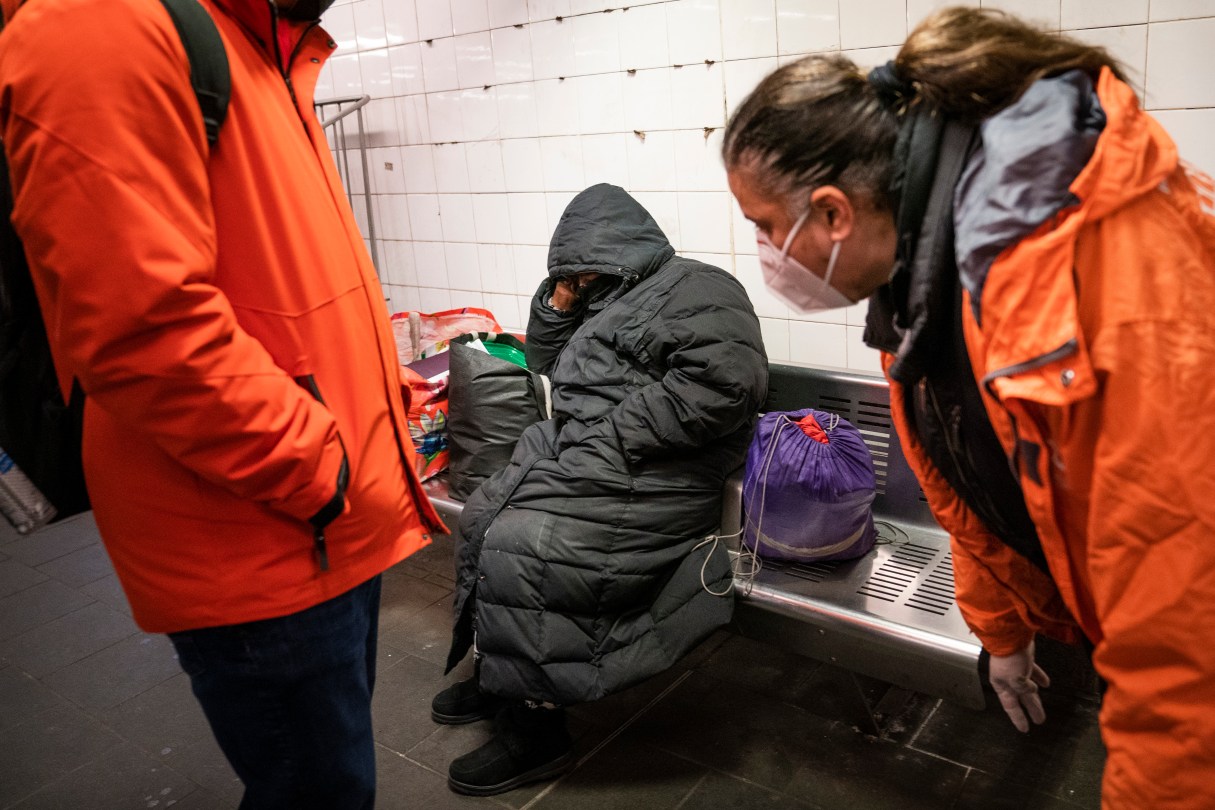
NEW YORK (AP) — New York City’s mayor on Tuesday said he was directing police and city medics to be more aggressive about getting severely mentally ill people off the streets and subways and into treatment, even if it means involuntarily hospitalizing some people who refuse care.
“These New Yorkers and hundreds of others like them are in urgent need of treatment, yet often refuse it when offered,” Mayor Eric Adams said at a news conference, noting the pervasive problem of mental illness has long been out in the open.
“No more walking by or looking away,” the mayor said, calling it “a moral obligation to act.”
The mayor’s directive marks the latest attempt to ease a crisis decades in the making. It would give outreach workers, city hospitals and first responders, including police, the discretion to involuntarily hospitalize anyone they deem a danger to themselves or unable to care for themselves.
“The very nature of their illnesses keeps them from realizing they need intervention and support. Without that intervention, they remain lost and isolated from society, tormented by delusions and disordered thinking. They cycle in and out of hospitals and jails.”