
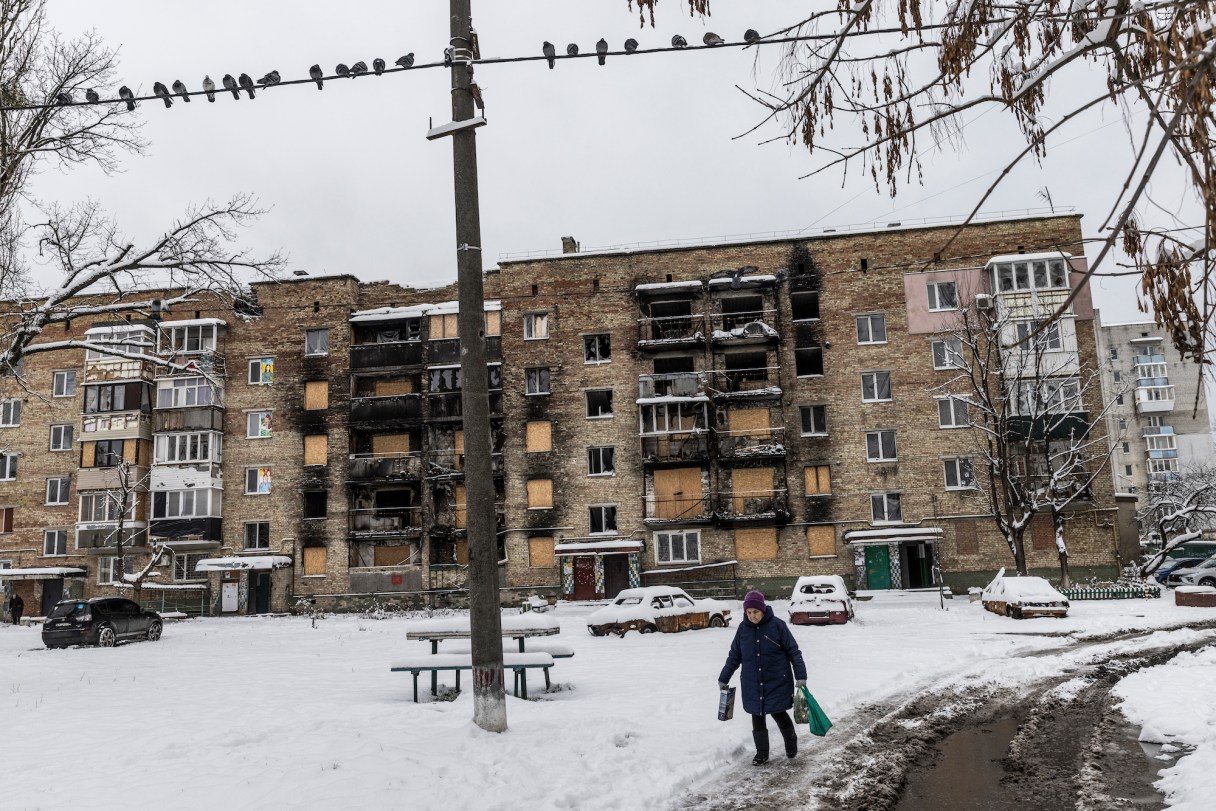
The strategically vital city of Kherson is back in the hands of Ukrainians, albeit under threat of Russian shelling and attacks on its electricity supply. But as combatants on both sides of an increasingly static firing line prepare for winter war, there are effectively two separate conflicts emerging: one on the land, the other in the air. What can the West do to help Ukraine meet the immediate tactical challenges, and ultimately seize the longer-term advantage?
On land, the arrival of a wet, rainy fall and a harsh winter will lead to a decrease in operations. Both Russia and Ukraine need to rest and reinforce their troops, as well as repair equipment. A return to full-blown combat operations isn’t likely until late winter when the ground freezes, presenting a better opportunity for the heaviest equipment.
Russia will particularly struggle to fill the holes in its forward combat operations, thanks to low motivation and a failing draft. Ukraine faces challenges too, but not of motivation — its citizens, fighting an existential war, are mighty motivated. The Ukrainian challenge stems from having a far smaller population — only about a third of Russia’s.
Ukraine will also have a major advantage in supplies. The West will continue to provide not only the high-tech weapons that receive most of the publicity but also the bread and butter of infantry operations: guns, mortars, ammunition, fuel, trucks, night-vision devices, cold weather gear, portable stoves, point-to-point communications equipment. In contrast, Russian conscripts have been told to find their own sleeping bags and improvise bandages from tampons.
But the challenge in the land war will be a classic military fact of the battlefield: Advantage in ground war accrues to the defensive side. Military theory says you need a 3:1 advantage on offense to conquer a well-dug in defense. Given Ukrainian advantages in materiel and motivation, I’d rather have their hand of cards.