
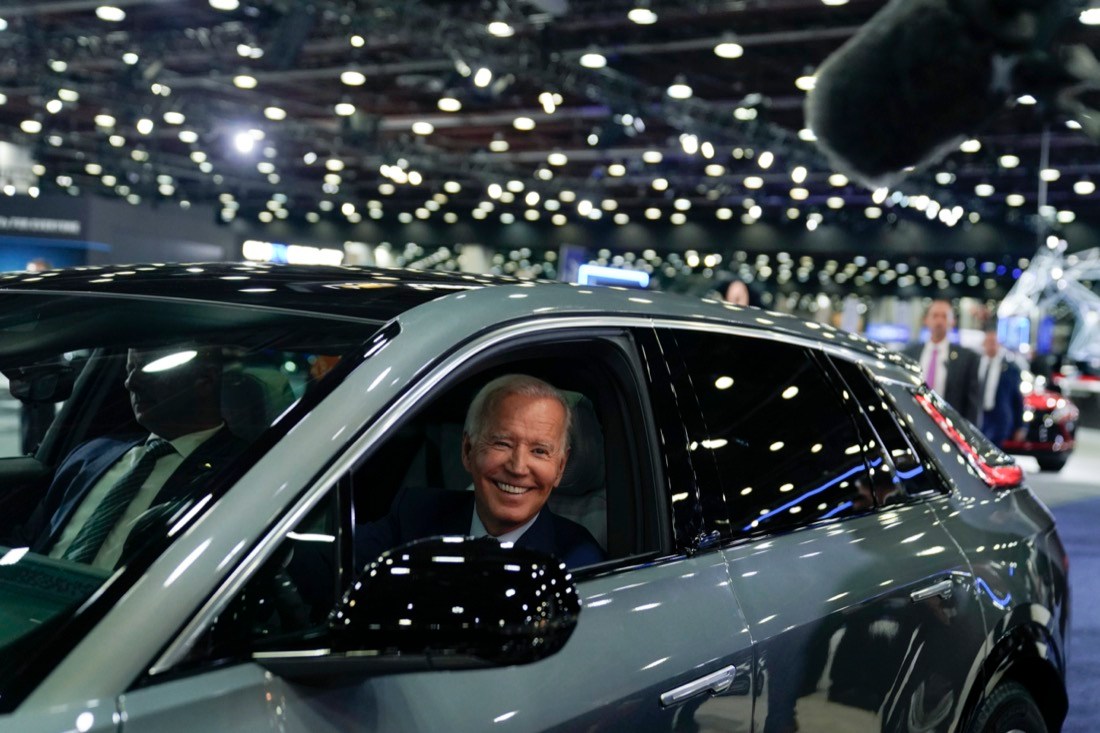
WASHINGTON (AP) — President Joe Biden, a self-described “car guy,” often promises to lead by example on climate change by moving swiftly to convert the sprawling U.S. government fleet to zero-emission electric vehicles. But efforts to eliminate gas-powered vehicles from the fleet have lagged.
Biden last year directed the U.S. government to purchase only American-made, zero-emission passenger cars by 2027 and electric versions of other vehicles by 2035.
“We’re going to harness the purchasing power of the federal government to buy clean, zero-emission vehicles,” the president said soon after his January 2021 inauguration. He has since used photo ops — taking a spin in Ford Motor Co.’s electric F-150 pickup truck, or driving GM’s Cadillac Lyriq electric SUV at the Detroit auto show — to promote their potential. Cabinet officials have hawked a first set of Ford Mustang Mach-E SUVs in use at the departments of Energy and Transportation.
The White House frequently describes the 2027 timeline as on track. But the General Services Administration, the agency that purchases two-thirds of the 656,000-vehicle federal fleet, says there are no guarantees.
Then there is the U.S. Postal Service, which owns the remaining one-third of the federal fleet. After initially balking and facing lawsuits, the agency now says that half of its initial purchase of 50,000 next-generation vehicles will be powered by electricity. The first set of postal vehicles will hit delivery routes late next year.